Review · SPLIT TOURS
Controversies behind Split and Croatia-Anthropologist guide
Split’s stones tell only part of the story. This anthropological walking tour uses the city’s palace, squares, and waterfront to explore the people and political disputes behind them, from ancient burial ground to divisions in modern Croatia.
I like two things in particular: the focus on local identity, not just architectural dates, and the small-group limit of 12, which leaves room for questions. Guide Marin brings maps and iPad visuals, and his teaching style makes complicated subjects easier to follow.
One consideration: this is a walking tour with several stops where you stand and listen. If standing for stretches is tiring, or you mainly want a quick tour of buildings, the pace and subject matter may not suit you.
At a glance
- The palace is the starting point for a bigger story: Hear why Diocletian’s Palace has been contested by locals across different periods.
- Seven central stops in about two hours: The route ends at Matejuška, with a view of Split.
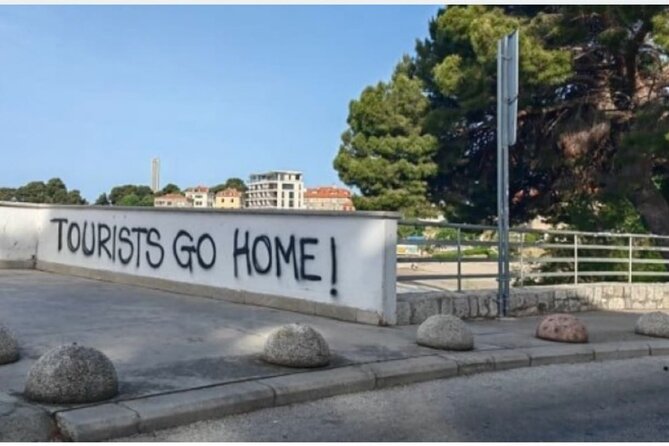
- Modern Croatia is part of the discussion: The tour addresses political and social issues that still divide the country.
- Marin uses maps and iPad visuals: They help put the city and its past in context.
- A small group keeps the conversation open: The maximum is 12 people.
- Budget about $35 per person: The tour is in English, and several start times are offered.
A city tour shaped around people, not just monuments
Split is easy to admire at face value. The old center is compact, and a stroll through its stone lanes and squares can fill an afternoon. But this tour asks you to look beyond the façades: who used these places, who controlled them, and how their past continues to shape local identity.
The approach is anthropological rather than a standard parade of dates and buildings. The guide connects places to the people who lived in and around them, and to the changing ways Split’s past is interpreted today. That makes the walk especially useful if you want more than the information on public signs.
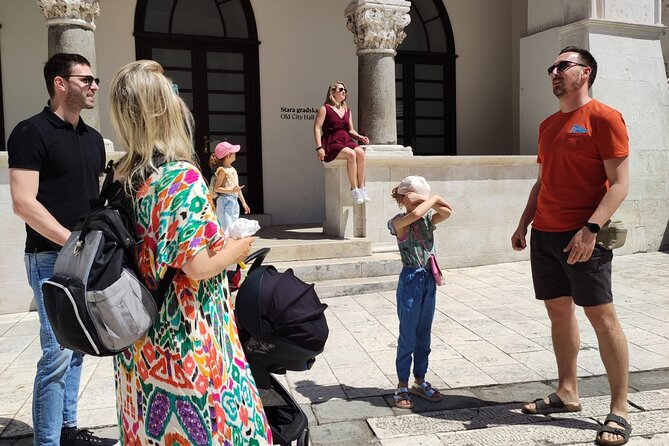
Guide Marin is described as warm, prepared, and comfortable with questions. He uses maps and images on an iPad, and brings a teacher’s approach to the route. The result is a session that can feel like an outdoor class, but one grounded in the streets and squares around you.
More guided tours in Split:
- From Split: Plitvice Lakes National Park Guided Tour
★ 5.0 · 3,002 reviews - From Split: Plitvice Lakes Guided Tour with Entry Tickets
★ 4.9 · 2,468 reviews - From Split: Plitvice Lakes National Park Guided Tour
★ 5.0 · 2,355 reviews
Diocletian’s Palace: a landmark with competing meanings
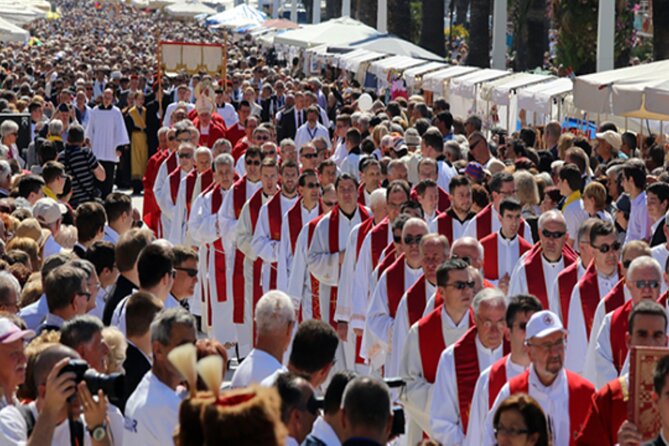
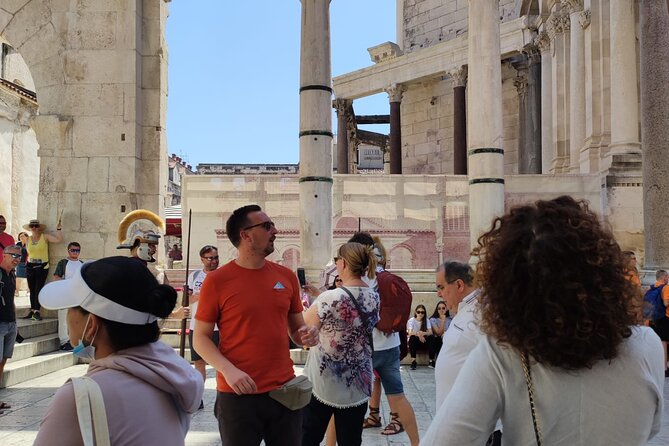
The tour begins at Ul. kralja Tomislava 12 and spends about 35 minutes around Diocletian’s Palace. The palace is more than a grand ancient site here. It is the central example of how a place can carry different meanings for the people who live with it, and why its legacy has been disputed in every historical period.
That framing matters. A conventional city walk might give you a date, a ruler, and a building style, then move on. Here, the palace becomes a way into questions about local history and ownership: what does the site mean to Split, and how has that meaning shifted over time? You get the setting and the argument together.
Admission to the palace is included. The stop is the longest on the route, giving the guide time to establish the themes that return at later locations. If you already know the basic outline of the palace, the social perspective should still add a different layer. If your priority is a detailed architectural tour, though, this walk is not presented as a specialist study of the building.
Riva: where public life meets public memory
From the palace, the route reaches Obala Hrvatskog narodnog preporoda, better known as the Riva. The group spends about 15 minutes on this traditional Mediterranean promenade, a place where public life happens and where important historical events have taken place.
The value of this stop is its connection between everyday life and civic memory. A promenade can seem like a simple place to stroll, but the tour asks you to consider how a shared public space becomes part of a city’s story. It is a useful change of pace after the palace, and a chance to see the city not only as a collection of old buildings but as a place people still use.
The Venetian square and the Ottoman frontier
At Trg Braće Radić, the old Venetian square, the discussion turns to turbulent times when Split was described as the last frontier fighting the Ottomans. The group spends around 15 minutes here, looking at how that period is understood today and why it continues to influence politics and local identity.
This is one of the clearest examples of the tour’s present-day focus. The point is not simply that conflict happened here. It is that memories of conflict can remain active in how people describe their history and define themselves. If you enjoy asking how the past is remembered, rather than just memorizing what happened, this stop should hold your interest.
More tours in Split:
- Split: Krka Waterfalls Trip with Boat Cruise and Swimming
★ 4.8 · 10,519 reviews - From Split: Krka Waterfalls, Food & Wine Tasting Tour
★ 5.0 · 9,326 reviews - Blue cave, Mamma Mia and Hvar, 5 islands speedboat tour
★ 5.0 · 7,150 reviews - From Split: Krka Waterfalls, Food & Wine Tasting Tour
★ 4.9 · 6,598 reviews
Narodni trg: a square with a buried past
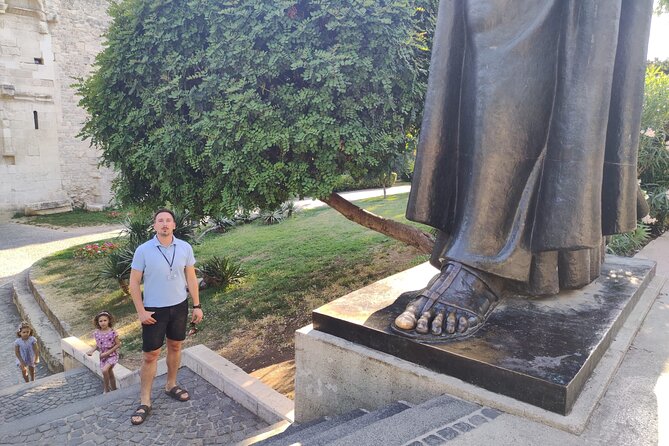
Narodni trg is another 15-minute stop, with a striking detail beneath the paving: the area was once an ancient cemetery, and human remains lie below. The guide also addresses later events at the square, including infamous episodes, though the tour information does not specify which ones.
The setting makes the point neatly. A familiar public square can conceal older layers, and the visible city is only part of what lies beneath it. This stop also shows why a guide can add value in a historic center: without someone connecting the location to its less obvious past, you might cross the square without knowing what had been there before.
Šperun: the popular neighborhood with a local story
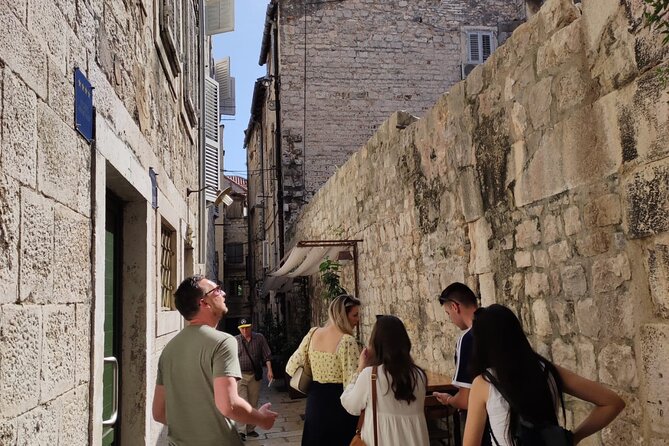
The walk continues to Šperun ulica, a well-known Split neighborhood and a popular place for visitors to stay. The tour spends about 15 minutes discussing the story behind the area, one that can be missed if you see it only as a convenient base for sightseeing.
That contrast is worth paying attention to. A neighborhood may be familiar to visitors while its local background remains unknown to them. This stop helps shift your view from where to sleep or stroll to how a district fits into the city’s identity. The available details do not spell out the neighborhood’s specific history, so go expecting the guide to supply the story rather than a set list of facts you can predict in advance.
Franjo Tuđman Square and Croatia’s recent past
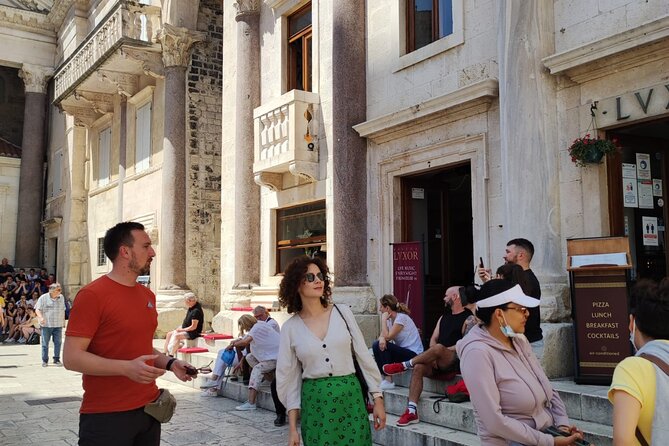
At Trg Franje Tuđmana, named for Croatia’s first president, the subject moves into the late 20th century. The tour treats this as a difficult chapter in Croatian history, one that remains divisive in society and challenging to teach in schools.
This is likely to be the most politically sensitive part of the walk. The value lies in hearing how the past connects to present-day disagreements, not in expecting a simple, settled verdict. Marin’s open approach and willingness to take questions are especially useful here. You can listen, ask for clarification, and leave with a more grounded sense of why modern Croatian identity is not a tidy subject.
If you prefer tours that stick to neutral dates and architecture, this section may feel heavier than you want on a holiday. If you are curious about how recent history continues to affect public life, it is one of the strongest reasons to choose this particular walk.
Matejuška: a final view and a modern Split
The tour ends at Matejuška, after about 10 minutes at this final stop. From here, the group has one of Split’s best-known views, and the guide uses the setting to offer final thoughts about the modern city.
It is a fitting close: the walk moves from the palace and older squares toward contemporary life, then ends with a broad view of the place all those stories belong to. The conclusion is not just a photo stop. It gives you a chance to connect the locations you have visited with the city you are standing in now.
The end point is Trumbićeva obala 2, so you finish in a different spot from where you began. That is useful to know if you are arranging a meeting or onward plans. The tour takes about two hours overall, and the listed stop lengths add up to that approximate duration.
What the pace and group size mean for you
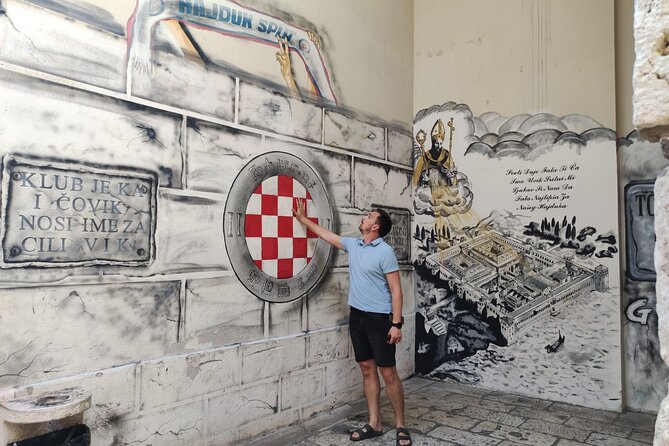
The maximum group size is 12. That is small enough to make questions and conversation practical, without promising a private tour. The guide’s use of maps and iPad visuals can also help when a story involves geography or several layers of history.
This is a walking tour, and you will stop to listen at multiple locations. One person who joined a group of 10 found the standing tiring, even while appreciating the content. Take that seriously if you have trouble standing for stretches. The tour information says most people can participate, service animals are allowed, and the meeting point is near public transportation.
There are several tour times to choose from, and the tour is offered in English. It averages about 12 days advance booking, so if you have a fixed date in mind, planning ahead is sensible. Confirmation is provided at booking. Free cancellation is available up to 24 hours before the start; bad weather may lead to a different date or a full refund.
Is $35 fair value for two hours?
At $35 per person, this is not the cheapest way to walk through Split, but the price pays for interpretation rather than transport or a long list of attractions. You get a guided route through seven central locations, a small-group cap, and a focused account of historical and current issues. Admission is included at the palace and Matejuška, while the other listed stops are free public places.
The best value comes if you want context you would not easily pick up by reading signs as you go. The tour’s unusual emphasis on local society, identity, and political memory gives it a clear purpose. If you only need help finding the main monuments, you may get more than you want for the price. If you like asking why a place matters to the people who live there, the fee is easier to justify.
Who should book this Split walk?
I would choose this tour early in a Split stay if I wanted a stronger sense of the city before exploring on my own. Its route covers familiar central places, but the guide’s framing can help you notice how history and current debates connect. It suits curious visitors who enjoy discussion and do not mind a few complicated topics.
It is less suited to anyone seeking a fast, purely architectural overview or a tour with minimal standing. The walk is at its best when you are ready to listen, ask questions, and think beyond the postcard view. If that sounds like your kind of city tour, Marin’s two-hour route offers a thoughtful way to meet Split.
FAQ
How long is the tour?
It lasts about two hours, with stops at seven locations in Split’s center.
How much does it cost?
The listed price is $35 per person.
What language is the tour offered in?
The tour is offered in English.
How many people can join?
The maximum group size is 12 travelers.
Where does the tour start and end?
It starts at Ul. kralja Tomislava 12, 21000 Split, and ends at Trumbićeva obala 2, 21000 Split.
Can I cancel if my plans change?
You can cancel for a full refund up to 24 hours before the start time. If poor weather cancels the tour, you will be offered another date or a full refund.
Just reviewed in Split
- Split City Walking Tour★ 5.0 · 5 reviews
- Split City Electric Bike Tour★ 5.0 · 68 reviews
- Split Cooking Class – Afternoon Edition Shared Activity★ 5.0 · 8 reviews
- Marjan Park & Split City Bike Tour★ 5.0 · 51 reviews
- Split: Blue Lagoon & 3 Islands Speedboat Tour – Small group★ 4.5 · 46 reviews
- Split Quest Experience: Discover the City★ 3.5 · 5 reviews
- Split Bike and Wine Experience★ 5.0 · 3 reviews
- Split: Blue Lagoon, Hvar, Brač, 6 Islands Boat Tour – Small Group★ 5.0 · 57 reviews
Split Tours, compared.

Krka Waterfalls Trip with Boat Cruise and Swimming
Read our review →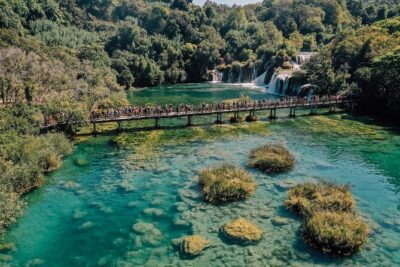

Blue cave, Mamma Mia and Hvar, 5 islands speedboat tour
Read our review →
Blue Cave, Mamma Mia, Hvar and 5 Island Tour
Read our review →
Blue Lagoon & 3 Islands Cruise with Lunch from Split
Read our review →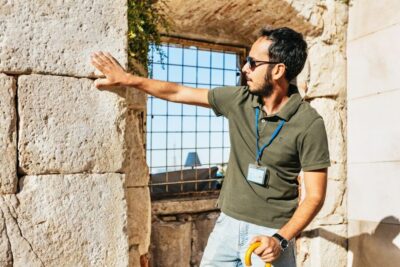

Blue Lagoon Boat Party with DJs, Shots & After Party
Read our review →