
Review · SPLIT PRIVATE TOURS
Semi-Private Balkans Tour; Split to Athens or Corfu in 14 Days
Split is the starting point for a 14-day overland route through seven countries, with medieval towns, Ottoman-era bazaars, lakeside stops and Greek monasteries along the way. You finish in Athens or take an included ferry from Igoumenitsa to Corfu, so this is a useful way to connect a Balkan trip with Greece.
I like two things about the plan: private transport and a tour leader take much of the strain out of border crossings and daily transfers, and the itinerary makes room for places such as Prizren, Gjirokaster and the Drilon springs, not just the best-known stops. Breakfast and 3-star accommodation are included, too.
The main consideration is the pace: you change locations often, and some stops are brief. Also, the tour description elsewhere refers to a four-day hiking trip from Dubrovnik, which does not match this 14-day Split-to-Greece itinerary. Confirm the exact route and activity before booking, especially if you are expecting a hiking tour.
- Mostar to Meteora in 14 days: The route links Adriatic towns, Balkan capitals, Albanian heritage sites and Greek monasteries.
- Small group, up to 10: The group cap and private transport keep the trip more personal than a large coach tour.
- 13 breakfasts included: Hotels and breakfast are covered, while lunches, dinners, drinks and snacks are on you.
- Two possible finishes: Choose Athens, or travel to Igoumenitsa and continue by included ferry to Corfu.
- A packed, varied schedule: Expect frequent drives and guided visits, with limited time at some stops.
- Budget carefully: The stated price is $5,153.85 per person, based on shared room occupancy.
A road trip across seven countries
This is a long-distance cultural tour, not a single-region holiday. Starting in Split, you head through Bosnia and Herzegovina, Montenegro, Albania, Kosovo, North Macedonia and Greece. The route moves between old town centers, religious sites, mountain and lakeside settings, and modern city life.
I like how the trip combines major landmarks with smaller, more local-feeling stops. You see Mostar’s famous bridge and Sarajevo’s central sights, but also a Kosovo monastery, an Albanian farm, the Drilon springs and the old bazaar in Gjakova. That variety gives you more texture than a tour focused only on headline cities.
The trade-off is that this many borders and destinations require a brisk pace. You should expect to pack and move often, and to treat some stops as introductions rather than thorough visits. If you prefer two or three nights in each place, this itinerary may feel too rushed.
Day 1: Mostar and the spring at Blagaj
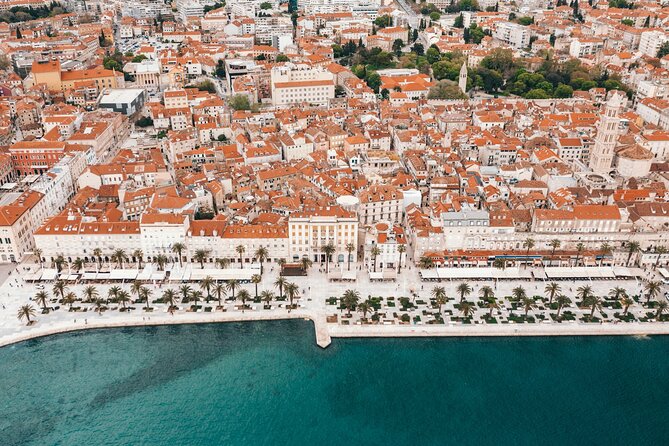
A 7:30 a.m. hotel pickup in Split begins the trip. The driver takes you to the border, where you meet the tour leader. That handoff is worth noting: the description distinguishes between the local driver and the leader, so expect the start of the day to involve a transfer before the guided portion gets underway.
In Mostar, you visit Stari Most, the 16th-century bridge and UNESCO-listed landmark, then walk the old bazaar’s cobbled lanes. The town’s mix of mosques, market streets and newer buildings makes it a good first stop for understanding how layered the region’s past is. You also visit Blagaj, where the Buna River emerges beside a cliff and an Ottoman-era religious complex.
There is some free time in Mostar, but the schedule gives only a short window at each main stop. If browsing the bazaar or lingering over a meal matters to you, plan to make the most of the time available rather than expecting a full free afternoon.
More private tours in Split:
- SPLIT-PRIVATE Walking Tour of Diocletian’s Palace & Old Town
★ 5.0 · 467 reviews - Private Krka Waterfalls tour with 30min Boat Cruse
★ 4.0 · 458 reviews - Split by Private Electric Rickshaw – Palace & Hidden Gems
★ 5.0 · 412 reviews
Day 2: Sarajevo’s Ottoman and Austro-Hungarian quarters
The drive from Mostar brings you to Sarajevo, where the tour introduces the city’s Ottoman and Austro-Hungarian heritage. You’ll see mosques, churches, synagogues and market streets, as well as visible reminders of the Bosnian War, including bullet and cannon marks.
At Latin Bridge, the guide explains the assassination of Archduke Franz Ferdinand and the event’s connection to the start of World War I. The itinerary also allows free time to eat in the old town. Sarajevo is known for meat dishes and desserts, though meals are not included, so set aside money for lunch or dinner.
The walking tour includes uneven ground and visits to ruins. Comfortable shoes are a sensible choice, and the day’s short scheduled visits mean you will likely want to return to any favorite corner on your own only if the timing allows.
Days 3 and 4: Kotor, Budva and northern Albania
Kotor’s compact old town is made for walking. Its winding lanes were designed to complicate an attacker’s route, and today they make a pleasant maze of churches, old buildings and small squares. You visit St. Luke’s Church, then have free time to explore. The overnight is described as near the Montenegrin Riviera, rather than in a specific town, so check the hotel location if being close to the old center matters to you.
The next day brings Budva’s old town, with its medieval churches and historic core, followed by a viewpoint near Sveti Stefan. The island settlement is now an exclusive resort and is not open for a visit on this tour; the stop is for the view and a photograph.
After crossing into Albania, you visit Rozafa Castle above Shkoder. Its position gives views over the lake and the rivers that meet near the Adriatic. Shkoder has a long history and Venetian-influenced architecture, but the itinerary repeats Rozafa Castle in its description of the city visit. Treat the schedule as a broad outline, and confirm how much time is allocated to the castle versus the town.
Days 5 and 6: Albanian farm life and Kosovo’s old towns
At Mrizi i Zanave, an agricultural tourism farm, you learn how a family business uses local produce and adapted old buildings for storage. The farm is described as an important local employer, and the visit includes time to see the operation. Lunch and purchases are extra, but this is a useful chance to try regional food or pick up local products.
Prizren, Kosovo’s cultural center, brings a riverfront old town, the Sinan Pasha Mosque and a hilltop fortress with views across the city. Its mix of religious and architectural influences makes it one of the route’s more rewarding walking stops. The following day adds Gjakova’s rebuilt bazaar, where local crafts are sold, and the Deçan Monastery, still home to Orthodox monks and known for its 14th-century frescoes.
The route then crosses Rahovec’s wine-growing valley before returning toward Prizren. These are distinct stops, but they also add to the sense of a full travel day. If you enjoy seeing working towns and rural production alongside monuments, this stretch earns its place. If you mainly want long visits at major museums, the schedule may feel too spread out.
More tours in Split:
- Split: Krka Waterfalls Trip with Boat Cruise and Swimming
★ 4.8 · 10,519 reviews - From Split: Krka Waterfalls, Food & Wine Tasting Tour
★ 5.0 · 9,326 reviews - Blue cave, Mamma Mia and Hvar, 5 islands speedboat tour
★ 5.0 · 7,150 reviews - From Split: Krka Waterfalls, Food & Wine Tasting Tour
★ 4.9 · 6,598 reviews
Days 7 and 8: Kruja’s castle and Tirana’s food culture
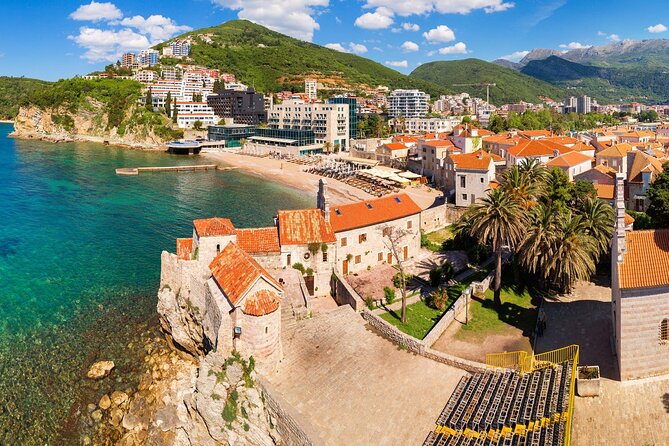
Kruja is associated with Albania’s resistance to Ottoman expansion. You visit the castle and walk through its old bazaar, a good place to browse handmade goods such as carpets and jewelry. The tour leader also points out paths used to leave the castle during sieges, bringing a practical detail to the visit.
In Tirana, the focus shifts from old fortifications to everyday food and city life. A local companion leads you to try byrek, a filled pastry, and introduces market streets, a traditional coffee stop and local neighborhoods. At the New Bazaar, the plan includes qofte, or grilled meatballs, with bread; vegetarians are offered bread with gjize, a cottage cheese. Albanian raki is also included in the tasting described.
Bunk’Art 2 closes the day with an exhibition in a former nuclear bunker built for communist leader Enver Hoxha and close party members. The museum focuses on the communist army and daily life under the regime. This is a welcome change of pace from churches and castles, though the itinerary gives little time for each Tirana stop. Be ready to keep moving.
Days 9 and 10: Ohrid, St. Naum and the Drilon springs
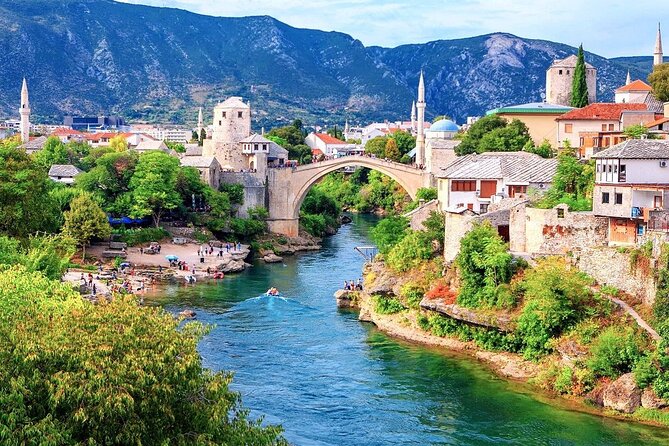
The North Macedonia leg starts in Struga, with a stop by the source of the Drini River, then continues to Ohrid. The city and lake are UNESCO-listed, and the town’s religious landmarks reflect its importance as an Orthodox center. The tour includes a viewpoint near St. John’s Church, St. Nicholas Church and the Halveti Hayati Tekke.
The following day, St. Naum Monastery sits beside the source of the Crni Drim, in Galicica National Park. The route then crosses back into Albania, stopping in Tushemisht and at Drilon National Park, where spring water forms a small lake shaded by weeping willows. These are gentler, more scenic pauses after several days of town walking.
Ohrid gets two days in the schedule, which gives it more room than many stops on the route. Still, the visits are guided and timed, so do not assume you will have an entire day for independent lakeside exploring.
Days 11 and 12: Berat and stone-built Gjirokaster
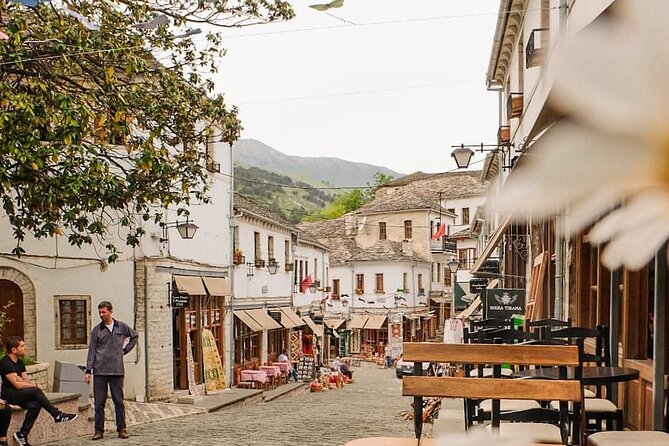
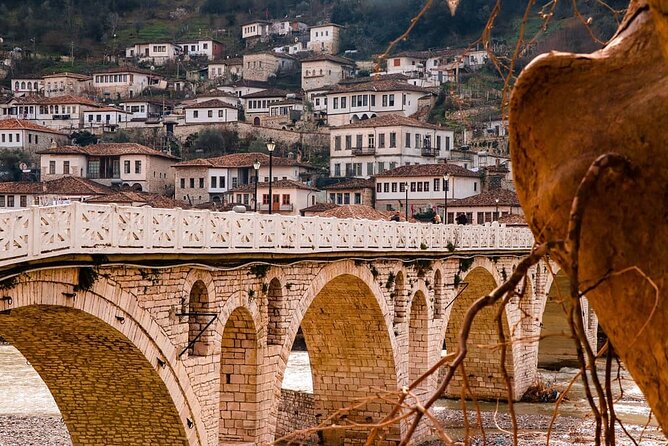
Berat, the town of 1,001 windows, is known for houses climbing the hillside and for residents who still live within the castle walls. You visit Berat Castle, the Onufri Iconographic Museum and Gorica Bridge. Onufri is remembered for a distinctive reddish pigment used in religious painting, adding an artistic note to the architectural tour.
Gjirokaster is another UNESCO-listed Albanian town, with stone streets and houses that resemble small fortresses. The itinerary includes the castle and bazaar, along with a visit to a well-preserved traditional house. Expect slopes and uneven stone underfoot; the old town’s character comes with a little effort in the legs.
These two days are among the strongest for travelers who like historic architecture and local craft shops. The trade-off is that castles, bazaars and museums can begin to blur together after repeated visits. Take time to notice the differences: Berat’s hilltop homes and inhabited castle feel distinct from Gjirokaster’s stone-built streets and fortified houses.
Days 13 and 14: Ioannina, Meteora and the final transfer
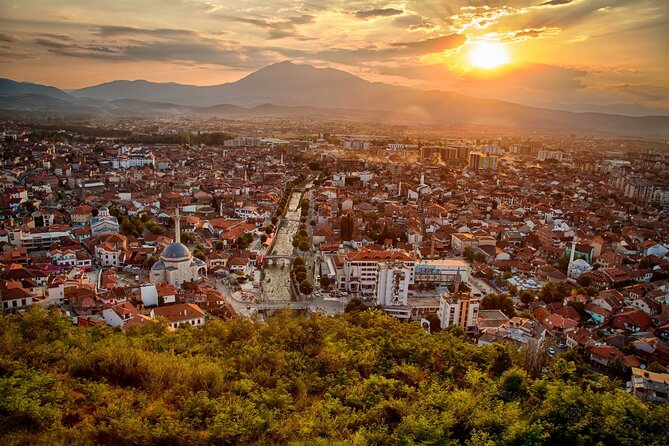
In Greece, Ioannina offers an old town, Byzantine and Ottoman traces, and a castle with narrow streets and historic buildings inside its walls. The visit leaves time to find a café or try local food, though meals remain at your own expense.
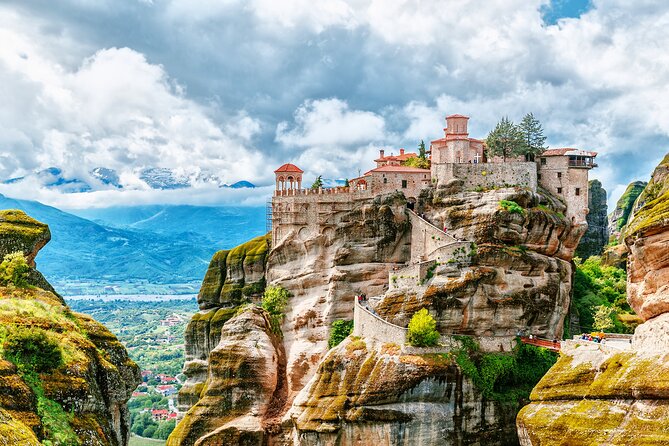
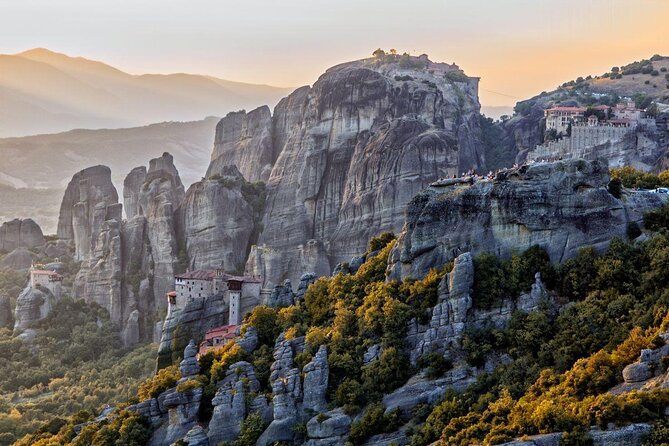
Meteora is the final major sight, with monasteries set atop dramatic rock formations. The itinerary aims for a sunset visit, when changing light brings out the shapes of the rock towers. It is a memorable end to a route full of built heritage, though the scheduled stop is listed as one hour, so ask how that timing works with the drive and sunset.
On day 14, you are transferred to Athens. The alternative is a transfer to Igoumenitsa, followed by a ferry to Corfu, with ferry tickets included. The tour ends in a different place from where it began, so factor onward travel into your plans.
What the price covers, and what it does not
At $5,153.85 per person, this is a substantial purchase. The value comes from covering a complicated route through seven countries with private transport, a tour leader, hotel pickup in Split, 3-star accommodation, 13 breakfasts, site entry tickets listed as included, and the road costs and tourist taxes specified by the operator.
That arrangement can save you time and coordination. You do not need to piece together separate transport between towns or manage every border crossing yourself. The group is capped at 10, which should make day-to-day movement easier than on a large coach, though it does not mean every stop will feel private.
The quoted price is calculated around shared double, twin, triple or quadruple occupancy. Check what room arrangement applies to your booking. Lunches, dinners, drinks, snacks, souvenirs and personal spending are excluded, so the actual trip budget will be higher. Tips are optional, though a gratuity for the tour leader or driver is suggested for good service.
One important detail deserves a direct question before you pay: the supplied tour information also describes a four-day hiking trip from Dubrovnik, with a focus on Valbona Valley and ferry travel on Lake Koman. That is a different experience from the 14-day route described here. The schedule above does not lay out a Valbona hike or Lake Koman ferry. Confirm that the dates, route and activities you are buying are the Split-to-Athens-or-Corfu tour.
The experience is non-refundable and cannot be changed, so do not book until your route and room setup are clear. The tour schedule may also change because of weather, strikes, holidays, closures or other outside events. You are responsible for your own health and travel insurance.
Who should book this Balkan route?
I’d choose this trip if you want a broad introduction to the Balkans and Greece without arranging a new bus, hotel and guide in every country. It suits curious, flexible travelers who enjoy history, food, architecture and changing scenery, and who are comfortable with early starts and frequent transfers.
It is less suited to anyone seeking a slow holiday, a beach-focused stay or a dedicated hiking adventure. The route contains a lot of ground, while individual visits can be short. If the long drive days sound acceptable and you value having logistics handled, the included transport, hotels and breakfasts make the price easier to understand.
Before booking, get written confirmation that your dates follow the 14-day itinerary from Split, ask where the overnight stays are located, and confirm whether your endpoint is Athens or the Igoumenitsa ferry to Corfu. If those details match what you want, this is a practical way to connect a remarkable range of places in one trip.
FAQ
Where does the tour start?
The tour starts in Split, Croatia, with hotel pickup at 7:30 a.m. A local driver takes you to the border, where you meet the tour leader.
Where does the tour end?
You can finish in Athens, or be transferred to Igoumenitsa for an included ferry to Corfu. The activity ends in a different location from its starting point.
How many countries does the route visit?
The route covers Croatia, Bosnia and Herzegovina, Montenegro, Albania, Kosovo, North Macedonia and Greece.
What is included in the price?
Included items are private transport, a professional tour leader, hotel pickup in Split, 3-star accommodation with breakfast, 13 breakfasts, the listed entry tickets, tourist taxes, road costs, petrol and international car insurance. The Corfu option includes ferry tickets.
Are lunches and dinners included?
No. Lunches, dinners, drinks and snacks are not included. You should also budget for souvenirs and other personal spending.
Is this a hiking tour?
The detailed 14-day schedule describes a multi-country road tour with town walks and sightseeing. Other tour information refers to a separate four-day hiking trip from Dubrovnik, so confirm the exact itinerary and activities before booking.
Just reviewed in Split
- Split City Walking Tour★ 5.0 · 5 reviews
- Split City Electric Bike Tour★ 5.0 · 68 reviews
- Split Cooking Class – Afternoon Edition Shared Activity★ 5.0 · 8 reviews
- Marjan Park & Split City Bike Tour★ 5.0 · 51 reviews
- Split: Blue Lagoon & 3 Islands Speedboat Tour – Small group★ 4.5 · 46 reviews
- Split Quest Experience: Discover the City★ 3.5 · 5 reviews
- Split Bike and Wine Experience★ 5.0 · 3 reviews
- Split: Blue Lagoon, Hvar, Brač, 6 Islands Boat Tour – Small Group★ 5.0 · 57 reviews
Split Private Tours, compared.
Private Krka Waterfalls tour with 30min Boat Cruse
Read our review →
Private Blue cave, Mamma Mia and Hvar, 5 islands tour from Split
Read our review →

Private Boat Tour by local expert – Create Your Itinerary
Read our review →
Split airport to Split Private transfer to 8 pax (Door to Door any location)
Read our review →Browse the lists this tour appears in