Review · SPLIT TOURS
Storytelling World War II in Split Tour
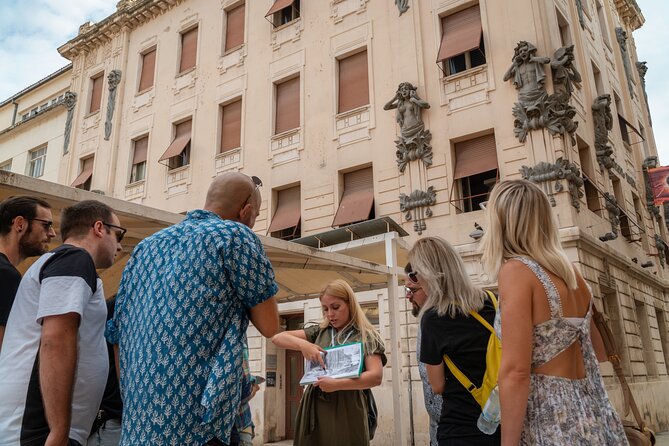
Split’s wartime past can be hard to spot beneath the Roman stonework and café tables. On this two-hour walk, guide Ina Nikolic links WWII events to places you can still visit, using archival photographs to show how familiar streets looked during the conflict.
I like two things in particular: the old photographs make the past tangible, and the route brings the story to ordinary city spaces, not just grand monuments. Ina’s storytelling also connects local events to broader wartime history, with Jewish history and the conflicts of the 1990s among the subjects covered.
One point to consider: this is a stop-and-listen tour, not a brisk walking circuit. You’ll spend time standing as Ina tells each story, so wear comfortable shoes and decide whether a history-focused pace suits you.
- Archival photos at street level: Compare historic images with the Riva, palace, squares, and main streets around you.
- A local WWII story: Learn when and why war came to Split, and how it affected daily life and the city center.
- Seven central stops: The route runs from Split Riva to Prokurative, ending near the promenade.
- Ina Nikolic leads the walk: A licensed local guide who uses stories and visual material to explain the city’s wartime past.
- Small group, about two hours: The group is capped at 15, with free cancellation up to 24 hours before the start.
Why Split’s wartime past is worth a closer look
Split’s old center has a habit of drawing your eyes backward in time. Diocletian’s Palace is the obvious headliner, but this tour asks you to look at the same streets through a more recent lens: occupation, bombing, imprisonment, and the choices people faced during WWII.
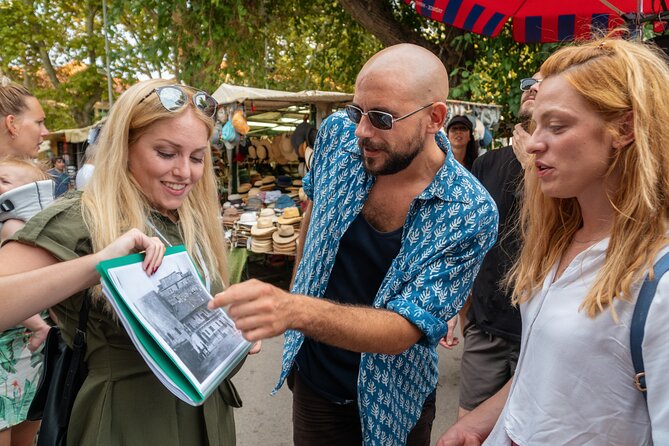
That contrast is the point. You are not entering a dedicated war museum or viewing a preserved battlefield. Instead, Ina tells the story where events unfolded, showing archival photographs as you move through a city that has changed and rebuilt itself. The familiar setting makes the history easier to picture, and the visual comparisons help anchor dates and events to actual corners and buildings.
The tour’s photographs are especially useful because the images come from the Museum of the City of Split’s archive and are not part of its permanent display. Ina has permission to use them. That gives the walk a distinctive tool: you can look at a historic image, then turn to the street in front of you and compare the two.
Expect the emphasis to be on local experience, not a broad survey of every military campaign in Europe. Ina connects Split’s story to the wider war, but the value lies in understanding what happened here and why these particular places matter.
From the Riva to the Green Market
The walk begins at Split Riva, the waterfront promenade at Obala Hrvatskog narodnog preporoda 27. Ina introduces when, where, and why the war began in Split, setting up the local timeline before the group moves inland. The opening stop is listed at about 15 minutes, enough time to establish context without turning the start into a long lecture.
The Riva is a useful place to begin because it gives the group a clear central meeting point and an immediate sense of the city’s public life. You may also be able to arrange a meeting point in central Split that works better for your group. If you are arriving by ferry, pickup details list Trajektna luka Split on Obala kneza Domagoja, but confirm the exact arrangement when booking.
From the waterfront, the route heads to the Green Market. Here, Ina tells the story of what is described as the most horrific bombing in Split. The market is not simply another stop on a sightseeing walk; it gives the wartime story a human scale. A market is part of ordinary life, and learning what happened there can change how you read the city’s everyday spaces.
The stop is about 15 minutes. As with the rest of the tour, the guide’s account and photographs do much of the work. If you prefer tours with constant movement, this pace may feel slow. If you want time to follow the story and ask questions, the pauses are a plus.
More tours in Split:
- Split: Krka Waterfalls Trip with Boat Cruise and Swimming
★ 4.8 · 10,519 reviews - From Split: Krka Waterfalls, Food & Wine Tasting Tour
★ 5.0 · 9,326 reviews - Blue cave, Mamma Mia and Hvar, 5 islands speedboat tour
★ 5.0 · 7,150 reviews
The Silver Gate and Diocletian’s Palace
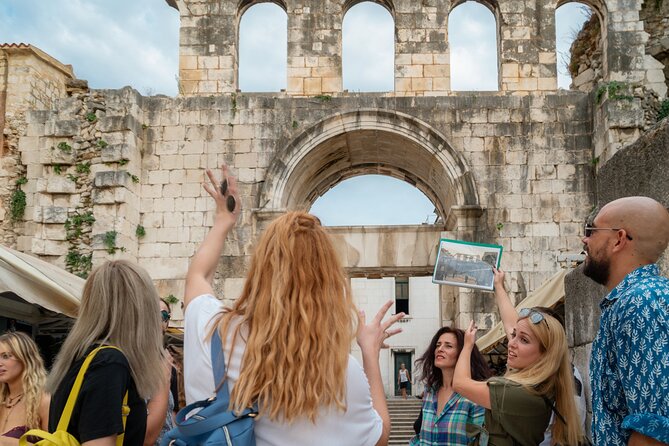
The Eastern, or Silver, Gate is a brief stop, listed at about five minutes. It marks an entrance to Diocletian’s Palace from the east, and gives Ina a chance to connect the old city’s layout with the events she is describing. The stop is short, so think of it as a wayfinding point and historical link rather than a detailed architectural visit.
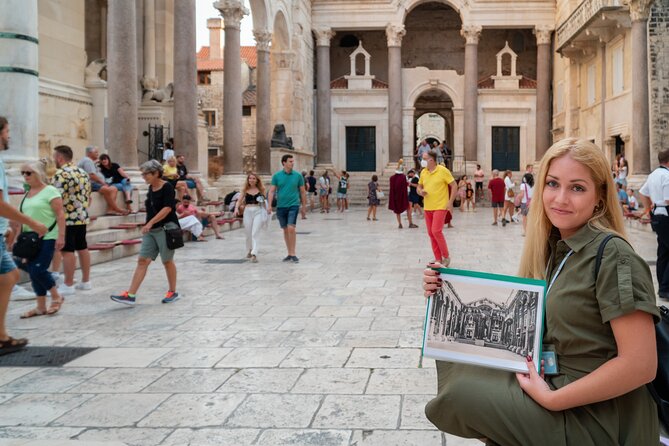
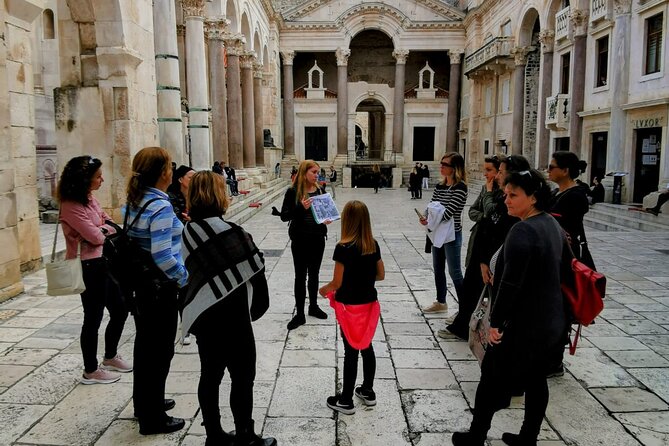
At the Peristyle, the palace’s central courtyard, the group spends about 15 minutes learning which parts of the ancient complex were attacked during the war. The setting makes the tour’s main contrast especially clear: Split’s Roman past did not shield it from modern conflict. A place celebrated for its age and architecture also carries a more recent history of damage.
You may have already seen the Peristyle before taking the tour. That is not a drawback. The photographs give you a different way to look at a familiar monument, and the wartime account can add context you would not get from simply walking through on your own. One useful tip is to take a moment before the tour to notice the courtyard and its surrounding structures. Comparing what you see with the images will make the visual storytelling more rewarding.
This stop also shows why the tour works best for visitors with at least some interest in history. Ina’s talk is the main event; the palace is the setting. If you are mainly seeking a Roman architecture tour, this is not a substitute for one.
Narodni Trg and Marmontova Ulica
Narodni Trg, the main square, is another 15-minute stop. Ina explains the terrible events that took place there during the war, placing a public gathering space within the more difficult story of the occupation and its consequences. The square’s central position helps make the account feel connected to the city’s daily life rather than sealed away in the past.
From there, the group continues along Marmontova Ulica, Split’s main street. The stop is brief, about five minutes, but it reinforces one of the tour’s strongest ideas: wartime history is not confined to a single monument or memorial. Streets that people use every day can also hold stories of fear, loss, resistance, or upheaval.
These stops are close enough to keep the route within the historic center. You will still spend more time listening than covering ground, though. One past participant described the experience as a lot of standing around compared with walking, and that is fair advice for setting expectations. Bring shoes you can stand in, and avoid scheduling this immediately after a long day on your feet if that is likely to bother you.
Ina is also described as welcoming and willing to answer questions. That matters on a subject where details can lead naturally to broader questions about local memory, identity, and the way the city has changed.
Ending at Prokurative
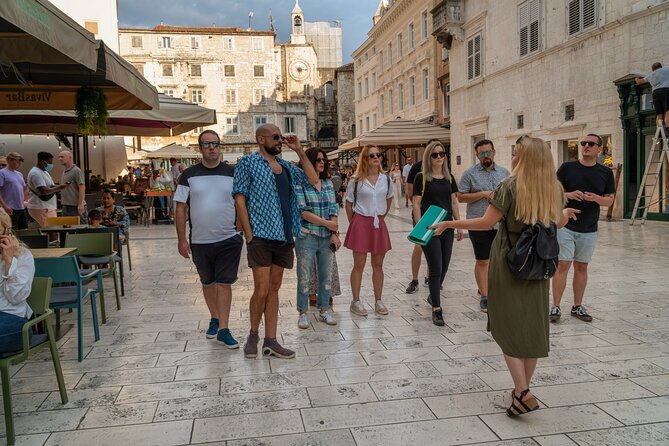
The tour ends at Republic Square, also called Trg Republike or Prokurative, after a final stop of about 15 minutes. Here Ina discusses prisons and executions during the war. It is a weightier end to the walk than a simple return to the waterfront, and it gives the route a clear final chapter.
Prokurative is in the old historic center, close to the promenade, so you can continue exploring or stop for a meal afterward without needing transport. The endpoint is practical as well as atmospheric: you finish in a central area rather than being dropped far from the sights.
The tour’s subjects are not limited to WWII in every telling. Ina has also connected the period to Jewish history and to the wars of the 1990s, helping place the city’s wartime experience within a longer local story. If those topics matter to you, you can ask about them during the walk. The two-hour format still puts a limit on how far any one subject can be explored, so treat the tour as a strong introduction rather than an exhaustive account.
Same coast, a different kind of day:
- From Split: Krka Waterfalls, Food & Wine Tasting Tour
★ 4.9 · 6,598 reviews - Split/Trogir: Blue Cave, Mamma Mia, Hvar and 5 Island Tour
★ 4.6 · 6,320 reviews - Blue Lagoon & 3 Islands Cruise with Lunch from Split
★ 4.5 · 5,756 reviews - Split: Old Town and Diocletian Palace Walking Tour
★ 4.9 · 4,727 reviews
What the $60.01 price buys you
At $60.01 per person, this is not the cheapest way to spend two hours in Split. The question is what you value: you are paying for a licensed local guide, access to archival photographs that are not on permanent museum display, and a focused interpretation of places you can visit independently but may not understand in the same way.
The photographs are a meaningful part of the value. Without them, the route would still offer local stories, but the then-and-now comparisons give the walk a more concrete quality. The guide’s ability to connect each image to a present-day location is what makes this different from reading a general history book before your trip.
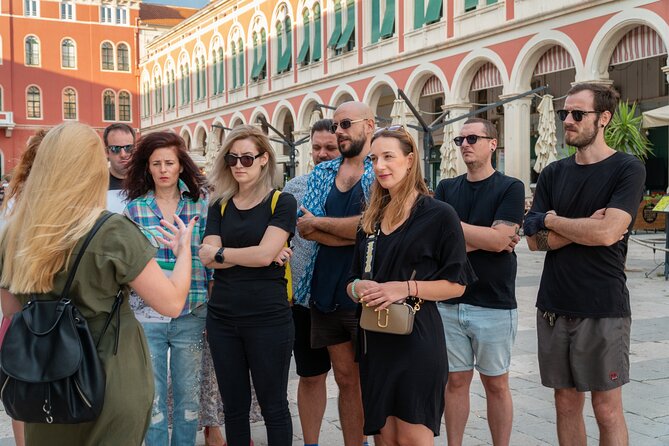
The group limit of 15 is another practical advantage. It is small enough to make questions more manageable than on a large coach tour, though it is not a private experience. Group discounts are offered, which may help if you are booking for several people. The tour is offered in English, and the listed duration is about two hours.
This price makes the most sense if WWII history is a real interest, or if you want to understand Split beyond its Roman landmarks. If you only want a broad orientation to the old town, a general walking tour may suit you better. You can also explore the streets on your own for free, but you will not have Ina’s stories or the archive images to interpret what you are seeing.
Practical details before you book
The tour begins at Obala Hrvatskog narodnog preporoda 27 and ends at Prokurative. A pickup option is listed at Split ferry port, and a flexible central meeting point is offered to suit group members. Confirm the precise meeting arrangement before setting out, especially if you are coordinating several people or arriving by ferry.
The group is limited to 15. Most people can participate, and service animals are allowed. Confirmation is received within 48 hours of booking, subject to availability. The experience is booked an average of 35 days ahead, so if your dates are fixed, it is sensible not to leave the decision until the last minute.
The tour has a free-cancellation window up to 24 hours before its start time. For a full refund, cancel at least 24 hours in advance; changes made later are not accepted, and cancellations within that period are not refunded. The cut-off follows local time.
Should you book Ina’s WWII walk?
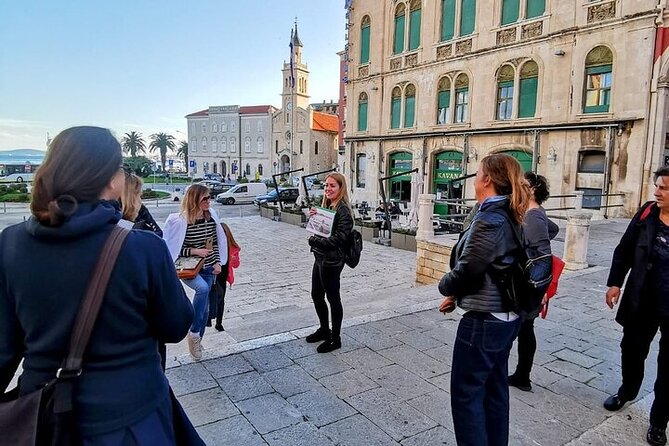
Book this tour if you want to hear how WWII affected Split and prefer stories tied to real streets over a general lecture. Ina’s archival images, local perspective, and willingness to connect wartime events with Jewish history and the 1990s conflicts make the experience especially appealing to history-minded visitors and families with older children.
Skip it if you want a fast-paced walk, a Roman-focused tour, or a deep scholarly treatment of the entire war. The route is compact, and much of the experience involves standing while Ina speaks. But if you can give it two unhurried hours, you will leave with a more layered understanding of the city than its stone facades alone can provide.
FAQ
How long is the tour?
It lasts about two hours.
Where does the tour start and end?
The listed start is Obala Hrvatskog narodnog preporoda 27 in Split. It ends at Prokurative, also called Republic Square or Trg Republike.
Is pickup available?
Pickup is offered, with Split ferry port listed at Obala kneza Domagoja. A flexible meeting point in central Split is also offered.
What language is the tour offered in?
The tour is offered in English.
How large is the group?
The group has a maximum of 15 people.
Can I cancel for a refund?
Yes. You can cancel up to 24 hours before the start time for a full refund. Cancellations made less than 24 hours before the experience are not refunded.
Just reviewed in Split
- Split City Walking Tour★ 5.0 · 5 reviews
- Split City Electric Bike Tour★ 5.0 · 68 reviews
- Split Cooking Class – Afternoon Edition Shared Activity★ 5.0 · 8 reviews
- Marjan Park & Split City Bike Tour★ 5.0 · 51 reviews
- Split: Blue Lagoon & 3 Islands Speedboat Tour – Small group★ 4.5 · 46 reviews
- Split Quest Experience: Discover the City★ 3.5 · 5 reviews
- Split: Blue Lagoon, Hvar, Brač, 6 Islands Boat Tour – Small Group★ 5.0 · 57 reviews
- Private transfer Split Airport to Split★ 5.0 · 28 reviews
Split Tours, compared.

Krka Waterfalls Trip with Boat Cruise and Swimming
Read our review →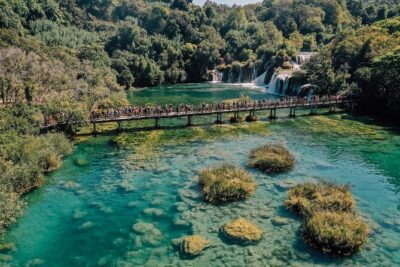
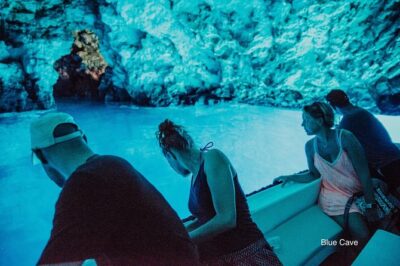
Blue cave, Mamma Mia and Hvar, 5 islands speedboat tour
Read our review →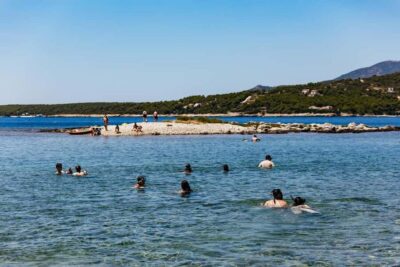
Blue Cave, Mamma Mia, Hvar and 5 Island Tour
Read our review →
Blue Lagoon & 3 Islands Cruise with Lunch from Split
Read our review →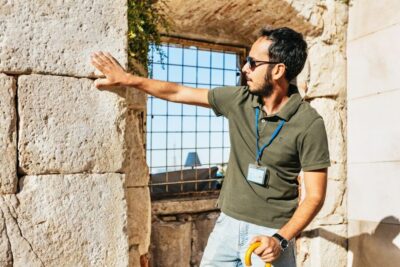

Blue Lagoon Boat Party with DJs, Shots & After Party
Read our review →