
Review · DIOCLETIAN PALACE TOURS
Split: Diocletian’s Palace Private walking tour
Diocletian’s Palace is not a ruin set apart from the city. It is Split’s old centre, where ancient walls frame everyday life. I like that this tour connects key places such as the Peristyle and North Gate to the story of the emperor who built the palace.
I also like the small-group limit and the option to customize the route. One consideration: parts of the site are not wheelchair accessible, and services or events may require changes to the route.
Key points to know
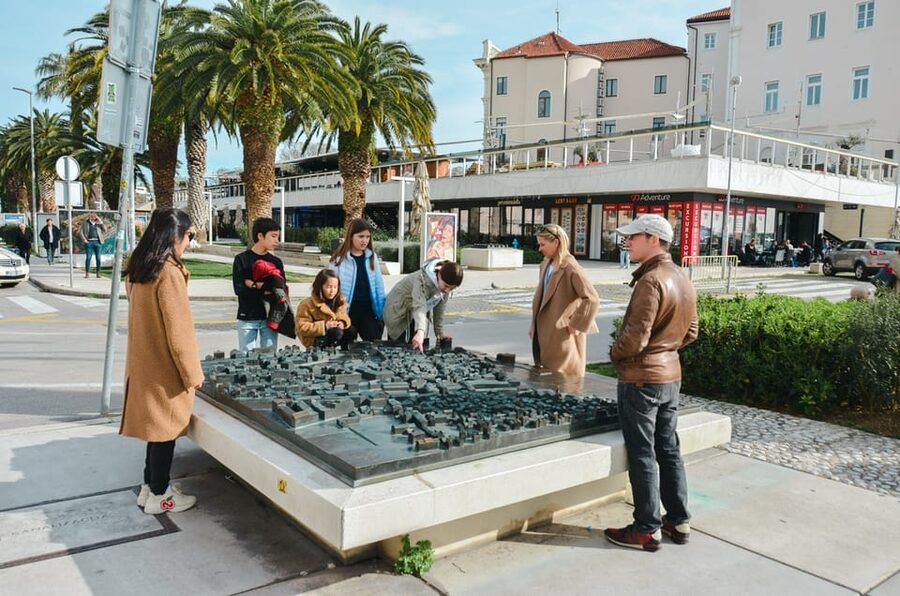
- Start at the bronze city model: Meet at the eastern end of the Riva promenade, then return to the same spot at the end.
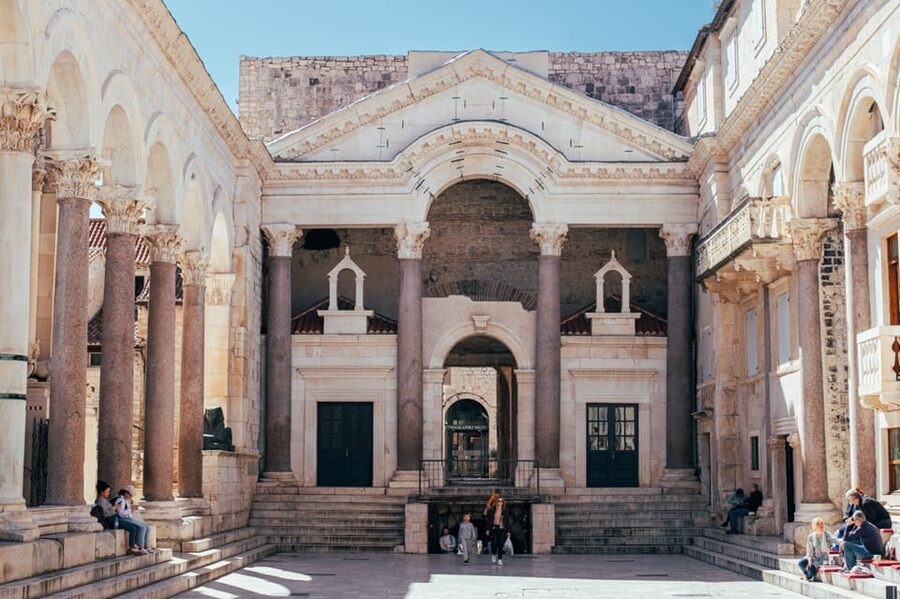
- Stand in the Peristyle: Hear how this ceremonial courtyard presented Diocletian as the son of Jupiter.
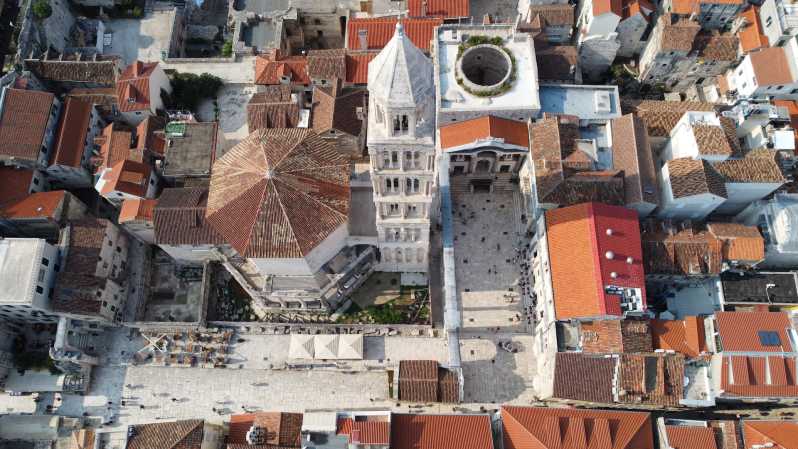
- See a pagan mausoleum become a cathedral: Split Cathedral occupies the building originally made as Diocletian’s tomb.
- Enter the Vestibule: This grand passage led to the emperor’s private quarters.
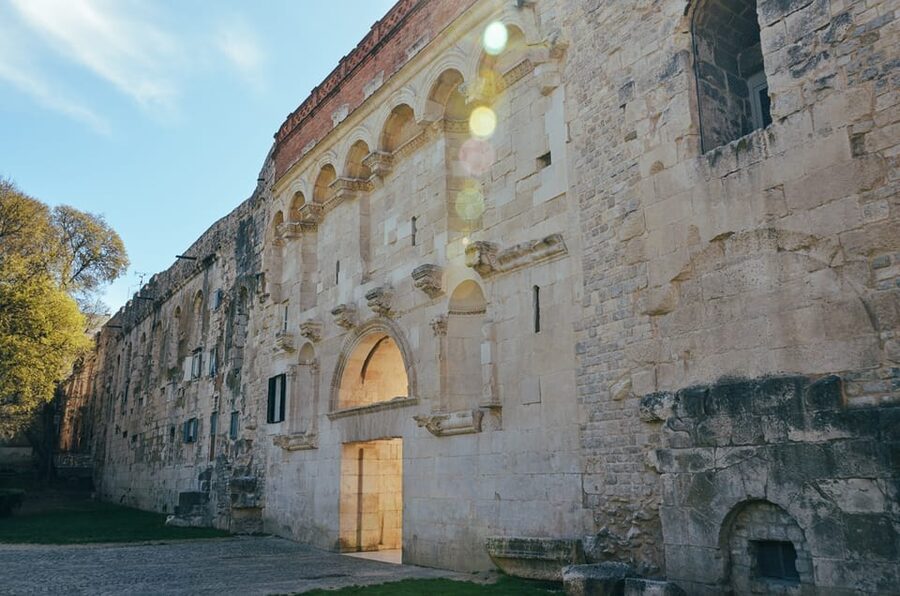
- Find the Golden Gate and St. Martin’s Church: The North Gate was a major Roman entrance, and a small church sits in a former guard corridor.
- Keep the group intimate: The tour is designed for no more than 10 participants and can be adapted to your interests and needs.
A Roman palace that still belongs to Split
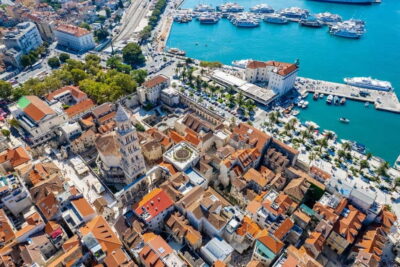
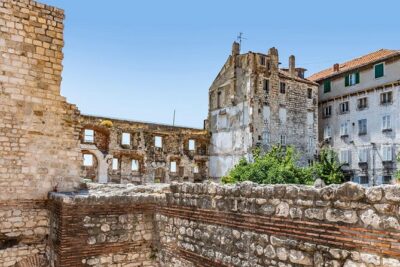
Diocletian’s Palace is about 1,700 years old, but it is not simply an archaeological site. The palace is woven into Split’s centre, and people still live and go about their daily business among its ancient buildings. That makes the walk feel less like a museum visit and more like a lesson in how a Roman complex became part of a modern city.
The setting is the tour’s biggest advantage. You can look at a stretch of old stonework, then see that it is part of the place where local life continues. A guide helps you read the layout and understand what each stop meant, rather than treating the palace as a collection of impressive walls.
This is a walking tour, not a long list of separate attractions. Its main stops trace the transition from imperial residence to the heart of Split: ceremonial space, a former mausoleum, the entrance to the emperor’s private quarters and a key city gate. If you have limited time in the centre, that route gives you a useful first picture of the site.
More walking tours in Split:
- Split: Old Town and Diocletian Palace Walking Tour
★ 4.9 · 4,727 reviews - Walking Tour of Split and Diocletian’s Palace
★ 5.0 · 2,588 reviews - Krka Waterfalls tour with Trogir Walking tour and Krka panoramic boat cruise
★ 5.0 · 1,659 reviews
Meeting on the Riva
The tour begins beside the bronze model of Split at the eastern end of the Riva promenade. This is a practical meeting point: you start near the centre of the action, and the tour finishes back there rather than leaving you across town.
From the outset, you can ask your guide to shape the walk around what interests you. The tour is individually customizable, within the places and conditions available that day. That matters in a complex where a few clear explanations can make the difference between seeing old stone and understanding how the palace worked.
The group limit is 10. That is small enough for questions and conversation, without making the experience feel like a large procession through narrow historic spaces. The tour is described as private, while the stated maximum is 10 participants. If you need to know exactly how your own booking is grouped, confirm that detail before you reserve.
Dana is one guide name associated with the tour. Her style has been described as enthusiastic and personal, which suits a walk that depends on a guide to bring the place to life. Guide assignment is not specified, so ask about Dana if meeting her is important to your plans.
The Peristyle and Diocletian’s public image
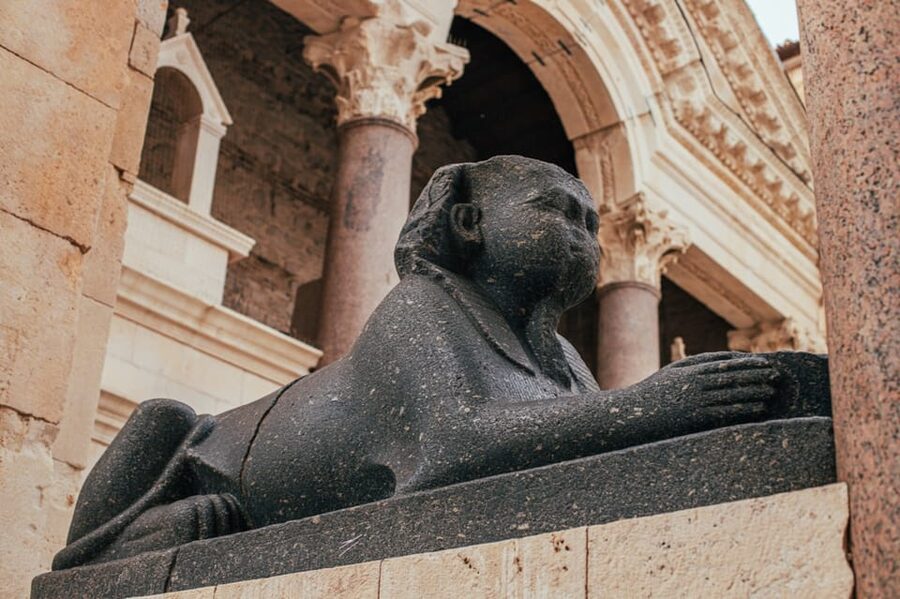
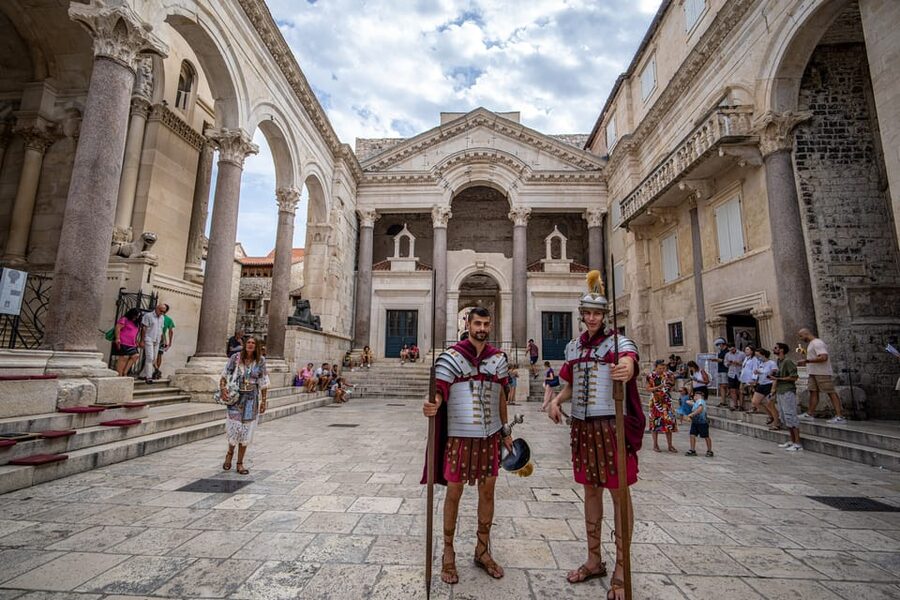
The Peristyle is the natural centrepiece of the walk. In Diocletian’s day, this was an important meeting place and a stage for imperial ceremony. The emperor was worshipped here as the son of Jupiter, a striking reminder that Roman power was presented as more than political authority.
I like this stop because the story is easy to connect to the space. You are not only hearing that Diocletian ruled Rome; you are standing in a place designed to make his status visible. The guide can help explain how the courtyard served as a link between the palace’s public and private worlds.
It is also a useful point to get your bearings. The palace can feel like a maze of passages and courtyards if you arrive without context. A guide can show how the major spaces fit together, then help you spot details you might otherwise pass without noticing.
The Peristyle is an open historic space, not a sealed exhibit. That is part of its appeal, but it also means conditions may vary. Events can affect access or require a change to the planned route, so be ready for a small adjustment rather than expecting every stop to unfold exactly as planned.
Split Cathedral, once Diocletian’s mausoleum
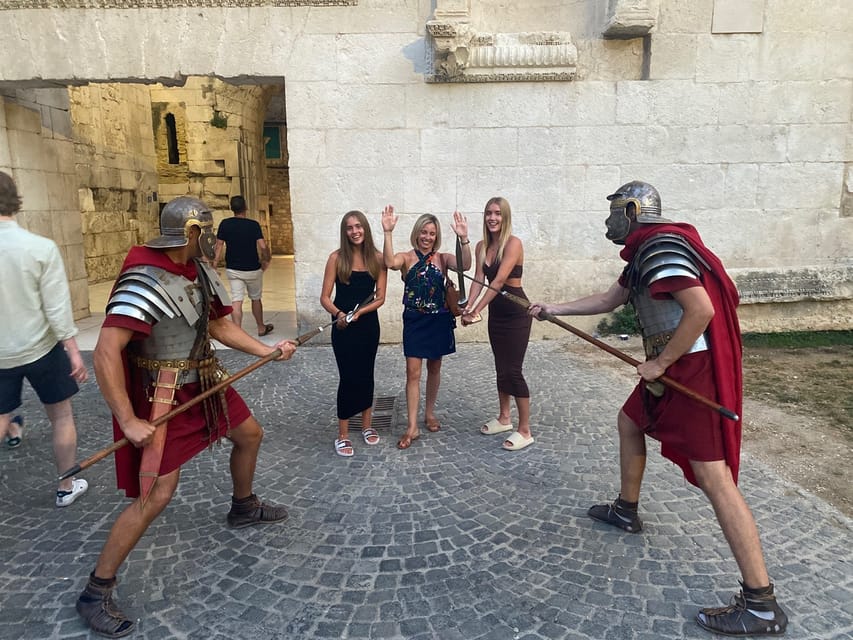
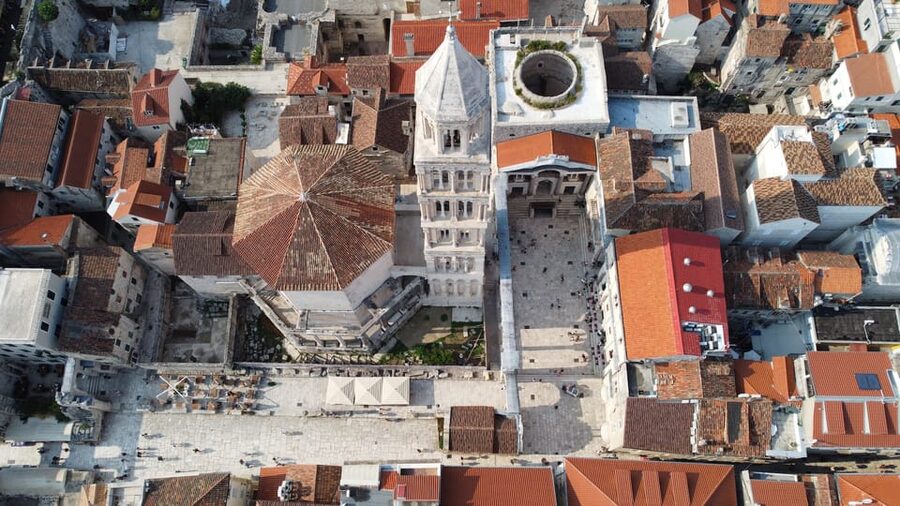
The cathedral’s story turns the palace’s history on its head. The building began as Diocletian’s mausoleum. With the spread of Christianity, the emperor’s remains disappeared, and the structure was converted into a cathedral.
That change gives the stop unusual depth. You see how one building can hold several chapters of the city’s past: an imperial tomb, a structure transformed through Christianization and a cathedral in the centre of Split. The guide focuses on its history and exterior, so do not assume the tour includes access to every interior space.
This is also a good place to notice that the palace was not frozen in its original Roman form. Its buildings changed use as the city changed. If you are interested in how ancient structures survived by being adapted, the cathedral is one of the clearest examples on the route.
Church services may affect access or the order of the walk. The tour can make slight changes when that happens. That is a reasonable trade-off in a living religious site, but it means the visit is not a guarantee of entering every place at every hour.
More Diocletian Palace tours in Split:
- Split & Diocletian’s Palace Walking Tour
★ 5.0 · 1,125 reviews - Split: Diocletian Palace & Old Town Guided Walking Tour
★ 4.7 · 882 reviews - Split: Game of Thrones Tour with Diocletian’s Palace Cellar
★ 4.8 · 545 reviews - Diocletian’s Palace and Old Town SMALL GROUP Walking Tour
★ 5.0 · 502 reviews
The Vestibule and the emperor’s private quarters
The Vestibule served as the grand entrance to Diocletian’s private chambers. The distinction between public ceremony and private life is part of what makes this stop useful. After the open, formal setting of the Peristyle, the Vestibule points toward the emperor’s personal domain.
A guide can help you picture how important the transition would have been. Dignitaries arriving from across the empire were welcomed through this impressive space before reaching the emperor’s quarters. The building’s purpose was not merely practical: its grand entrance helped communicate power and status.
The Vestibule is a good moment to ask how the palace was organized and how its spaces related to one another. The tour’s value lies partly in those connections. You are not only visiting individual landmarks; you are learning how the complex worked as a residence and seat of imperial authority.
The tour information does not specify how long the walk lasts or how much time is spent at each stop. If you have a tight schedule, ask the operator for the expected duration before booking. That will help you plan around meals, other visits or a departure time.
The North Gate and the little church in the old guard corridor
The North Gate, also known as the Golden Gate or Porta Aurea, was the most important city gate in the Roman era. It gives the tour a useful change of scale: after the inner palace spaces, you can consider how people entered the complex and how its major access points shaped movement through the city.
The gate’s name and architectural role make it one of the route’s most recognizable landmarks. A guide can set it in context as an entrance to the Roman palace, not just a photogenic old doorway. That explanation helps you see the palace as a functioning complex with routes and thresholds.
Inside a former guard corridor stands the Church of St. Martin, described as the city’s smallest church. Its location is the surprise: a modest place of worship occupies a space once tied to the gate’s defence. The contrast adds a human-scale detail to the grander imperial story.
This stop is also a reminder that the palace has accumulated different uses over time. The best way to approach it is with curiosity rather than expecting every site to look as it did in Diocletian’s day. The tour is about tracing those changes, not seeing a perfectly preserved Roman world.
What the private format is worth
The price is $135 per person. That is a significant cost for a walking tour, so the value depends on what you want from your time in Split. You are paying for a guide-led route through a complex historic centre, a group capped at 10 and the chance to tailor the walk, rather than simply following a fixed route on your own.
I see the strongest value for first-time visitors who want to understand the palace quickly. One participant described the tour as a good way to see the highlights, learn a lot and get the lay of the land in the city centre. That is a practical benefit: the walk can help you make sense of the area before exploring further on your own.
The guide is central to that value. Dana has been praised for an enthusiastic approach, and an engaging guide can make the palace’s layered history easier to follow. Still, a guide’s presence does not mean every attraction is included or that every interior will be open. The listed stops emphasize the palace’s principal outdoor and architectural spaces.
For a group of friends or family, the small maximum may make the price easier to justify, especially if everyone wants context and the option to ask questions. If you prefer to wander without a guide, or only want a quick look at the main sights, you may not need a private tour at this price. The decision turns on how much you value interpretation and a guided introduction.
Who should book this walk

I would consider this tour if you are visiting Split for the first time and want a clear introduction to the old centre. It is particularly useful if Roman history interests you, but you do not want to study a map and try to reconstruct the palace’s purpose by yourself.
It also suits people who like to ask questions and prefer a smaller group. The maximum of 10 makes conversation more practical than on a large group walk, and the customizable format gives you a chance to flag particular interests or needs in advance.
If mobility is a concern, contact the provider before booking. The site is only partly wheelchair accessible, but the route can be adapted to participants’ needs when the guide is informed ahead of time. The exact accessible route is not specified, so explain what you need rather than assuming every stop can be reached.
You should also allow for changes if a church service or event affects access. The program may shift slightly, but that flexibility is part of visiting a living historic centre. If your plans require a fixed route or guaranteed entry to particular interiors, check those details before paying.
Should you book it?
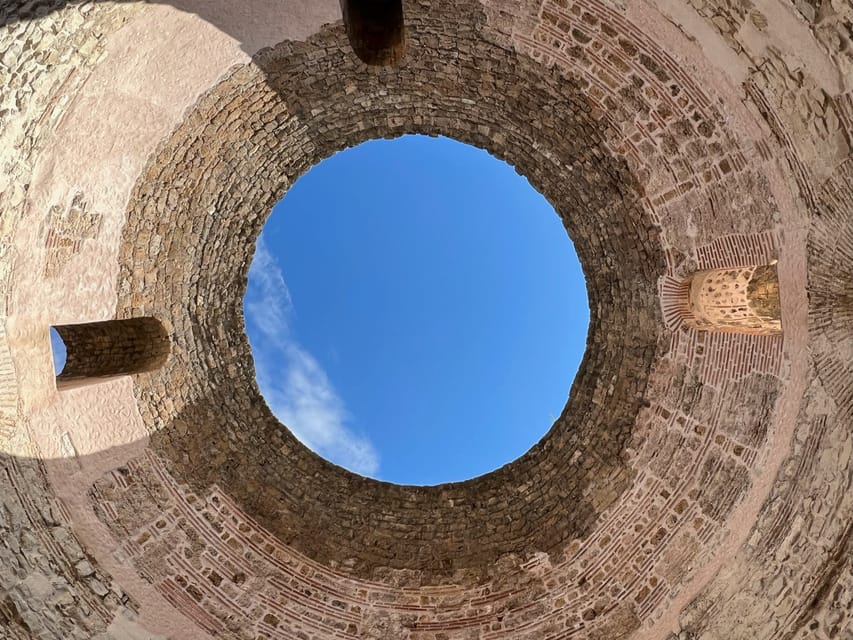
Book this walk if you want more than a quick look at the palace’s stones. Its best features are the central route, the guide’s explanations and the chance to see how Roman architecture remains part of Split’s everyday setting. The Peristyle, former mausoleum, Vestibule and Golden Gate provide a strong framework for understanding the place.
At $135 per person, it makes the most sense for visitors who value a personal, small-group introduction and expect to ask questions. If you mainly want to stroll at your own pace, consider exploring independently instead. For a focused first visit, this is a useful way to get oriented, with the sensible caveat that events, services and access needs can alter the route.
FAQ
Where does the tour start and finish?
It starts at the bronze model of Split at the eastern end of the Riva promenade. It ends back at the same meeting point.
How many people can take part?
The tour is designed for a maximum of 10 participants.
Which languages are offered?
The tour is offered in English, French and German.
Can the route be customized?
Yes. The tour is described as individually customizable. Tell the provider in advance about any specific interests or needs.
Is the tour wheelchair accessible?
The site is only partly wheelchair accessible. The route can be adapted to special needs, so inform the provider in advance.
Can church services or events change the tour?
Yes. Some sights may not be accessible during events or church services, and the program may be adjusted slightly.
What is the cancellation policy?
You can cancel up to 24 hours in advance for a full refund. Booking with the reserve-and-pay-later option requires no payment today.
More private tours in Split
- SPLIT-PRIVATE Walking Tour of Diocletian’s Palace & Old Town
★ 5.0 · 467 reviews - Private Krka Waterfalls tour with 30min Boat Cruse
★ 4.0 · 458 reviews - Split by Private Electric Rickshaw – Palace & Hidden Gems
★ 5.0 · 412 reviews - Private Blue cave, Mamma Mia and Hvar, 5 islands tour from Split
★ 5.0 · 387 reviews
Just reviewed in Split
- Split City Walking Tour★ 5.0 · 5 reviews
- Split City Electric Bike Tour★ 5.0 · 68 reviews
- Split Cooking Class – Afternoon Edition Shared Activity★ 5.0 · 8 reviews
- Marjan Park & Split City Bike Tour★ 5.0 · 51 reviews
- Split: Blue Lagoon & 3 Islands Speedboat Tour – Small group★ 4.5 · 46 reviews
- Split Quest Experience: Discover the City★ 3.5 · 5 reviews
- Split: Blue Lagoon, Hvar, Brač, 6 Islands Boat Tour – Small Group★ 5.0 · 57 reviews
- Private transfer Split Airport to Split★ 5.0 · 28 reviews
Diocletian Palace Tours, compared.
Walking Tour of Split and Diocletian’s Palace
Read our review →
Game of Thrones Tour with Diocletian’s Palace Cellar
Read our review →
Game of Thrones Small group Tour with Diocletian’s Cellar
Read our review →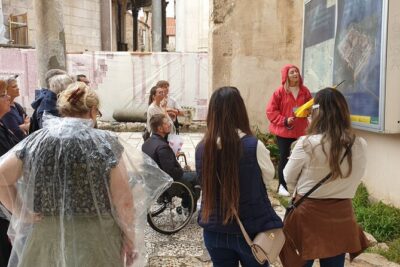
History & Cultural Walking Tour of Split and Diocletian’s Palace
Read our review →Browse the lists this tour appears in