
Review · SPLIT PRIVATE TOURS
Salona & Amphitheater – Private guided tour – Admission incl.
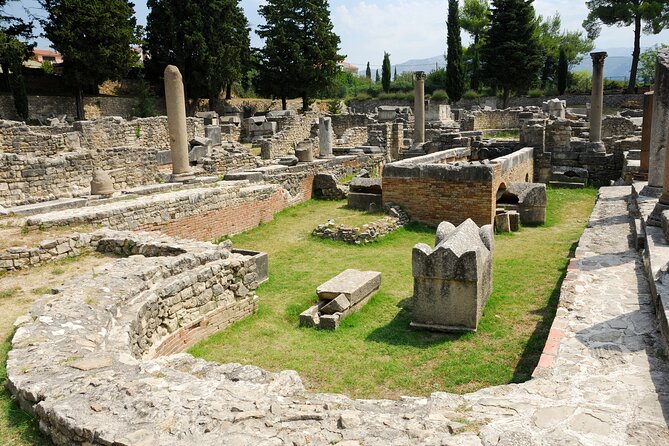
Salona’s scale is the surprise: this was once a Roman city of about 60,000 people, and its remains still stretch across a broad open-air site near Split. On this private walking tour, you follow its story from the old city gate to the amphitheater, with early Christian burial grounds and public buildings along the way.
I like two things in particular: the range of sites, which connects everyday Roman life with the later Christian period, and the private format, which gives your group a guide’s attention rather than a fixed large-group pace. One visitor singles out Ivan as a pleasant companion who knew the site well, a useful sign of the kind of personal guiding this tour can offer.
The main consideration is the admission wording. The tour name says admission is included, but the Salona stop details put the adult entrance fee at about €10 and mark it as not included. Ask the operator to confirm what you’ll pay at the gate before you book.
What to know before you go
- Salona’s Roman gate still shows chariot ruts, a small but vivid trace of traffic through the ancient city.
- The route takes in cemeteries and basilicas as well as civic ruins, so you see how the city changed after Christianity became legal.
- The amphitheater gets the longest stop, about 30 minutes, and is the tour’s main finale.
- It’s a private tour for your group only, with an English-speaking guide and an approximate duration of 2 hours 30 minutes.
- The tour begins and ends at Salona’s main entrance, not in central Split.
- Check the admission fee before booking: the title and stop details give conflicting signals about whether the roughly €10 adult entry is covered.
Salona is more than a Roman ruin stop
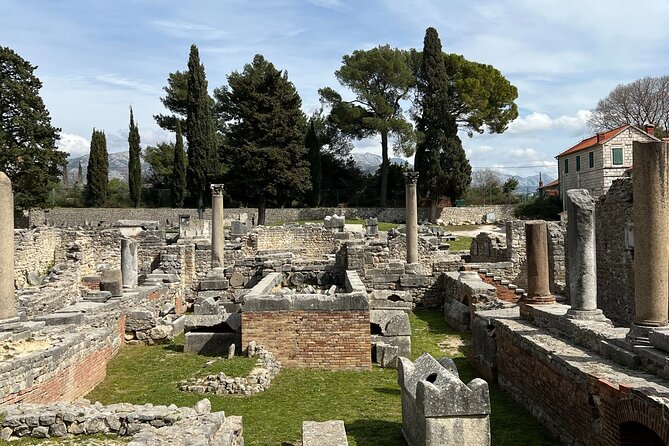
Salona lies in Solin, just beyond Split, and this guided walk makes sense of a site that can otherwise feel like a scattered collection of foundations. The Roman city had an estimated 60,000 residents before it was destroyed by the Avars in the sixth century. That figure gives you a useful frame: you are not looking at a small outpost, but at the remains of a major urban center.
The tour is built around walking between its different parts. Instead of spending the whole visit at one dramatic monument, you move through burial grounds, religious buildings, baths, industrial remains, a gate, and the amphitheater. The variety helps you picture how a city worked, and how its purpose changed over time.
A guide matters here. Much of what you see is at foundation level, and the site’s significance is not always obvious from the stones alone. One visitor specifically praised Ivan as a pleasant companion who knew the place well. That is the sort of practical help that can turn a walk among ruins into a clearer story, though the details and style will depend on your guide.
More private tours in Split:
- SPLIT-PRIVATE Walking Tour of Diocletian’s Palace & Old Town
★ 5.0 · 467 reviews - Private Krka Waterfalls tour with 30min Boat Cruse
★ 4.0 · 458 reviews - Split by Private Electric Rickshaw – Palace & Hidden Gems
★ 5.0 · 412 reviews
The first cemetery and Tusculum
The first named stop is Manastirine, a burial ground used in Roman times and later as a Christian cemetery. It is associated with St. Dominius, the martyr regarded as Split’s city patron. This is a useful early stop because it introduces the shift from Roman civic life to Christian worship and burial traditions.
The scheduled visit is about 15 minutes, so expect an overview rather than a long, quiet exploration. If you want time to take photographs or look closely at individual remains, ask your guide how much flexibility the private format allows. The tour description does not specify a separate admission charge for this stop.
Next comes Tusculum, built by Don Frane Bulić, a clergyman and archaeologist from Split. He used it as an office and meeting place, and some rooms can be visited. That detail gives the site a more recent human connection: it was not only an archaeological stop, but also part of the work of studying and preserving Salona.
The planned visit is 15 minutes. Some rooms being open is a welcome change from looking only at outdoor foundations, but the information provided does not say which rooms are accessible on the day or how much time is spent inside. Treat this as a concise stop within a larger route, not a full museum visit.
Episcopal buildings and the Roman baths
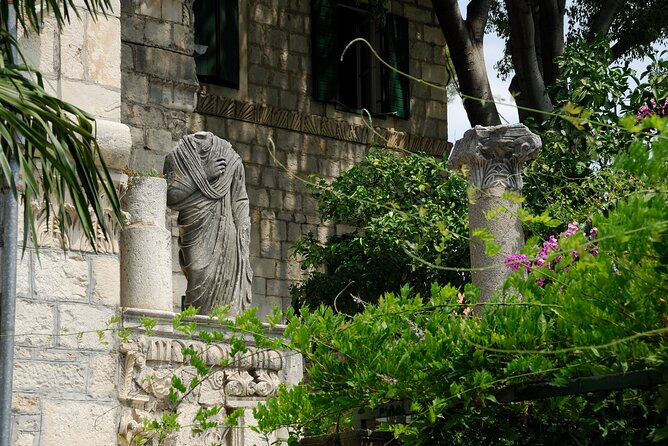
At the remains of the bishop’s palace, you see foundations tied to the period when Christians could practice their religion openly. Two cathedral structures once stood here; today, only their foundation walls remain. Their modest appearance makes a guide’s explanation especially useful, since the shape of a building can be hard to read when only its lower courses survive.
The tour allows about 15 minutes here. I like the way this stop adds a civic and religious layer to the route: Salona’s story is not limited to emperors, roads, and arenas. The buildings also point to a community organizing around its faith.
The large urban spa offers a different angle. Roman baths served for several centuries and were a center of social and cultural life. They were more than a place to wash; they were part of the city’s public routine. You have about 10 minutes at the remains, enough for a short explanation and a look around, but not a leisurely visit.
This is one of the stops where expectations matter. You are seeing the remains of a complex, not a functioning bathhouse or a fully reconstructed interior. The value is in understanding what the baths meant to daily life and how public spaces helped hold a Roman city together.
Five bridges, a gate, and the old center
Pet mostova, or Five Bridges, belonged to an industrial area outside the old city center. The stop lasts about 10 minutes. It adds a practical note to the tour: Salona was not just a place of temples and public monuments, but also a working city with activity at its edges.
The Town Gate, Porta Caesarea, was the capital gate in Roman times. Look for the ruts left by Roman chariots, still visible in the stone. They are among the route’s most tangible details: a worn track gives you a direct connection to the repeated movement of people and vehicles through the entrance.
You have roughly 10 minutes at the gate. It is a short stop, but the ruts are the sort of detail worth slowing down for. If your guide moves quickly, ask where to look before you leave.
In the oldest part of Salona, the remains include the forum, a temple, and an ancient Roman theater. The scheduled visit is about 10 minutes. Again, the remains are not presented as a complete, polished monument. They reward a little imagination and a guide who can explain how these spaces fitted into the city.
Taken together, these stops make the route more varied than a simple march to the amphitheater. You see evidence of entry, work, public gatherings, worship, and bathing. The trade-off is that each stop is brief, so this tour suits you best if you want a broad, guided introduction rather than extended time at every structure.
More guided tours in Split:
- From Split: Plitvice Lakes National Park Guided Tour
★ 5.0 · 3,002 reviews - From Split: Plitvice Lakes Guided Tour with Entry Tickets
★ 4.9 · 2,468 reviews - From Split: Plitvice Lakes National Park Guided Tour
★ 5.0 · 2,355 reviews - Plitvice Lakes National Park Guided Day Tour from Split
★ 5.0 · 1,948 reviews
Cemeteries on the road to the amphitheater
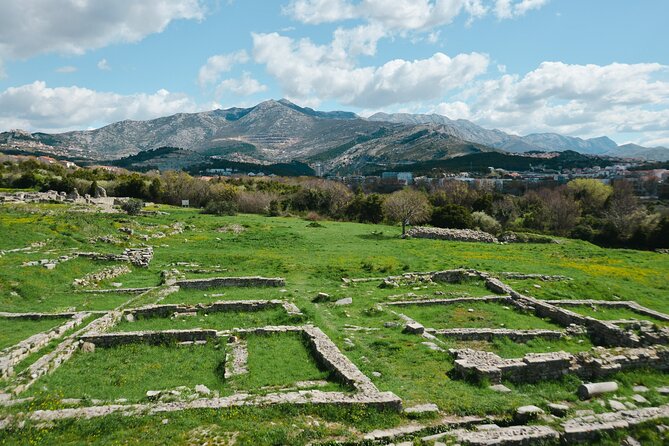
The Cemetery of the 16 Sarcophagi lies beside the road leading toward the amphitheater. Roman cemeteries were built outside city walls, and this necropolis gives you a clear example of that practice. The stop is about 10 minutes.
The location helps explain the route itself. You are not jumping from one isolated attraction to another; you are following a path through parts of the ancient city, including the places where residents buried their dead beyond the walls. The cemetery’s position beside the road also makes the transition toward the amphitheater feel connected to the wider city.
At Kapljuc, you see another basilica and necropolis. Five martyrs who died in Salona’s amphitheater during the early fourth-century persecution of Christians under Diocletian were buried here. That connection gives the stop particular weight: the burial place and the arena are linked not just by geography, but by the people whose deaths became part of Salona’s Christian memory.
The visit is scheduled for about 10 minutes. It is a compact stop, but it sets up the amphitheater well. By the time you reach the arena, you have seen how the site preserves both Roman civic life and the later memory of those who suffered there.
The amphitheater is the final act
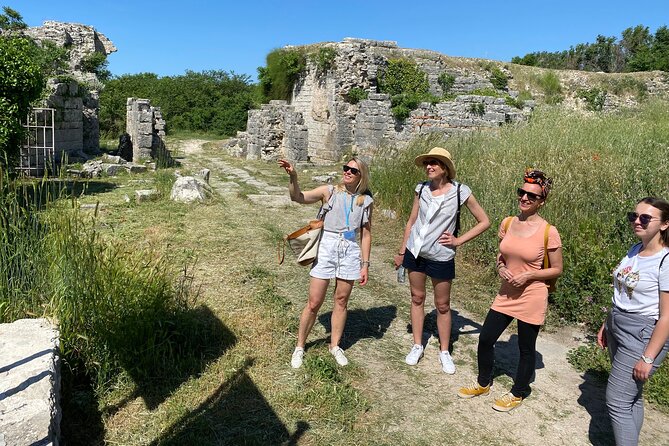
The amphitheater is the tour’s main highlight, with about 30 minutes set aside for it. It is relatively well preserved, though much of its stone was removed by the Venetians to build churches in Venice. That history of reuse is a reminder that ancient buildings did not always survive as protected monuments; their materials were valuable and often carried off for new construction.
The longer stop gives you more time to take in the structure than you get at most points along the route. You can use that time to look at the surviving form and consider how the arena relates to the surrounding city. The tour details do not specify whether you enter particular sections, so ask your guide what areas are open during your visit.
There is also a sobering connection between the amphitheater and the martyrs buried at Kapljuc. The arena was not only a public venue; it was also the place where five Christians died during the persecution under Diocletian. That link gives the final stop a more complicated meaning than spectacle alone.
What the private format and price mean
The price is listed at $203.50 per person for a private tour, lasting about 2 hours 30 minutes. Only your group joins, so you are not sharing the guide with strangers. That can be good value if you are traveling with family or friends and want to ask questions, adjust your pace, or focus on particular parts of Salona. For one person or a small party, the per-person price is a larger commitment for a relatively short tour.
The route covers 11 stops, with time ranging from about 10 minutes at several sites to 30 minutes at the amphitheater. The total planned stop time adds up to 2 hours 30 minutes, so the schedule appears tightly organized. The private format may offer some flexibility, but the tour information does not promise extra time or a slower pace.
Admission needs a direct check. The tour name says admission is included, while the Salona stop lists an adult entrance fee of about €10 and marks the ticket as not included. Since Salona is the first and central stop, clarify this with Split Guide before you pay, and ask whether the stated amount applies to your visit.
The tour is offered in English and uses a mobile ticket. It meets at Salona’s main entrance at Ul. don Frane Bulića 58 in Solin and returns to the same place. Public transportation is nearby, but no transportation from central Split is specified, so plan how you will get to the meeting point.
Who should book this walk
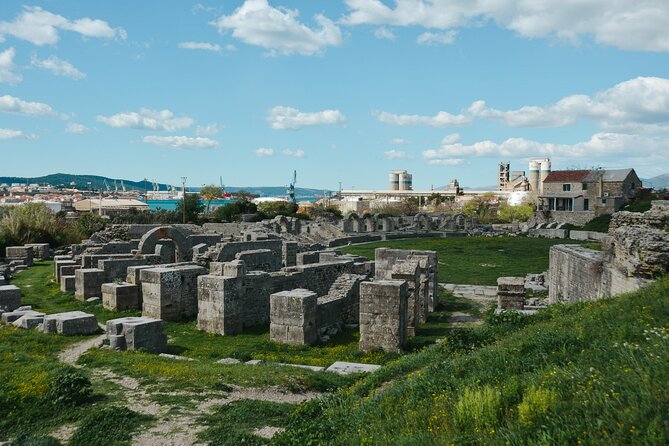
I would choose this tour if you want a guided introduction to Roman Salona and prefer a focused visit with a private guide. It is especially suitable if you are interested in Roman urban life, early Christian sites, or the way a city’s purpose changes across centuries. The route brings together enough different kinds of remains to give you a useful overview in one visit.
It may be less suited to you if you want a slow archaeological study, long time at each location, or a tour that starts in central Split. The itinerary has many short stops, and the meeting point is at Salona itself. If you have mobility or pace concerns, the tour information says most people can participate but gives no detailed walking-surface or accessibility information, so check with the operator.
The excellent overall rating is encouraging, though it is based on only eight ratings. The one specific comment available praises Ivan’s knowledge and easy company. That is a positive sign for a guided visit where context matters, but it is not a guarantee that every departure has the same guide.
Should you book?
Book if you want a private, English-language walk through Salona’s Roman and early Christian remains, and you value a guide’s explanations more than long free time at each ruin. The amphitheater, chariot ruts, and cemetery sites make a strong sequence, while the private format can make the visit feel more personal.
Before booking, settle two practical questions: whether the roughly €10 adult entrance fee is included, and how you will reach the entrance in Solin. If those details work for you, this is a compact way to see far more than the arena alone.
FAQ
How long does the tour last?
It lasts approximately 2 hours and 30 minutes.
Where does the tour start and end?
It starts at Salona’s main entrance, Ul. don Frane Bulića 58, in Solin, Croatia, and ends back at the same meeting point.
Is the tour private?
Yes. Only your group participates.
What language is the tour offered in?
The tour is offered in English.
Is Salona admission included in the price?
The tour title says admission is included, but the Salona stop details list an adult entrance fee of about €10 and mark the ticket as not included. Confirm the current arrangement with the operator before booking.
Can I cancel for a full refund?
Yes, if you cancel at least 24 hours before the experience’s start time. Cancellations made less than 24 hours before the start are not refunded.
Just reviewed in Split
- Split City Walking Tour★ 5.0 · 5 reviews
- Split City Electric Bike Tour★ 5.0 · 68 reviews
- Split Cooking Class – Afternoon Edition Shared Activity★ 5.0 · 8 reviews
- Marjan Park & Split City Bike Tour★ 5.0 · 51 reviews
- Split: Blue Lagoon & 3 Islands Speedboat Tour – Small group★ 4.5 · 46 reviews
- Split Quest Experience: Discover the City★ 3.5 · 5 reviews
- Split: Blue Lagoon, Hvar, Brač, 6 Islands Boat Tour – Small Group★ 5.0 · 57 reviews
- Private transfer Split Airport to Split★ 5.0 · 28 reviews
Split Private Tours, compared.
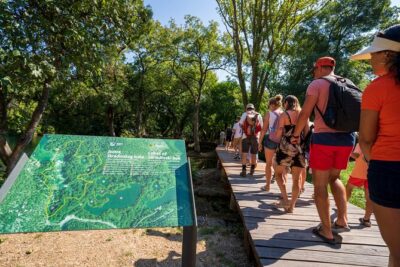
Private Krka Waterfalls tour with 30min Boat Cruse
Read our review →
Private Blue cave, Mamma Mia and Hvar, 5 islands tour from Split
Read our review →

Private Boat Tour by local expert – Create Your Itinerary
Read our review →
Split airport to Split Private transfer to 8 pax (Door to Door any location)
Read our review →Browse the lists this tour appears in