
Review · SPLIT MUSEUMS
Split: Museum of Illusions Entrance Ticket
In Split’s Museum of Illusions, your eyes may insist that water is flowing uphill or that a friend has suddenly grown taller. I like the hands-on visual tricks, which turn perception into a game, and the playrooms, where puzzles add a more thoughtful challenge.
One consideration: the museum’s captions are offered in English, German, Italian, and Croatian, but not French. A French-speaking visitor specifically wished for French explanations, so check the available languages if you want text to accompany each illusion.
Key points to know
- Try the size-changing photo setup: One installation makes people appear larger or smaller, a fun choice if you want a playful picture.
- Look closely at the optical tricks: The exhibits play with perspective, mirrors, and your brain’s interpretation of what your eyes see.
- Make time for the puzzles: The playrooms offer games and challenges alongside the larger visual installations.
- Expect a learning element: The illusions are entertainment, but they also introduce ideas about vision, perception, the brain, and science.
- Bring a camera: Several effects are made to be seen and photographed, though the supplied details do not specify photography rules for individual exhibits.
When your eyes disagree with your brain
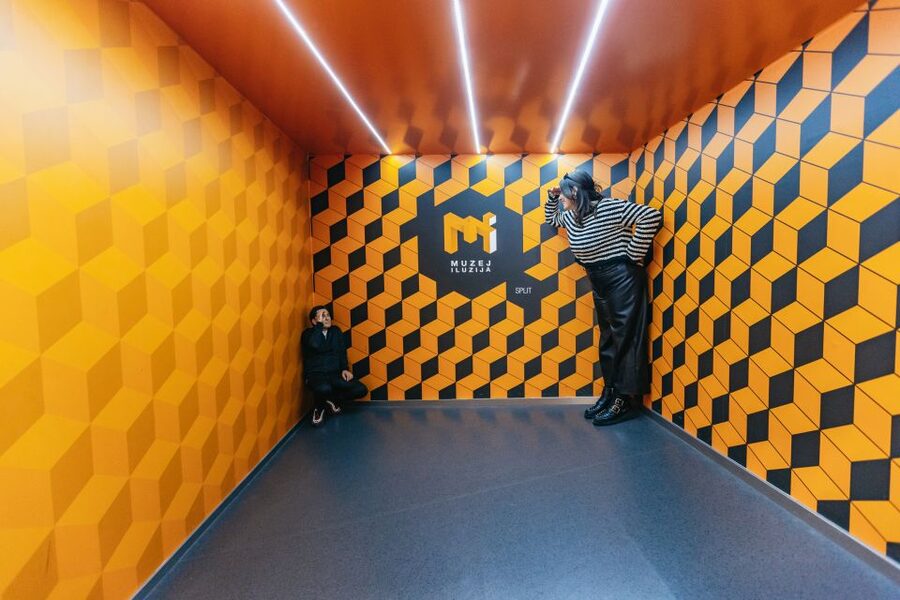
The appeal of the Museum of Illusions is immediate: you can watch something that seems impossible, then try to work out why your senses have been fooled. A room where water appears to flow uphill makes a simple point in a memorable way. What you see is not always a direct report of what is happening.
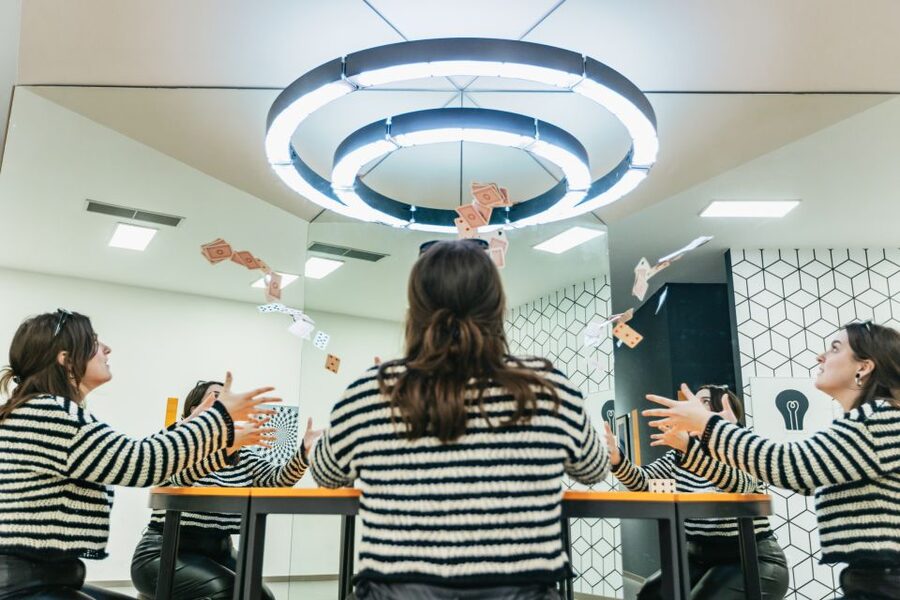
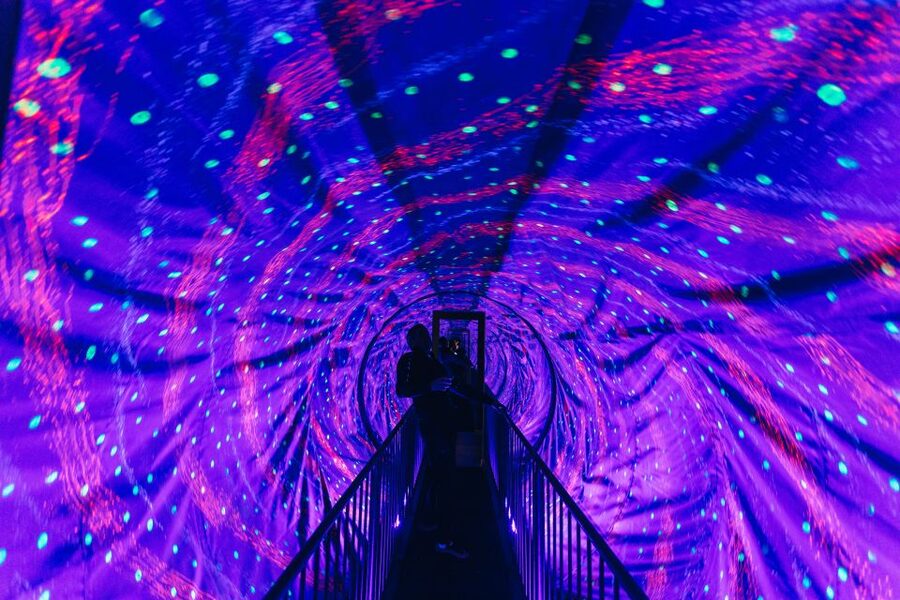
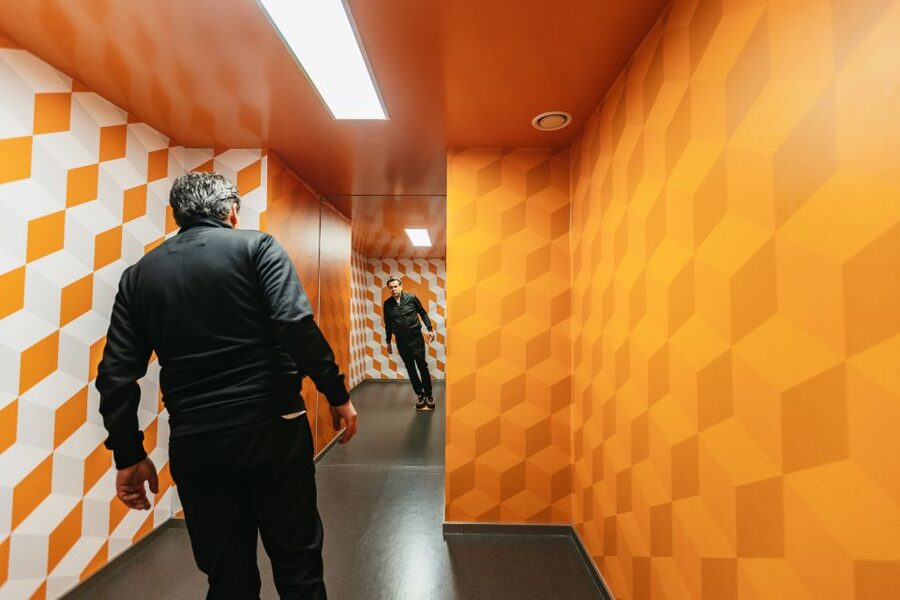
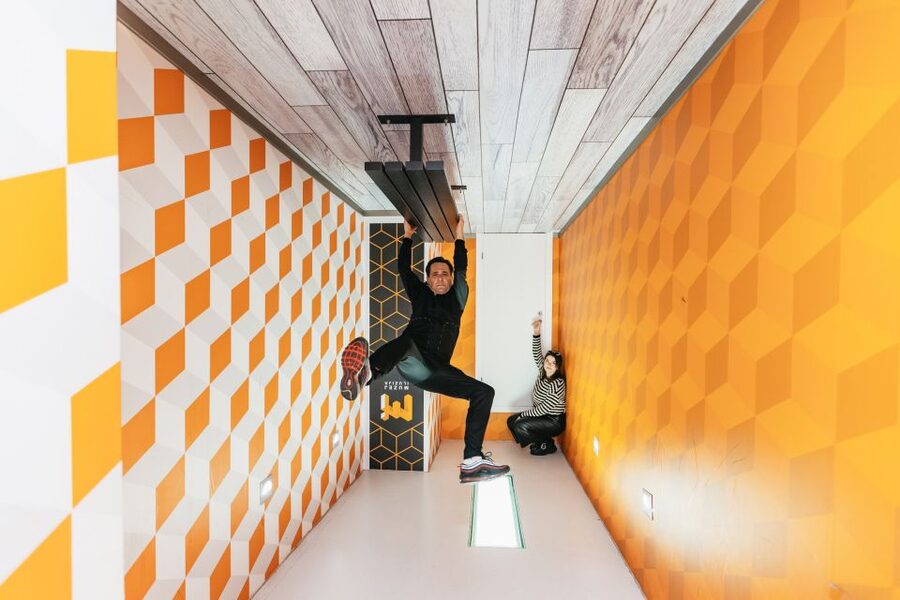
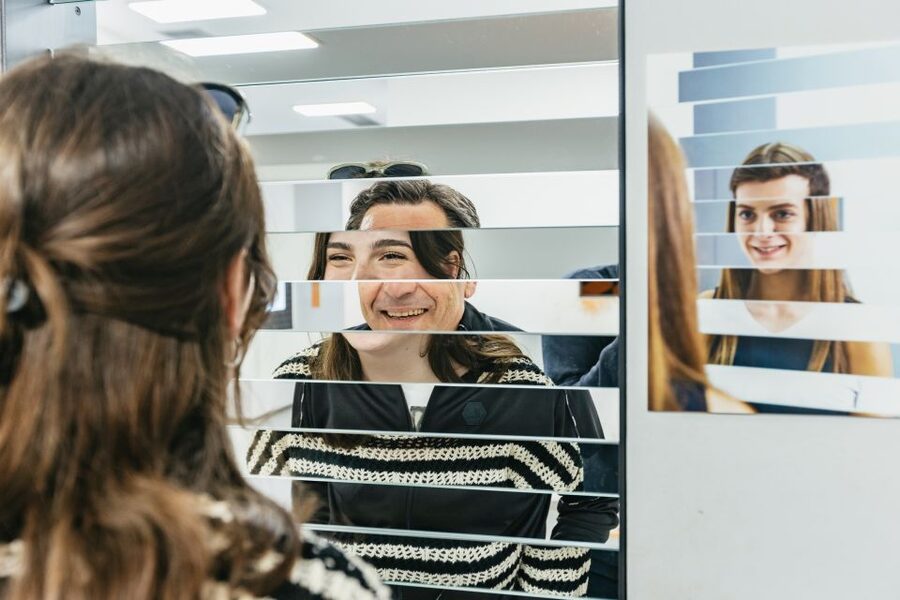
Other installations invite you to compare your own size with someone else’s, get turned around in a mirror maze, or pose for a photograph that makes it look as if a head is being served on a tray. There is also a chance to appear to climb onto the ceiling. These scenes are designed to be looked at, tested, and often photographed, rather than simply viewed from a distance.
I like that the museum gives you more than one way to engage. You can enjoy the visual surprise, try to understand the trick, or use the playrooms to take on a puzzle. That mix helps the visit work for people with different interests, including adults who enjoy the science behind an illusion and children who would rather get straight to the game.
The size-changing room and other photo setups
The size-changing effect is one of the most distinctive experiences described for the museum. You and a companion can appear to change size, making it a natural place to take a photo and compare the result. The trick is playful, but it also makes the museum’s central idea easy to grasp: a carefully arranged view can persuade your brain to accept something that is not physically true.
Other photo opportunities include the head-on-a-tray illusion and the ceiling effect. These are visual jokes as much as exhibits, and they may be most fun when you are willing to pose rather than just look. Bring a camera, as recommended, and be ready to take your time composing a shot. No specific photography rules or photo services are provided, so do not assume that staff will take pictures for you.
The museum’s effects can be more satisfying when you pause to inspect them. The first reaction may be surprise, but the more useful question is what in the scene is steering your perception. The experience does not promise a detailed explanation for every installation, so read the captions where available and give yourself time to notice how each illusion works.
More museum visits in Split:
- Blue Lagoon & Underwater Museum from Split with Lunch & Drinks
★ 4.5 · 1,122 reviews - Split: Game of Thrones Museum Entrance Ticket
★ 3.8 · 385 reviews - SPLIT-PREMIUM Emperor’s Walking Tour for History Lovers + Museum
★ 5.0 · 333 reviews
Mirror maze, uphill water, and ceiling tricks
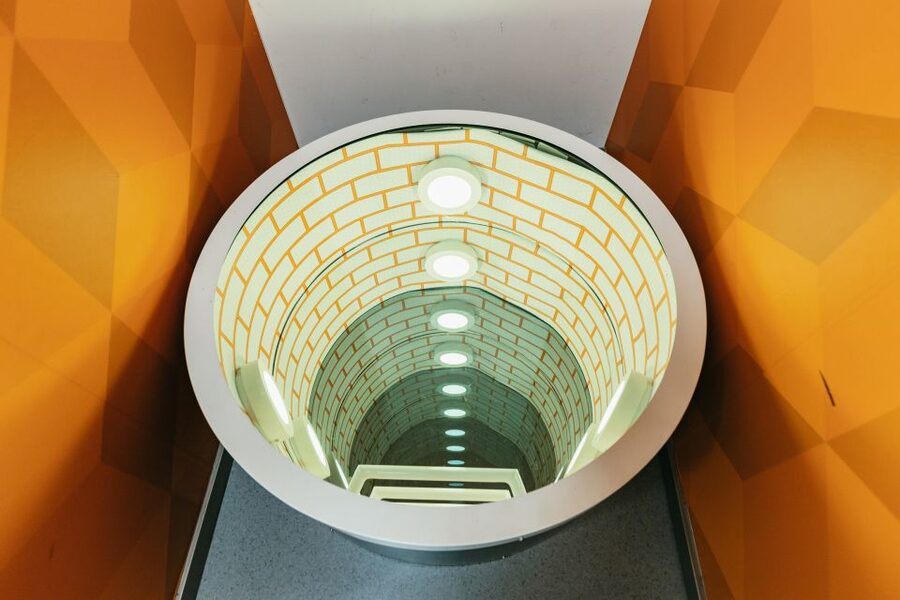
Some of the most engaging installations challenge your sense of space. A mirror maze can make it difficult to judge where a path continues, while an apparent uphill flow of water asks you to question the room’s orientation. The ceiling illusion reverses the usual relationship between floor and overhead space, creating a scene that looks as though someone has climbed above the room.
These effects are simple to understand once you know the premise, but that does not make them dull. Their value is in the gap between what you see at first and what you realize after looking again. If you are visiting with children, that gap gives you an easy opening to ask how the trick might be made. If you are on your own or with adults, you can treat each room as a small exercise in observation.
Do not expect a conventional museum visit built around objects behind glass. The emphasis here is on installations that ask you to take part, look from a particular angle, or test your own response. That makes it more playful than a formal exhibition, though anyone hoping for a long, specialist account of optical science should keep expectations measured.
Puzzle rooms add a different kind of challenge
The playrooms bring a welcome change of pace. Instead of relying only on visual surprise, they contain games and puzzles that invite you to think through a problem. The available details do not name individual games, so it is best to arrive ready for a range of challenges rather than expecting a particular puzzle or difficulty level.
I like this balance because not every visitor responds to illusions in the same way. One person may want to take photos in the size-changing room; another may prefer to figure out a puzzle. The playrooms also give the experience an educational angle without turning it into a classroom lesson. You can learn through trying, noticing, and talking through what happened.
The museum connects these activities to vision, perception, the human brain, and science. That context is useful for families, but it does not require you to arrive with a science background. The basic pleasure is accessible: see the effect, wonder how it works, and test your assumptions.
What the ticket covers, and how to plan the visit
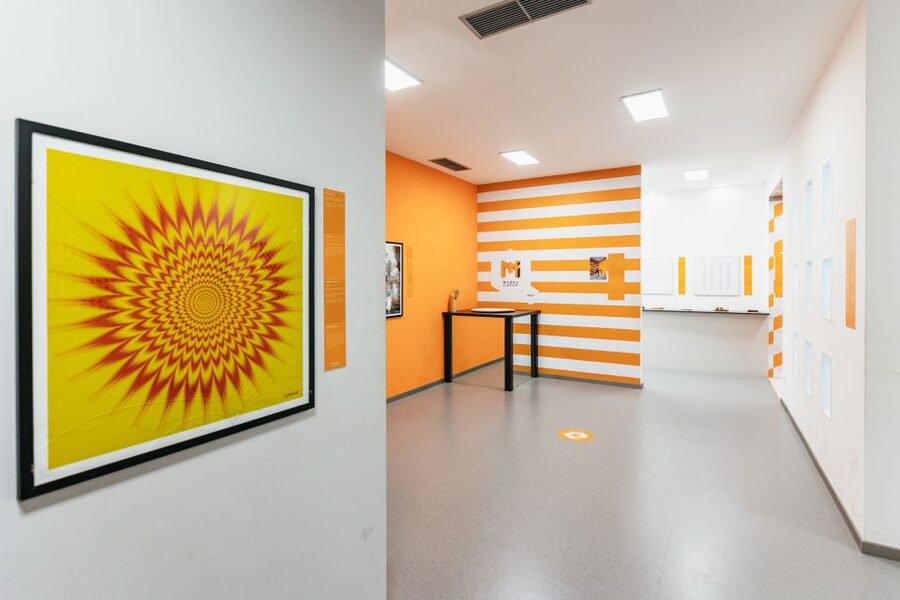
The $14 ticket covers museum entry. It is valid for one day, and you should check availability for starting times before booking. The stated duration is one day of validity, not a promise that you will spend a full day inside; no specific visit length is provided. Plan your schedule around the available entry time rather than assuming a particular number of hours.
You show your voucher at the museum’s main entrance. The listed host or greeter languages are English and Croatian, while exhibit captions are available in English, German, Italian, and Croatian. A French-speaking visitor enjoyed the size-changing photo room but wished for French explanations. If French is important for understanding the exhibits, the available caption languages are a real limitation.
At $14, the ticket offers reasonable value if you will try several installations and spend time with the puzzles. The price buys entry to an interactive experience rather than a single view or brief presentation. It may feel less worthwhile if you mainly want a traditional museum with extensive written interpretation, or if optical illusions are not your thing. Your value will depend on how much you enjoy taking part and experimenting.
The booking terms allow cancellation up to 24 hours in advance for a full refund, and a reserve-now, pay-later option is available. Those terms can help if your plans are not settled, but they do not change the experience itself. The ticket includes entrance, so do not assume extras are part of the price.
More tickets and passes in Split:
- From Split: Plitvice Lakes Guided Tour with Entry Tickets
★ 4.9 · 2,468 reviews - Split: Klis Fortress GOT and Olive Museum Entry Tickets
★ 4.6 · 283 reviews - From Split: Plitvice Lakes Guided Tour with Entry Tickets
★ 4.6 · 274 reviews - Split: Plitvice Lakes Guided Day Tour with Entry Tickets
★ 4.7 · 171 reviews
Accessibility, age rules, and practical details
The museum is listed as wheelchair accessible, which is a useful point if step-free access matters to you. Service animals are permitted. The information does not describe specific routes, equipment, or access arrangements inside each installation, so contact the museum if you need details about a particular exhibit.
Unaccompanied minors are not allowed. If you are planning a visit for a young person, make sure an adult is accompanying them. No minimum age is specified, so the information does not establish a particular age threshold for children who come with an adult.
Bring a camera if you want to keep a record of the visual setups. The museum’s illusions are well suited to playful photographs, especially the effect that makes people appear to change size. Captions support four languages, but the listed options do not include French. Service animals are permitted, and the museum is wheelchair accessible.
Who will enjoy this museum most
This is a good fit if you like interactive attractions, optical effects, and playful challenges. Families may appreciate the mix of photo moments and puzzles, while adults can enjoy testing how perception works. You do not need specialist knowledge to take part, and the experience offers a shared activity that can spark conversation.
It is less suited to someone looking for a quiet, conventional museum visit or a guided, in-depth science lecture. The ticket information does not identify a named guide or describe a guided tour. Think of the visit as a collection of visual and sensory installations with educational captions, rather than a scheduled talk.
Language matters, too. English, German, Italian, and Croatian captions are listed. If you need explanations in another language, especially French, that may affect how much you get from the educational side, even if the visual effects remain easy to enjoy.
Should you book the Split Museum of Illusions?
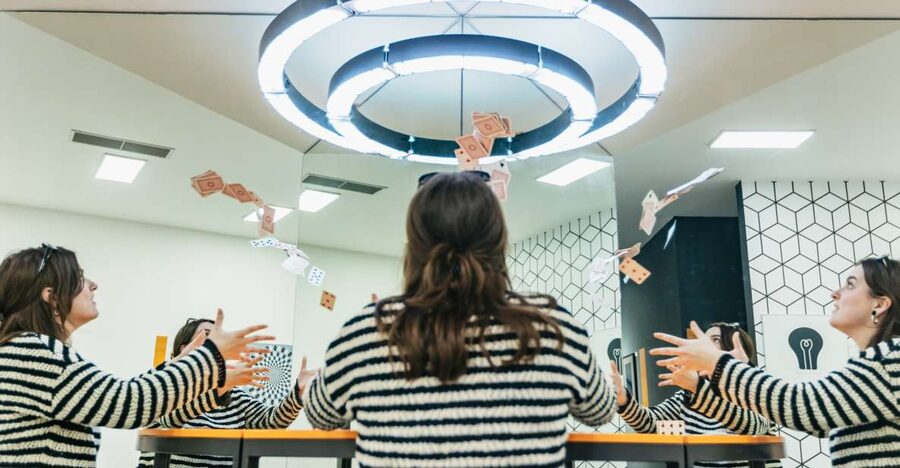
Book if you want an interactive break in Split and enjoy trying tricks, posing for unusual photographs, or solving puzzles. The size-changing room, mirror maze, uphill-water effect, and ceiling illusion give you several different ways to test your perception, while the playrooms provide a change from looking at installations.
At $14, I would consider it worthwhile if you plan to engage with the exhibits rather than rush through them. Check the available starting times, note that entry is valid for one day, and weigh the caption languages against your needs. If you prefer a traditional museum or need French explanations, you may want to choose another activity.
FAQ
How much does the entrance ticket cost?
The listed price is $14 per person. The ticket includes entrance to the Museum of Illusions.
How long is the ticket valid?
The ticket is valid for one day. The stated duration does not specify how long a visit inside the museum takes.
Where do I show my voucher?
Show your voucher at the museum’s main entrance.
What languages are available for captions?
Captions are available in English, German, Italian, and Croatian. French is not listed.
Is the museum wheelchair accessible?
Yes. The museum is listed as wheelchair accessible.
Can I bring a service animal?
Yes. Service animals are permitted.
Can minors visit alone?
No. Unaccompanied minors are not allowed.
What should I bring?
A camera is recommended, particularly if you want to photograph the visual effects.
Can I cancel my booking?
Yes. You can cancel up to 24 hours in advance for a full refund.
Just reviewed in Split
- Split City Walking Tour★ 5.0 · 5 reviews
- Split City Electric Bike Tour★ 5.0 · 68 reviews
- Split Cooking Class – Afternoon Edition Shared Activity★ 5.0 · 8 reviews
- Marjan Park & Split City Bike Tour★ 5.0 · 51 reviews
- Split: Blue Lagoon & 3 Islands Speedboat Tour – Small group★ 4.5 · 46 reviews
- Split Quest Experience: Discover the City★ 3.5 · 5 reviews
- Split: Blue Lagoon, Hvar, Brač, 6 Islands Boat Tour – Small Group★ 5.0 · 57 reviews
- Private transfer Split Airport to Split★ 5.0 · 28 reviews
Split Museums, compared.
Blue Lagoon & Underwater Museum from Split with Lunch & Drinks
Read our review →
PREMIUM Emperor’s Walking Tour for History Lovers + Museum
Read our review →
Klis Fortress GOT and Olive Museum Entry Tickets
Read our review →
Biking Vidova – Skrip & museum of olive oil – Splitska – Postira
Read our review →Browse the lists this tour appears in