
Review · SPLIT HISTORY TOURS
Split Walking Tour with Professor of History
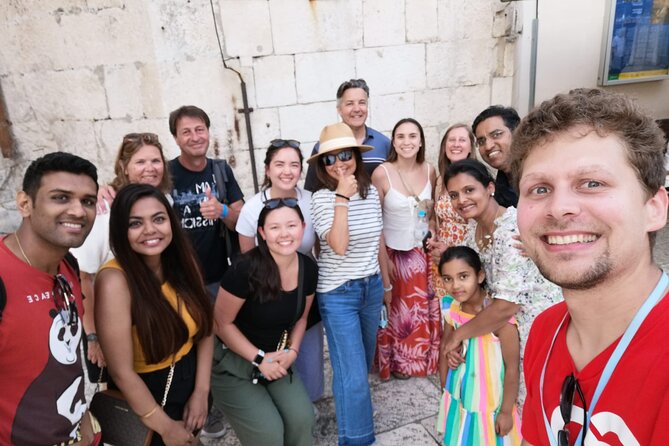
Split’s old town is not a collection of Roman ruins behind a fence. It is a living city built into Diocletian’s Palace, where ancient halls, medieval lanes, and everyday cafés share the same streets. This walking tour traces that unusual mix with a professor of history as your guide.
I like two things in particular: the route links major Roman landmarks to later Croatian life, and the small group cap of 17 gives you a better chance to hear and ask questions. Guides Mario and Anita are praised for combining historical detail with humor and useful advice on food, shops, and getting around.
The main consideration is time. The planned walk lasts about 2 hours 20 minutes, but a guide who has plenty to share may run longer. You will also see the cathedral and Temple of Jupiter from outside; their entrance fees are not included.
- A palace that became a city: Walk through Diocletian’s Palace and the streets that grew inside its Roman walls.
- A history professor leads the way: Expect historical context, stories, and room for questions rather than a quick photo tour.
- Eleven stops in about 2 hours 20 minutes: The route covers the Riva, palace interiors and gates, and several squares beyond the palace.
- A small-group format: The maximum group size is 17, with a private upgrade available.
- Practical local pointers: Guides may share recommendations for food, shops, ATMs, and onward travel.
Why Split’s Roman palace still feels lived in
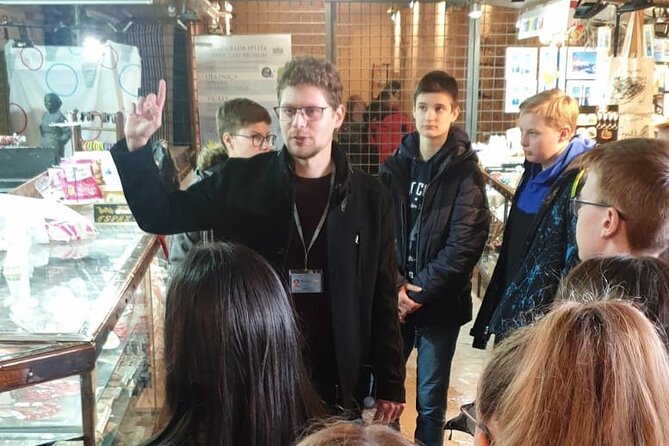
Diocletian’s Palace is the anchor of this walk, but it helps to think of it less as a single monument and more as the original framework of Split’s old center. The Roman complex dates to the early fourth century. Over time, later buildings and daily life took root within it, so the route moves between ancient stonework and streets that still serve local residents.
That mix is why a guided walk can be more useful than simply following a map from one landmark to another. A guide can connect the buildings to the people who used them, explain the change from imperial palace to later city, and point out details that are easy to miss when you are watching your footing on narrow streets.
The tour is offered in English and lasts about 2 hours 20 minutes. It is listed as a small-group experience for no more than 17 people, a size that should make it easier to stay close to the guide and ask questions than on a large coach tour.
Starting at the Riva and the palace’s basement halls
The walk begins at the Brass Gate, also called Porta Aenea, on the waterfront. The first stop is the Riva, Split’s promenade and a place where local life is on display: people meet for coffee, sit in the sun, and spend time outdoors. It is a useful opening because it gives you a sense of the city as it is now, before the tour turns toward its Roman foundations.
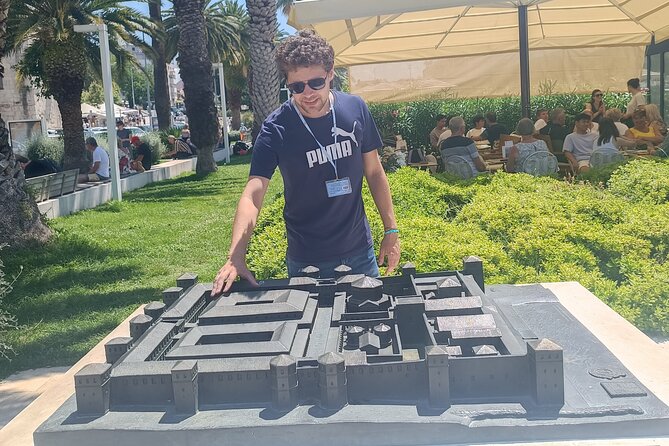
The Riva stop is scheduled for 15 minutes. From there, the route heads to the substructures beneath Diocletian’s Palace. These basement halls are among the best-preserved ancient complexes of their kind, and they help explain the palace’s unusual survival: the lower spaces preserve the plan and scale of the structure above them.
You should not assume that every stop means an extended indoor visit. The itinerary lists the substructures as a 15-minute stop with free admission, but the tour’s pace and the guide’s explanation shape how much time you spend in each space. If you want a longer look at a particular site, ask your guide what can be revisited after the walk.
More walking tours in Split:
- Split: Old Town and Diocletian Palace Walking Tour
★ 4.9 · 4,727 reviews - Walking Tour of Split and Diocletian’s Palace
★ 5.0 · 2,588 reviews - Krka Waterfalls tour with Trogir Walking tour and Krka panoramic boat cruise
★ 5.0 · 1,659 reviews
The Peristyle and the emperor’s ceremonial route
The Peristyle was the palace’s central square and a stage for imperial power. The emperor was associated with Jupiter, and the space was designed to make his appearance feel formal and imposing. The guide’s account helps you read the square not just as a handsome courtyard, but as a place built to shape how people approached and saw the ruler.
The stop is scheduled for 10 minutes. That is enough for an explanation and a look around, but it is a short visit if you want to linger over the architecture or take photographs. The historical context is the real value here: it gives the central square a purpose beyond being a scenic pause on the route.
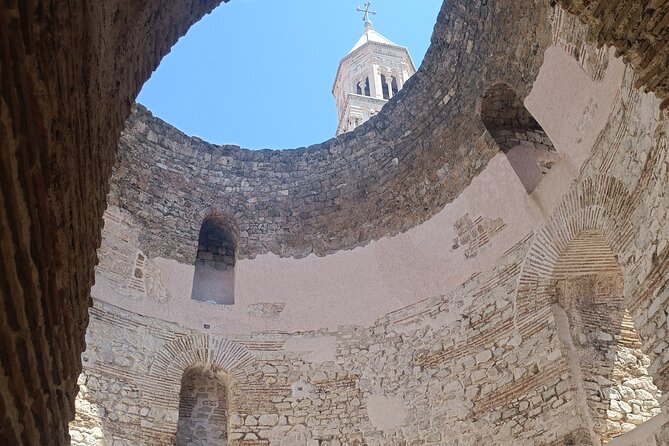
Next comes the Vestibule, a circular hall that formed part of the imperial corridor leading toward the emperor’s apartments. It once had a dome and measures about 17 meters high and 12 meters across. Its size and shape helped make it a formal reception space for selected audiences, including ambassadors.
The Vestibule stop is also 10 minutes. Its circular form is easy to appreciate in person, while the guide’s explanation fills in what the bare architecture cannot show: how the room fit into the palace’s sequence of public and private spaces.
The cathedral and Temple of Jupiter from the outside
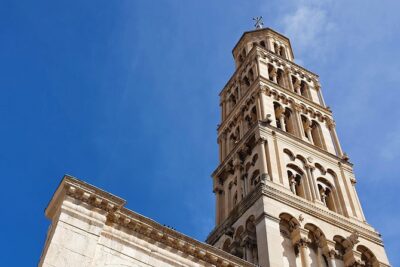
The Cathedral of Saint Domnius has served as a Roman temple, a mausoleum, and a church. That changing use makes it one of the clearest examples of how Split’s history is layered into the same structure. The tour spends 20 minutes here, but the visit is from outside only. Entry is not included, though the guide can give you information if you want to go in later.
The same outside-only approach applies to the Temple of Jupiter. The Roman temple was later converted into a baptistery dedicated to Saint John the Baptist. The stop is scheduled for 10 minutes, so you get the historical explanation without an interior visit.
On the way toward the Golden Gate, the group passes Let Me Pass Street, a narrow lane between the ancient temple and a medieval building. Local people call it the world’s narrowest street. Treat that as a local claim rather than a measured record, but it is a memorable example of how tightly different eras sit together in Split’s old center.
If you want to enter the cathedral or temple, plan to return after the tour and pay any entrance fee yourself. That separation is practical: the walk introduces the sites and helps you decide which ones deserve more of your time.
The Golden Gate and Gregory of Nin
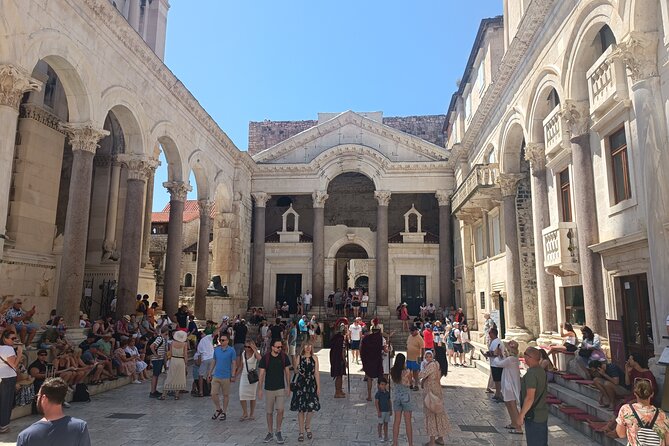
The Golden Gate was the main northern entrance to Diocletian’s Palace and the route used by the emperor when entering the complex. It was once more elaborate than the gate you see today, with columns and statues that disappeared after it was sealed during the Middle Ages. The stop takes 15 minutes and gives you a chance to consider how a working entrance became a historic landmark.
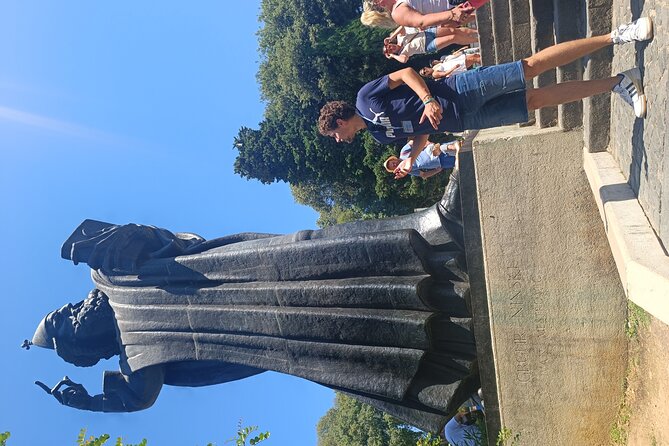
The nearby statue of Gregory of Nin is another short stop, scheduled for 10 minutes. Sculptor Ivan Meštrović’s statue stands 8.5 meters tall, and its polished toe has become a popular good-luck touchstone. You can rub it if you like, but the more useful detail is the statue’s place in the city’s public life: it is both a monument and a small shared ritual.
This stretch of the route is a good reminder that Split’s appeal is not limited to Roman remains. The city’s later history and its everyday customs are part of the same walk, and the guide can make those connections as the group moves between sites.
More history tours in Split:
- Walking Tour of Split with a ‘Magister’ of History
★ 5.0 · 1,122 reviews - Split: History and Heritage Walking Tour
★ 4.9 · 650 reviews - Split History and Gastro Small-Group Tour with Food and Drinks
★ 5.0 · 375 reviews - SPLIT-PREMIUM Emperor’s Walking Tour for History Lovers + Museum
★ 5.0 · 333 reviews
Marmont Street and the squares beyond the palace
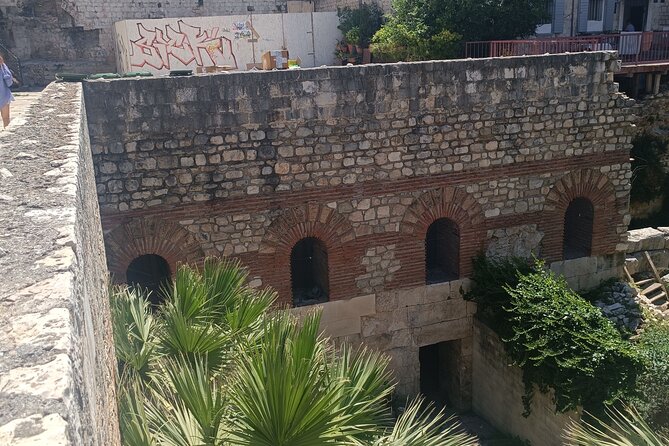
Marmontova Ulica leads the tour away from the ancient palace and into another chapter of Split’s development. The street is named for Napoleon’s marshal Marmont, who played a role in the urban development of Dalmatian cities. The stop lasts 10 minutes, a brief pause that helps broaden the story beyond Roman rule.
The route then reaches Prokurative, or Republic Square, an open space bordered on three sides by elaborate neo-Renaissance buildings. It offers a different architectural mood from the palace’s ancient stonework. At 10 minutes, the stop is long enough for the guide to explain its character and for you to take in the broad, open layout.
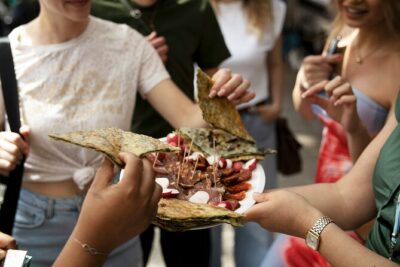
The final stop is Fruit’s Square, also called Trg Brace Radic. It takes its name from the women who once sold fruit there. The square is also associated with a statue of Marko Marulić, often called the father of Croatian literature, and gives the guide room to connect local history with food and gastronomy.
This last stop is scheduled for 15 minutes, and it is a sensible place to end. You finish not only with dates and monuments, but with a better sense of how people used the city’s public spaces. The tour returns to its starting point at the Brass Gate.
A guide who teaches, entertains, and gives useful advice
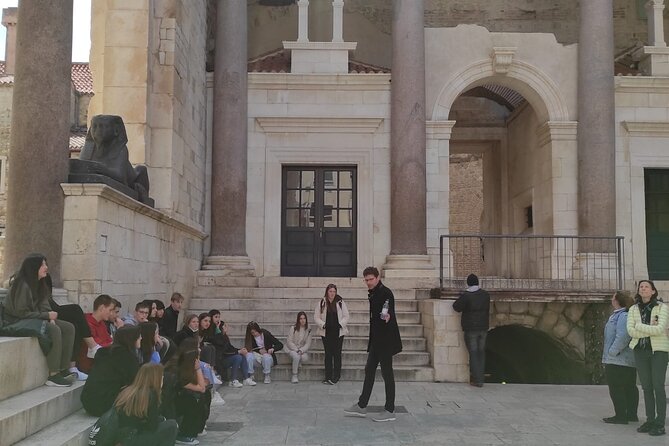
The guide is central to this experience. Mario is described as a history professor who mixes detailed explanation with humor, trivia, and questions that invite you to think about what you are seeing. Anita is also praised for her command of Croatian history and for taking care of the group. Since guide assignments can vary, you should not assume either one will lead your departure.
The strongest feature of the guiding style is the balance between scholarship and ease. You can expect substantial historical detail, but the walk is not meant to feel like a lecture delivered at you. Stories and light humor help break up the facts, and guides may also talk about current issues or local customs.
Practical advice can be part of the value, too. Mario is known for sharing suggestions on food, shops, ATMs, and onward travel, and for following up with useful local information. If you have questions about where to eat or what to see after the walk, this is a good time to ask.
What $24.19 buys you, and what it does not
At $24.19 per person, the tour is a modest-cost way to get a structured introduction to Split’s old center. You are paying for a guide’s time and interpretation across 11 stops, not for entry to every monument. The cathedral and Temple of Jupiter are viewed from outside, and their entrance fees are excluded.
The price also includes all fees and taxes. Alcoholic beverages are not included, though they are not a central part of this walking experience. A private-tour upgrade is offered if you want a more personal format, but no private-tour price is provided here.
The value depends on how you like to explore. If you enjoy context and want to understand why one building matters in relation to another, the guide can make a compact historic center much easier to read. If you prefer to move at your own pace, spend a long time inside a single site, or avoid scheduled group stops, a self-guided visit may suit you better.
The advertised duration is approximate. One person found the walk ran closer to three hours, which is worth bearing in mind if you have a tight schedule afterward. A guide with stories to tell may keep the group longer than planned, so leave some breathing room.
Who should book this Split walk
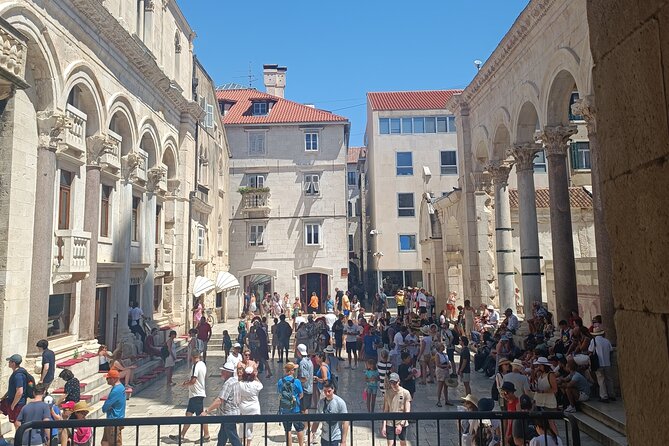
I would put this tour near the start of a first visit to Split. It covers the key historic center in a single walk and gives you background that can make a return visit to the palace, cathedral, or temple more rewarding. It also suits anyone who likes asking questions and hearing the human stories behind major landmarks.
It is a good fit for history-minded visitors, couples, and small groups who want more than a quick orientation. The maximum group size is 17, and most people can participate. Service animals are allowed, and the meeting point is near public transportation.
You may prefer another approach if you want guaranteed entry to interior sites, a strictly timed walk, or a private guide without other participants. The core tour is a shared walking experience, and the listed cathedral and temple visits are exterior stops.
Booking is often planned ahead: the average booking lead time is 33 days. You can cancel for a full refund up to 24 hours before the start time. The experience requires good weather, and if poor weather leads to cancellation, you are offered another date or a full refund.
Should you book it?
Book this walk if you want a clear, engaging introduction to Split’s Roman palace and the city that grew around it. Its best value is the guide’s ability to connect architecture, Croatian history, and everyday local life in a compact route. If you want more time inside the cathedral or temple, treat the tour as an orientation and return on your own afterward.
FAQ
How long does the tour last?
The tour lasts approximately 2 hours 20 minutes. It may run longer, so leave some flexibility in your schedule.
Where does the tour start and end?
It starts at the Brass Gate, Porta Aenea, at Obala Hrvatskog narodnog preporoda 22 in Split. It ends back at the meeting point.
What language is the tour offered in?
The tour is offered in English.
How many people can join the group?
The maximum group size is 17 people. A private-tour upgrade is also offered.
Are entrance fees to the cathedral and Temple of Jupiter included?
No. Both are outside-only stops during the walk, and entrance fees are not included. The guide can provide information if you want to visit the cathedral afterward.
Can I cancel for a refund?
Yes. You can cancel at least 24 hours before the experience starts for a full refund. If the tour is canceled because of poor weather, you will be offered a different date or a full refund.
Just reviewed in Split
- Split City Walking Tour★ 5.0 · 5 reviews
- Split City Electric Bike Tour★ 5.0 · 68 reviews
- Split Cooking Class – Afternoon Edition Shared Activity★ 5.0 · 8 reviews
- Marjan Park & Split City Bike Tour★ 5.0 · 51 reviews
- Split: Blue Lagoon & 3 Islands Speedboat Tour – Small group★ 4.5 · 46 reviews
- Split Quest Experience: Discover the City★ 3.5 · 5 reviews
- Split: Blue Lagoon, Hvar, Brač, 6 Islands Boat Tour – Small Group★ 5.0 · 57 reviews
- Private transfer Split Airport to Split★ 5.0 · 28 reviews
Split History Tours, compared.
Walking Tour of Split with a ‘Magister’ of History
Read our review →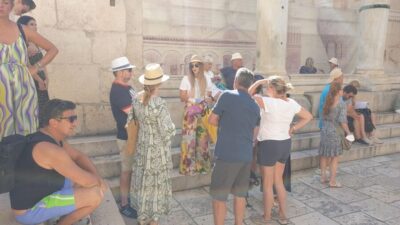
Split History and Gastro Small-Group Tour with Food and Drinks
Read our review →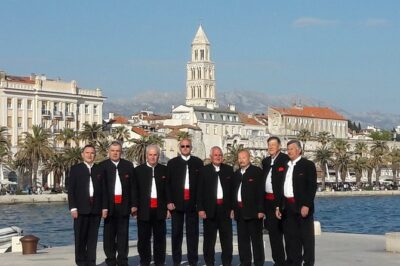
PREMIUM Emperor’s Walking Tour for History Lovers + Museum
Read our review →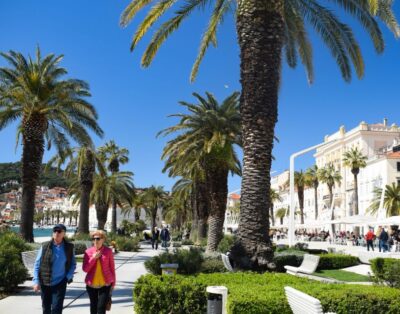
Local History and Culture 90-Minute Walking Tour
Read our review →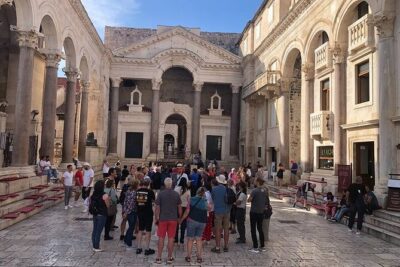
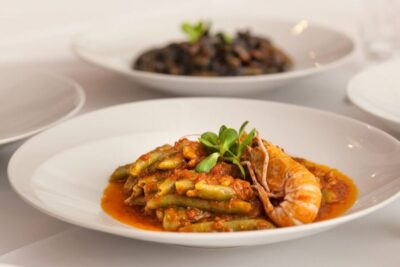
Historical & Gastro Treasures Tour with Green Market
Read our review →
Historical Tour of Salona, Klis Fortress and Trogir
Read our review →Browse the lists this tour appears in