
Review · SPLIT HISTORY TOURS
Walking Tour of Split with a ‘Magister’ of History
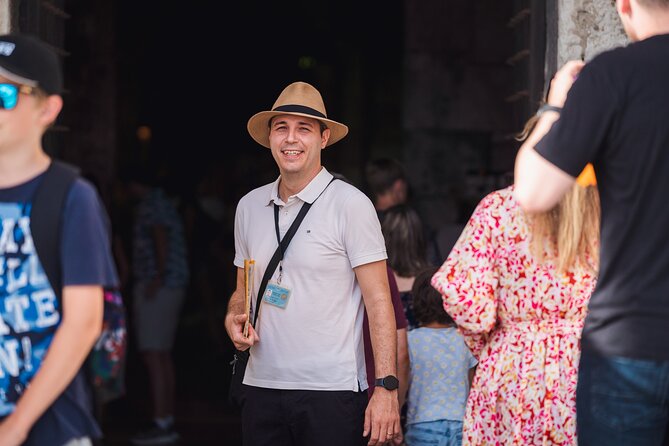
Diocletian’s Palace is not a ruin set apart from the city. It is part of Split’s everyday streets, squares, and buildings, and this walk helps you see how Roman structures were adapted as the city changed. Guide Toni Šare uses his own 3D reconstructions to make those layers easier to picture.
I like two things in particular: Toni connects ancient sights with medieval, Venetian, and modern Split, and the route leaves time to examine details instead of rushing from landmark to landmark. The 3D images are a useful extra when walls and columns alone don’t tell the whole story.
One consideration: this is an outdoor walking tour, and you do not go inside the cathedral, Temple of Jupiter, museums, or other paid sites. If you want interior visits, plan to return on your own.
At a glance
- Toni Šare leads the walk: He is a Split native, a history teacher by background, and the owner of DiocleSpot Tours.
- The palace is the main subject: You’ll see its Peristyle, former mausoleum, temple, gates, and remains of the emperor’s residence.
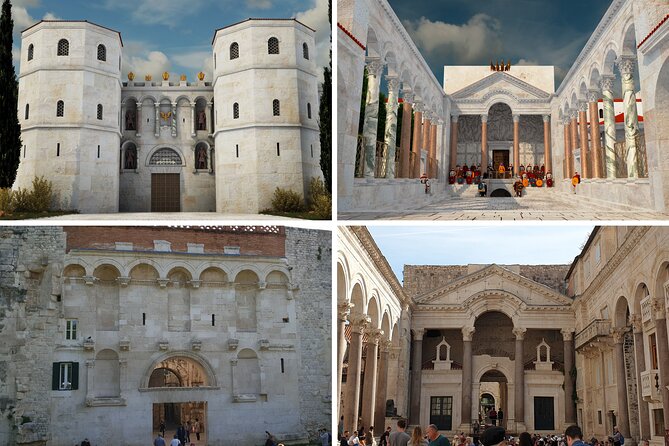
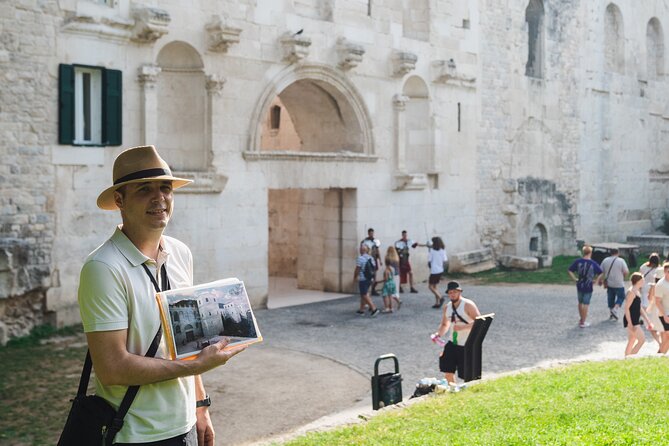
- 3D reconstructions add context: Toni uses his own images to help show how parts of the palace looked in their original form.
- The route spans several eras: Roman sites share the walk with noble palaces, Renaissance details, and medieval landmarks.
- Expect about 100 to 110 minutes on foot: The group is capped at 18, and private upgrades and group discounts are offered.
- The finish is central: The tour ends at Narodni trg, also called Piazza or Pjaca, a useful place to continue exploring.
Start at the Riva, with the palace in view
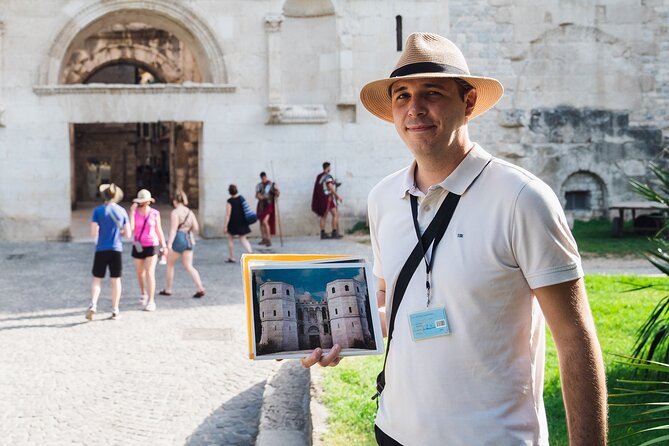
The meeting point is the Brass Gate, also known as Porta Aenea, at Obala Hrvatskog narodnog preporoda 22. From there, the opening stop is the Riva, Split’s waterfront promenade and a central part of local life. It is also a practical place to begin: you can look toward the palace’s southern wall while Toni introduces the route and uses graphic or model representations to set the scene.
That opening view matters because the palace is not just a collection of isolated Roman remains. Its walls and entrances shaped the city that grew inside and around them. Starting outside gives you a sense of the palace’s scale before you thread through its lanes.
The Riva stop lasts about 15 minutes. The walk then passes smaller details, including noble family palaces, before reaching the central Roman sites. That broader route is one of the tour’s strengths: Split is famous for Diocletian’s Palace, but the city’s story did not stop with Rome.
More walking tours in Split:
- Split: Old Town and Diocletian Palace Walking Tour
★ 4.9 · 4,727 reviews - Walking Tour of Split and Diocletian’s Palace
★ 5.0 · 2,588 reviews - Krka Waterfalls tour with Trogir Walking tour and Krka panoramic boat cruise
★ 5.0 · 1,659 reviews
Read the Peristyle as a living square
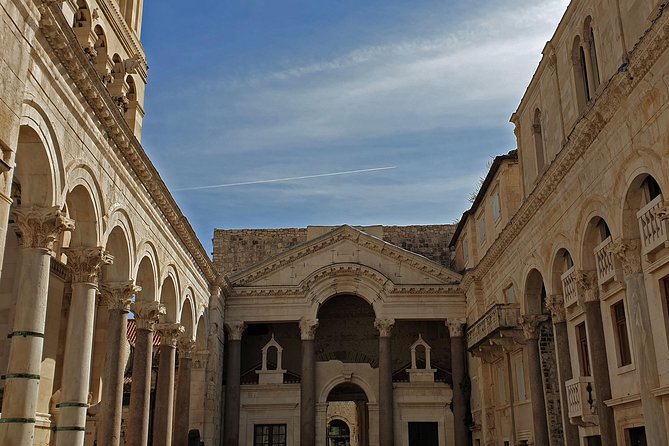
The Peristyle is the palace’s central square and one of Split’s most important public spaces today. Roman structures remain visible here, but the square is also part of the working old town. Toni’s reconstructions help you compare what you see with how the area appeared during the palace’s early years.
You spend about 10 minutes here. That may sound brief, but it is a compact place to explain a lot: the original design, what has survived, and how the square continues to function. The images are particularly useful if you find it hard to make sense of a building from fragments alone.
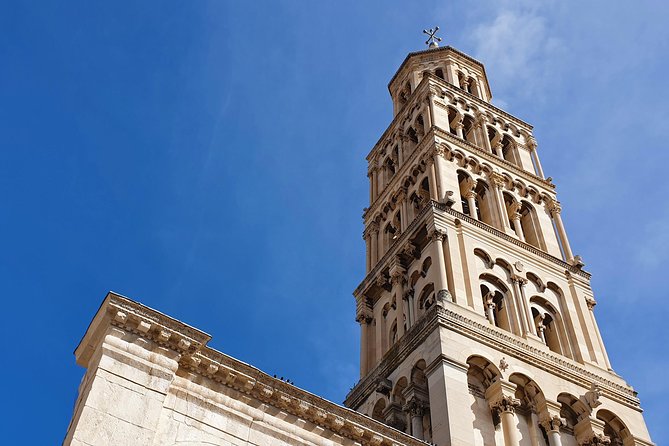
The route next visits the Cathedral of Saint Domnius, originally built as Emperor Diocletian’s mausoleum. Toni explains how the tomb became a Christian cathedral, as well as the building and bell tower. The group does not enter, and the stop is about 10 minutes, so you get the story and exterior view rather than time inside.
That distinction is worth keeping in mind when planning your day. If you want to see the cathedral’s interior or climb the bell tower, this walk does not include that visit. It does, however, give you context that can make a return visit more rewarding.
Look closely at the Temple of Jupiter
The Temple of Jupiter is another of the palace’s best-preserved Roman structures. Toni points out construction anomalies and mistakes, a welcome reminder that ancient builders were skilled people doing real work, not flawless figures from a textbook.
The stop lasts around 15 minutes, but the tour stays outside. You will not enter the temple, so this is a close look at the exterior and its details, paired with an explanation of what you are seeing. If your main goal is paid-site access, factor in separate time and admission.
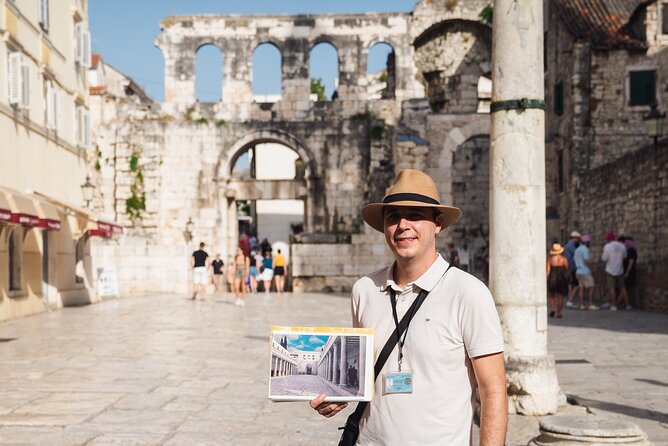
From the temple area, the route reaches the Silver Gate, one of the palace’s eastern entrances. Here you can take in the relationship between the gate and cathedral, with a surviving section of the original road below. It is a short stop, about five minutes, but it makes the palace’s old layout easier to grasp.
A walk through the Silver Gate area also shows how later Split grew within the Roman framework. The city did not simply discard the palace and build somewhere else. Its people reused and reshaped structures that were already there.
From Grgur Ninski to the emperor’s private quarters
The stop at the Grgur Ninski statue lasts about five minutes. The statue is a familiar Split landmark, but Toni explains its meaning for Croatian language and early medieval culture. This is one of the points where the tour’s wider focus pays off: you move beyond imperial Rome and into the history of the people who made Split their city.
Next comes the Vestibulum, an ancient entrance to Diocletian’s private residence. Toni takes you around the remains of the emperor’s living quarters, with about 10 minutes set aside for this area. His 3D reconstructions can help you imagine the spaces as parts of a residence rather than scattered stones.
You will also pass palaces built by noble families. These buildings show how the old palace area continued to serve as a home and civic center through later centuries. The tour does not assign each palace a separate timed stop, so the level of detail may depend on the group’s pace and questions.
If the group is interested, Toni can point out Game of Thrones filming locations along the way, including a fan shop the route passes. This is an optional thread rather than the central purpose of the walk. If the show is not your thing, the history of the buildings remains the main event.
More history tours in Split:
- Split Walking Tour with Professor of History
★ 5.0 · 926 reviews - Split: History and Heritage Walking Tour
★ 4.9 · 650 reviews - Split History and Gastro Small-Group Tour with Food and Drinks
★ 5.0 · 375 reviews - SPLIT-PREMIUM Emperor’s Walking Tour for History Lovers + Museum
★ 5.0 · 333 reviews
See the Golden Gate and Renaissance Split
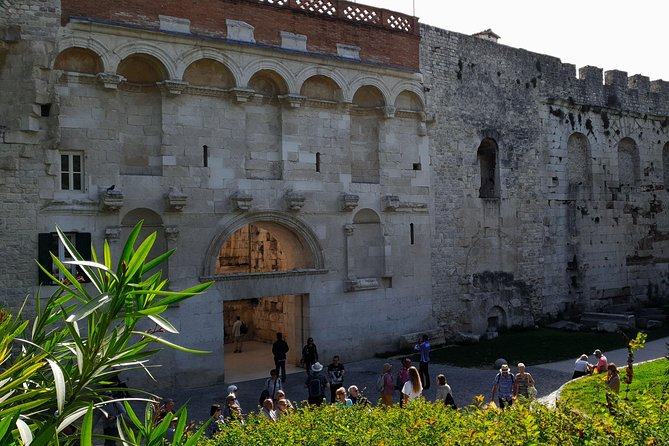
The Golden Gate is the palace’s main northern entrance and the best-preserved of its four gates. It is also the most decorated, making it a fitting place to stop for around 15 minutes. From here, you can view the northern wall and see how medieval Split continued to use Roman-built structures for defense, while removing parts no longer needed.
This is a useful point for understanding the city’s practical history. Old structures were not merely admired; they were adapted to solve new problems. Toni’s explanations connect the visible stonework with those changes, giving you a clearer sense of why the palace looks the way it does today.
The route also takes you into the courtyard of the City Museum of Split, housed in a Renaissance noble palace. You do not enter the museum itself, but the courtyard offers a view of the building from within. Toni uses this stop to discuss Venetian-era influence and the emergence of this kind of palace.
That contrast is part of what makes the route more than a Roman monuments walk. You get to notice how styles and civic life changed across the centuries, even when the city remained within the same old walls.
Finish at Pjaca, ready to explore on your own
The tour ends at Narodni trg, or Piazza Square, known locally as Pjaca. This has been Split’s main square since medieval times, and the 14th-century Town Hall is among the structures to see here. The end point is practical as well as historic: it is easy to orient yourself from the square and continue into the old town.
The route’s stop times add up to roughly 90 minutes, while the advertised experience runs about 1 hour 40 minutes to 1 hour 50 minutes. The extra time allows for walking between sites and for the explanations that connect them. Keep the whole block free rather than scheduling a tight appointment immediately afterward.
The tour is offered in English, with a maximum group size of 18. That is small enough to make questions and quieter corners more manageable, though the feel of the walk will naturally depend on how many people book that departure. Toni’s approachable style and willingness to answer questions are a recurring strength of the experience.
What the price gets you
At $34.83 per person, the value lies in interpretation rather than admission. You are paying for a guided route through several eras of Split’s history, Toni’s local perspective, and his 3D reconstructions. The sites are mostly viewed from public spaces, so the price does not include entry to museums or paid attractions.
For a first visit, that can be a sound trade. A guide can help you understand the palace’s structure and the city’s later changes in less than two hours, then you can decide which interiors deserve more of your time and money. If you prefer to explore silently at your own pace, a guide may feel less essential.
Private upgrades are available, while group discounts can help with the cost of booking together. The experience is often reserved about 31 days ahead on average, so it is sensible to plan early if your dates are fixed. Free cancellation is available up to 24 hours before the start; poor weather may lead to a new date or a refund.
Who should take this walk
I would put this tour near the start of a Split stay. The route gives you a framework for wandering the palace afterward, and one person used it as a morning introduction before choosing places to revisit in the afternoon. You will likely get more from the old town once you know what the gates, squares, and altered Roman structures represent.
It is especially suited to people who enjoy history explained in a lively, conversational way. Toni’s background in history and his connection to the city give the walk a personal angle, and the tour covers culture, religion, architecture, and local life rather than treating the palace as a single Roman monument.
It may be less suitable if you have limited mobility or do not want to walk, though the supplied details say most people can participate and service animals are allowed. The route is outdoors, and the experience depends on good weather. It also does not replace visits to paid interiors.
Should you book it?
Book this walk if you want to understand how Diocletian’s Palace became part of Split, not just photograph its most famous corners. Toni’s local stories, cross-era history, and 3D reconstructions give the tour a clear purpose, and the finish at Pjaca leaves you well placed to keep exploring.
Skip it if your priority is entering monuments or moving through the old town without a guide. For most first-time visitors who enjoy history, though, this is a practical use of about 100 minutes and a good way to make the rest of Split easier to read.
FAQ
How long does the tour last?
The walk takes about 1 hour 40 minutes to 1 hour 50 minutes.
Where does the tour begin?
It starts at the Brass Gate, also called Porta Aenea, at Obala Hrvatskog narodnog preporoda 22 in Split.
Where does the tour end?
It ends at Narodni trg, also known as Piazza Square or Pjaca.
What language is the tour offered in?
The tour is offered in English.
Who leads the tour?
Toni Šare, owner of DiocleSpot Tours, leads the experience.
Are museum or paid-site admissions included?
No. The tour does not enter museums or paid sites. The Cathedral of Saint Domnius and Temple of Jupiter are explained from outside.
Does the tour include 3D reconstructions?
Yes. Toni demonstrates some sites with his own 3D reconstructions to show how parts of the palace looked in earlier times.
How many people can join?
The group has a maximum of 18 participants.
Is there a private-tour option?
Yes. You can upgrade to a private tour, and group discounts are offered.
What happens if poor weather cancels the tour?
You will be offered another date or a full refund if the experience is canceled due to poor weather.
Just reviewed in Split
- Split City Walking Tour★ 5.0 · 5 reviews
- Split City Electric Bike Tour★ 5.0 · 68 reviews
- Split Cooking Class – Afternoon Edition Shared Activity★ 5.0 · 8 reviews
- Split: Blue Lagoon & 3 Islands Speedboat Tour – Small group★ 4.5 · 46 reviews
- Split Quest Experience: Discover the City★ 3.5 · 5 reviews
- Marjan Park & Split City Bike Tour★ 5.0 · 51 reviews
- Split: Blue Lagoon, Hvar, Brač, 6 Islands Boat Tour – Small Group★ 5.0 · 57 reviews
- Private transfer Split Airport to Split★ 5.0 · 28 reviews
Split History Tours, compared.
Split History and Gastro Small-Group Tour with Food and Drinks
Read our review →
PREMIUM Emperor’s Walking Tour for History Lovers + Museum
Read our review →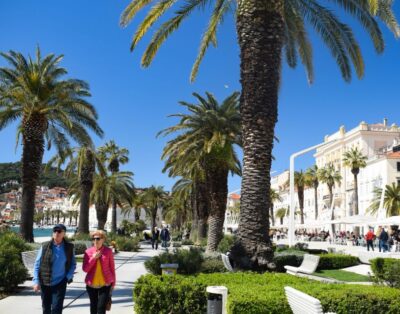
Local History and Culture 90-Minute Walking Tour
Read our review →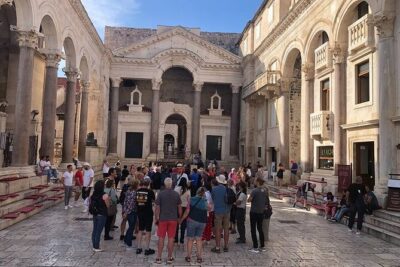

Historical & Gastro Treasures Tour with Green Market
Read our review →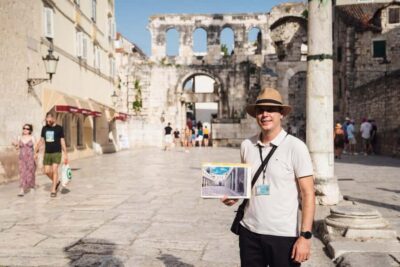
Walking tour of Split with a ‘Magister’ of History
Read our review →Browse the lists this tour appears in