
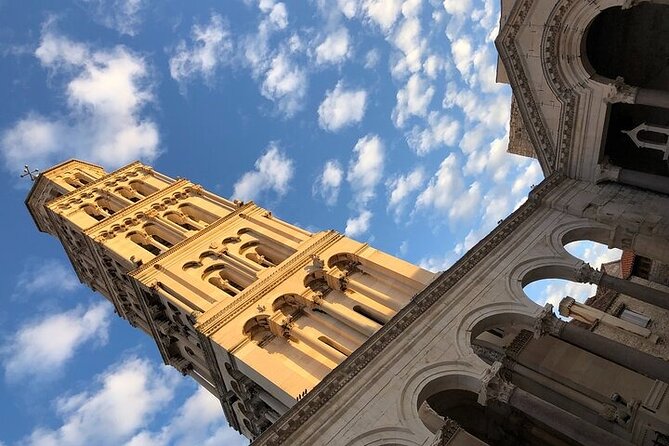
Review · SPLIT HISTORY TOURS
History Split Walking Tour in German – Small group
Diocletian’s Palace is not a ruin set apart from the city. It is the old heart of Split, where Roman walls frame shops, homes, squares, and daily life. This German-language walk connects the emperor’s rise from obscurity to power with the palace you’re standing in.
I like two things in particular: the route links the palace’s grand central spaces with nearby corners of the old town, and the guides make room for questions and humor. One practical caution: the route may not suit you if high steps are difficult, and the museum section of the palace substructures is not part of the tour.
- Start at the Peristyle: Get oriented in the palace’s central square, the natural hub for exploring its main spaces.
- Go below street level: See the substructures and learn how their purpose changed over time, without entering the museum section.
- Meet Split beyond the palace: The route reaches Riva Harbor, Fruit’s Square, and the Jewish quarter.
- Expect lively German-language guiding: Antonella, Josip, and Marko are among the guides praised for clear storytelling, humor, and thoughtful answers.
- Plan for a short, focused walk: The tour lasts about 90 minutes and allows up to 20 people.
A Roman palace that became Split’s old town
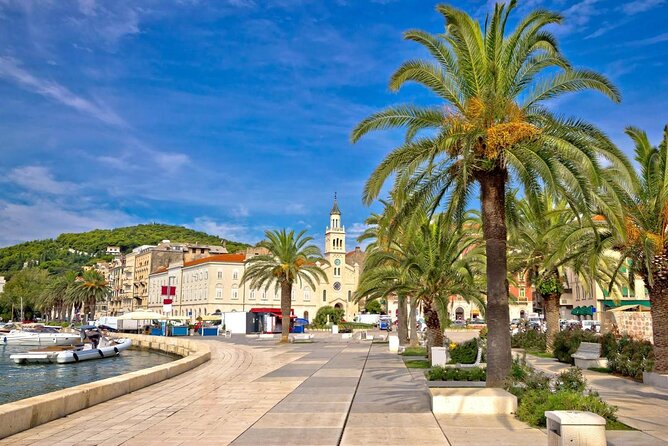
Diocletian’s Palace is the tour’s main subject, but the most useful idea to carry with you is that it is also part of the city’s everyday fabric. The route moves through major palace spaces and then into nearby streets and squares, showing how the Roman complex and Split grew together.
The central story is Diocletian’s climb from a little-known beginning to become one of the most powerful men in the world. A good guide can make that history easier to picture by tying it to the stones and spaces around you, rather than leaving you with a string of dates.
This is a guided introduction, not an exhaustive study of every corner. In about an hour and a half, you get a framework for understanding the palace and its surroundings, plus the chance to ask questions. If a detail catches your interest, you can return afterward and explore at your own pace.
The Peristyle gives you your bearings
The tour starts at the Peristyle, the palace’s central square and the route’s best place to get oriented. From here, you can reach almost all the other palace locations, so it serves as both a physical and historical hub.
The stop lasts about 15 minutes. That is enough time for a guide to explain the square’s role and set up the story of the palace, while helping you understand how the different parts fit together. Look around as you listen: the value of this first stop is not only the explanation, but the chance to see the palace’s main spaces in relation to one another.
The starting point is on Peristil Street. Arrive with enough time to find it, especially if you are new to Split’s compact old town. The tour ends nearby, and you can ask the guide to walk you back to the Peristyle.
More walking tours in Split:
- Split: Old Town and Diocletian Palace Walking Tour
★ 4.9 · 4,727 reviews - Walking Tour of Split and Diocletian’s Palace
★ 5.0 · 2,588 reviews - Krka Waterfalls tour with Trogir Walking tour and Krka panoramic boat cruise
★ 5.0 · 1,659 reviews
The Vestibule brings the palace indoors
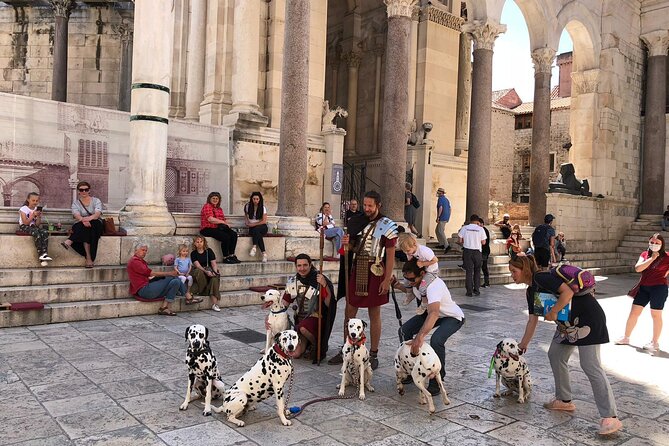
From the Peristyle, the route continues to Diocletian’s Vestibule, the entrance space associated with the emperor’s residence. It is a brief stop, about five minutes, but it adds a useful change of scale from the open square to an enclosed palace interior.
The guide explains the Vestibule’s history, and you may hear traditional Dalmatian singing there. That possibility is a pleasant extra, not something to count on as a scheduled performance. The stop is short, so treat it as a quick encounter rather than a long visit.
The substructures explain what lies below
The substructures are among the most revealing parts of the route. You go below the palace’s upper level and learn about how these spaces were built and how their function changed over the centuries.
Allow about 10 minutes with the guide. The tour does not include the museum section of the substructures, which you can visit separately afterward. That distinction matters: this walk gives you a guided look at the spaces and their history, but it is not a substitute for a longer museum visit.
For many people, this is where the palace becomes easier to imagine as a working complex rather than just a collection of striking walls. The explanation gives context to a space you might otherwise pass through without knowing what it was for.
The Golden Gate connects Roman and Croatian stories
At the Golden Gate, the palace’s main entrance, the guide explains the gate and points out the statue of Gregory of Nin. The stop lasts around 10 minutes, with a story that reaches beyond Roman architecture into Croatian history and language.
Gregory of Nin is important to the country’s history and language, and this part of the tour helps connect a visible monument with a wider cultural story. It is also a good example of why a guide can add value: a statue is easy to see on your own, but its significance is less obvious without an explanation.
The Golden Gate adds another perspective on the palace’s scale and design. It also shifts the focus from the emperor’s residence toward the city and its later history.
More history tours in Split:
- Walking Tour of Split with a ‘Magister’ of History
★ 5.0 · 1,122 reviews - Split Walking Tour with Professor of History
★ 5.0 · 926 reviews - Split: History and Heritage Walking Tour
★ 4.9 · 650 reviews - Split History and Gastro Small-Group Tour with Food and Drinks
★ 5.0 · 375 reviews
Riva Harbor opens the view to the waterfront
The route leaves the palace’s interior spaces for Riva Harbor, Split’s waterfront promenade. You’ll see a bronze model of Diocletian’s Palace and hear about the history of Riva, a useful contrast after the close lanes and enclosed palace spaces.
The stop is about 15 minutes, the longest on the route. The model offers a simple way to picture the palace as a whole, while the guide’s account of Riva gives you a sense of how the waterfront became part of the city’s public life.
This is a good moment to pause and take in the larger setting. The walk is not just about Roman remains; it also shows how Split’s identity reaches beyond the palace walls.
Fruit’s Square brings in Venice and Croatian literature
At Fruit’s Square, also called Trg Braće Radić, the guide discusses a 15th-century Venetian citadel and Marko Marulić, often called the father of Croatian literature. The stop lasts about 10 minutes.
This pairing makes the square more than a pretty place to pass through. It gives you a glimpse of the influences that shaped Split after the Roman period and introduces an important literary figure along the way. The tour’s broader appeal lies in these transitions: Roman imperial history, Venetian-era details, and local culture all appear within a compact walk.
If you enjoy asking questions, this is a good place to follow a thread beyond the basic route. Guides including Josip and Marko have been praised for answering questions that reach beyond the tour’s planned subjects. That openness can make a short walk feel more personal and useful.
The synagogue adds a quieter part of Split’s past
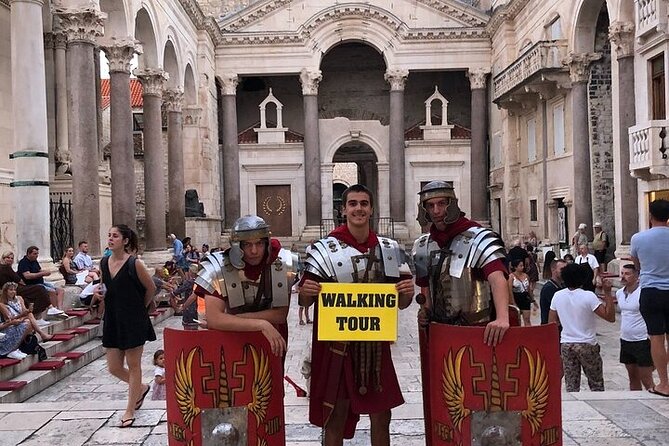
The final listed stop is the 16th-century Split Synagogue. You pass by it and learn about the history of the city’s Jewish community. The stop is about 10 minutes, and admission is not included.
This brief visit broadens the story beyond emperors, gates, and civic squares. It reminds you that Split’s past includes communities with different faiths and traditions. Since the itinerary describes passing by the synagogue rather than entering it, think of this as an introduction, not a full visit.
The tour ends within Diocletian’s Palace, not far from the start. Ask the guide to return you to the Peristyle if you want help finding your way back.
German-language guiding is a central part of the value
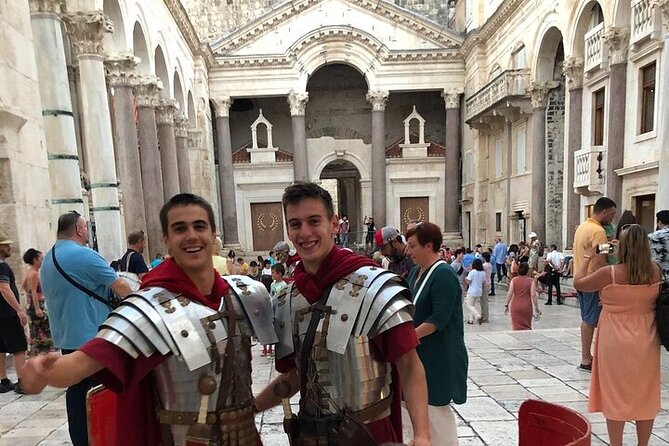
The tour is led by an educated guide with a strong command of the places around the palace. The experience depends on that person’s ability to turn a short sequence of stops into a clear story, and the guides named by people who took the tour include Antonella, Josip, and Marko.
Antonella is praised for combining historical detail with intelligence and a sense of humor. Josip is described as friendly and willing to answer a wide range of questions, while Marko is noted for lively historical storytelling. Those are useful qualities in a walk through a place as dense as Split’s old town: you want someone who can explain the main story without shutting down your curiosity.
The German language is the key booking detail. If you want a guided overview in German, this tour is designed for that. If you need another language, check before booking rather than assuming it will be available.
What 90 minutes and a group of up to 20 mean
The listed duration is about 90 minutes, with a maximum group size of 20. That is enough time to cover the main highlights without taking up half a day, and the group cap gives the guide a better chance to handle questions than a much larger group would.
The stops listed add up to about 75 minutes, leaving the rest of the tour for walking between locations and transitions. The pace is focused. You’ll get a strong introduction, but not long stretches to linger at every site.
The walk is not recommended for people who have trouble with high steps. If that applies to you, contact the operator before booking to clarify what the route involves. Service animals are allowed, most people can participate, and the meeting point is near public transportation.
Is $165.08 per person good value?
At $165.08 per person, this is a substantial price for a 90-minute walking tour. The main value is the German-language guide and the connected explanation of the palace and nearby old town, not paid entry to a series of attractions. The listed stops are free to access, and the synagogue admission is not included.
That makes the tour easiest to justify if you want a guided introduction, prefer to learn in German, and value an informed local voice who can answer questions. If you are comfortable exploring independently, you could see many of the same outdoor spaces without paying for a guide. The difference is structure and context: the tour gives you a clear route and a narrative that links Roman, Venetian, and local history.
Group discounts are available, but the actual discount depends on your booking. The experience is booked on average 44 days in advance, so plan ahead if you have fixed dates, while remembering that availability is not guaranteed.
Who should book this Split walking tour?
I’d choose this walk if you want to understand Diocletian’s Palace before exploring it on your own, especially if a German-speaking guide is important to you. It suits first-time visitors who want the main historical landmarks in one compact route, as well as people who enjoy asking questions and hearing about the city beyond the Roman period.
It is less suited to anyone who needs step-free access or wants a deep visit to the palace museum. It also may not offer enough time if you want to linger at each stop. For an efficient orientation with palace highlights, local context, and a guide who can make room for humor and questions, it is a sensible start to a stay in Split.
FAQ
How long does the tour last?
It lasts approximately 1 hour and 30 minutes.
Is the tour conducted in German?
Yes. It is a German-language walking tour.
What is the maximum group size?
The group is limited to a maximum of 20 people.
Does the tour include the museum section of the palace substructures?
No. The guided route visits the substructures but not the museum section. You can visit the museum after the tour.
Is admission to Split Synagogue included?
No. Admission is not included, and the route passes by the synagogue.
Can I cancel for a refund?
You can cancel at least 24 hours before the experience for a full refund. Cancellations made less than 24 hours before the start time are not refunded.
Just reviewed in Split
- Split City Walking Tour★ 5.0 · 5 reviews
- Split City Electric Bike Tour★ 5.0 · 68 reviews
- Split Cooking Class – Afternoon Edition Shared Activity★ 5.0 · 8 reviews
- Split: Blue Lagoon & 3 Islands Speedboat Tour – Small group★ 4.5 · 46 reviews
- Split Quest Experience: Discover the City★ 3.5 · 5 reviews
- Marjan Park & Split City Bike Tour★ 5.0 · 51 reviews
- Split: Blue Lagoon, Hvar, Brač, 6 Islands Boat Tour – Small Group★ 5.0 · 57 reviews
- Private transfer Split Airport to Split★ 5.0 · 28 reviews
Split History Tours, compared.
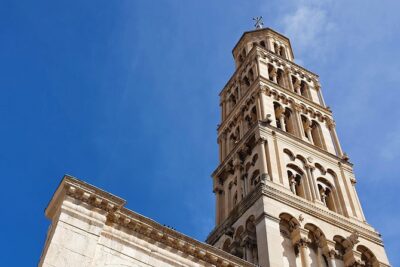
Walking Tour of Split with a ‘Magister’ of History
Read our review →
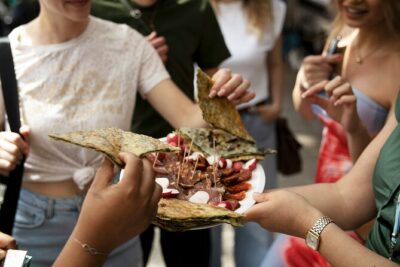
Split History and Gastro Small-Group Tour with Food and Drinks
Read our review →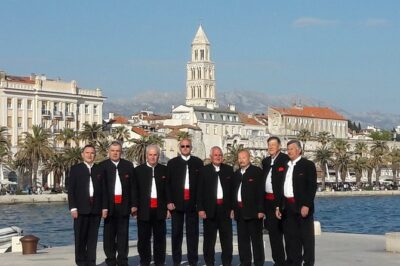
PREMIUM Emperor’s Walking Tour for History Lovers + Museum
Read our review →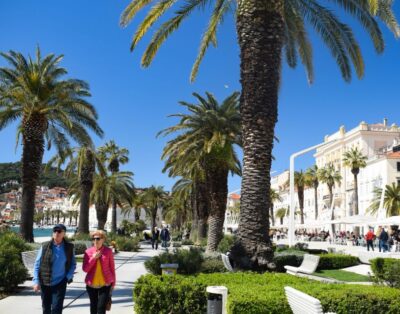
Local History and Culture 90-Minute Walking Tour
Read our review →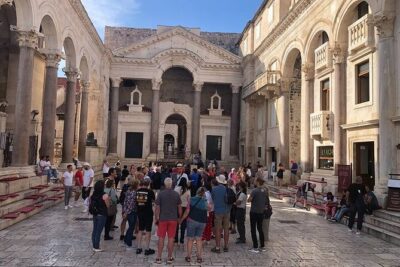
Historical & Gastro Treasures Tour with Green Market
Read our review →Browse the lists this tour appears in