
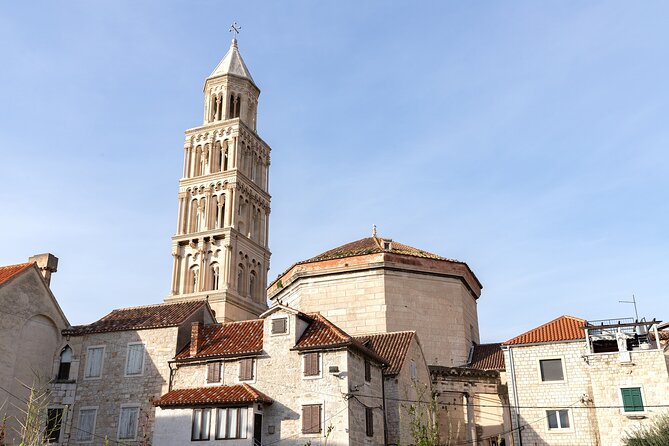
Review · SPLIT WALKING TOURS
Walking tour of Split with an Art Historian
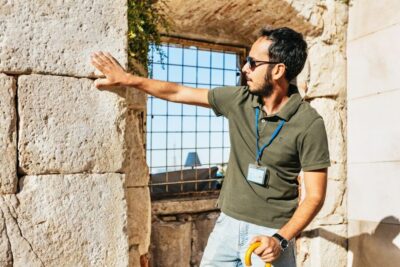
Split’s old town is not a Roman ruin parked behind ropes. People still live and work inside Diocletian’s Palace, where ancient walls became part of a medieval city and remain part of Split today. I like that this walk explains those layers on the spot, and that art historian Josipa connects architecture with the people who used it.
I also like the small-group limit of 10 and the conversational pace, which leaves room for questions and local recommendations. One consideration: this is an outdoor walking tour with steps and uneven areas, and it does not include entry to the cathedral, museums, or the paid palace substructures.
Key points to know before you book
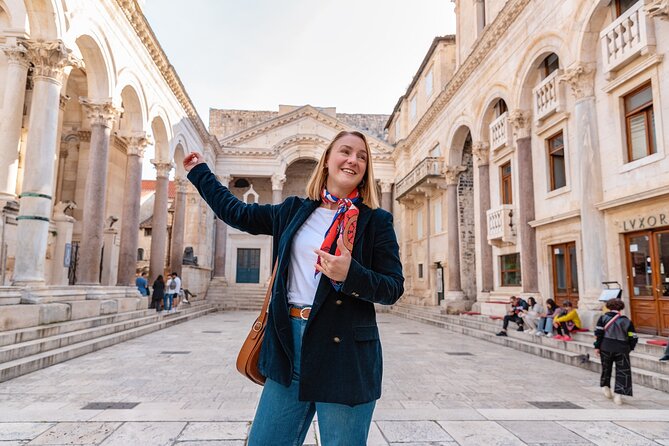
- The Roman palace is part of the city: Walk through its gates and streets, not around an isolated archaeological site.
- Josipa brings an art historian’s eye: Expect explanations of architecture, history, geography, and Split’s present-day culture.
- The group is capped at 10: A small group makes it easier to hear, ask questions, and keep a comfortable pace.
- The narrow street is only 57 centimeters wide: Let Me Pass Street is tiny, but its place in local memory gives it more meaning than a quick photo stop.
- Paid interiors are not included: The cathedral and palace substructures are discussed or passed through only where access allows.
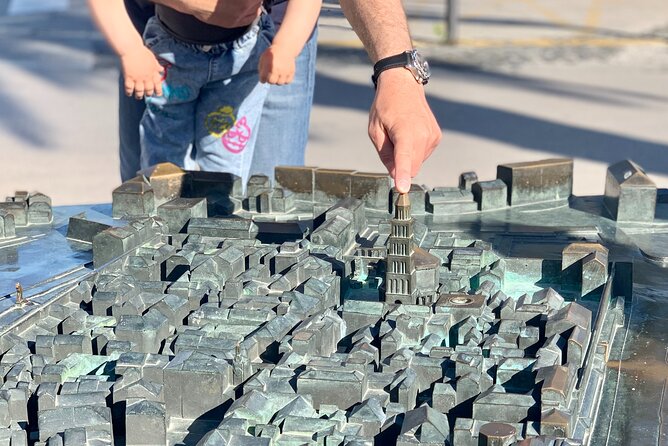
- Finish with a useful orientation: The route ends by the bronze model of Split’s old town on the Riva waterfront.
Start with water, then meet Roman Split
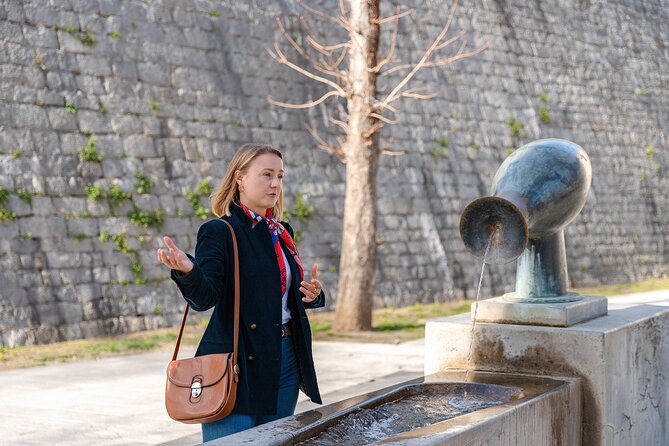
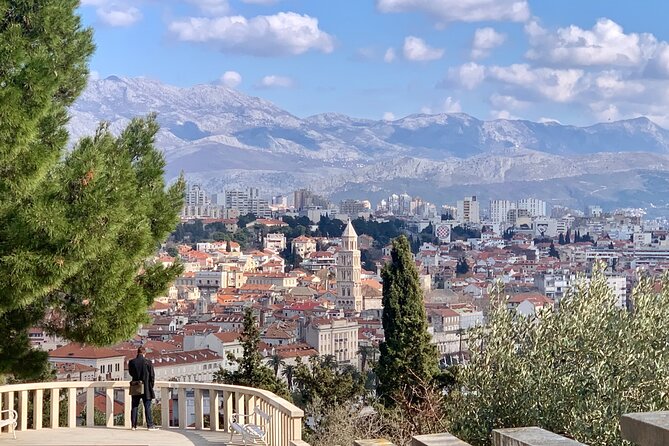
The walk begins beside the fountain in Strossmayer Park, known locally as Đardin. It is a sensible place to start: before getting into emperors and stonework, Josipa introduces the story of water and its role in sustaining the palace and city for more than 17 centuries. The park gives you a moment to orient yourself before the old town’s lanes begin to close in.
The first look at Diocletian’s Palace is deliberately not its grandest. At Tower 2, the guide uses a less polished view to explain what makes Split unusual: the palace was not simply left behind when Roman rule ended. It was adapted, reused, and built into the city around it. That framing helps you see the later streets and homes as part of the story, not as distractions from the Roman remains.
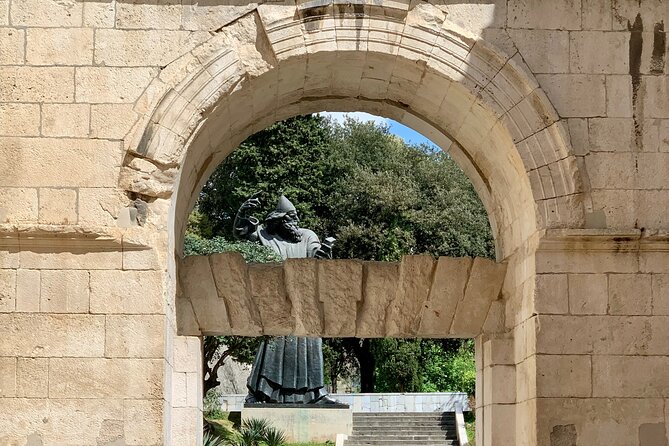
A short stop at the seven-meter bronze statue of Gregory of Nin brings in a more playful local custom. You can rub the statue’s toe for good luck, but Josipa also explains how the monument became part of popular culture. The small ritual is a good reminder that Split’s history is not just about emperors and dates. It is also about the city’s shared habits and symbols.
More walking tours in Split:
- Split: Old Town and Diocletian Palace Walking Tour
★ 4.9 · 4,727 reviews - Walking Tour of Split and Diocletian’s Palace
★ 5.0 · 2,588 reviews - Krka Waterfalls tour with Trogir Walking tour and Krka panoramic boat cruise
★ 5.0 · 1,659 reviews
Enter through the Golden Gate and follow the Roman street
The Golden Gate was one of four entrances to Diocletian’s Palace. From here, the route follows the Cardo, the main north-to-south street, toward the palace’s central spaces. Walking the old route makes the palace’s original plan easier to understand than studying a map alone. You can feel how a Roman street still directs movement through a living neighborhood.
The tour also takes in a hidden garden inside the palace. Details about the exact stop are limited, so think of it as a brief pause within the north-south route rather than a long garden visit. The walk continues through the northwestern corner toward the Iron Gate, where Josipa explains why this entrance became known as the city’s platinum gate. That nickname hints at how the gates gained different roles and meanings over time.
The Iron Gate and nearby lanes show the shift from a planned Roman complex to a city shaped by centuries of use. The route is short on each stop, often around five minutes, but the guide’s explanations link those places together. That approach suits the dense old town: you get a steady sequence of context without standing in one spot for too long.
Reach the Peristyle and the former imperial tomb
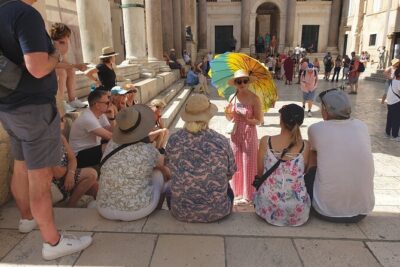
Following the Decumanus, the east-to-west Roman street, brings you to the Peristyle. This is one of the tour’s central stops, with about 10 minutes to hear how the space originated and what its architecture can tell you. It is a grand setting, but the value lies in having someone explain how it functioned rather than simply taking a photograph and moving on.
From the Peristyle, the walk makes a short detour to the Eastern, or Silver, Gate. The reason for the visit is explained on site, so this is a place to listen for how the palace’s different entrances fit into its design and later history. The route then returns to the Peristyle for the story of the Cathedral of Saint Domnius.
The cathedral began as a mausoleum for Emperor Diocletian and was later repurposed as a Christian church. That change gives you a clear example of how the city absorbed and reinterpreted Roman structures. The tour discusses the building from outside; entrance is paid and not included. If going inside is important to you, plan to return separately and allow for the admission fee.
One attraction description refers to a monument praised by Scottish architect Robert Adam in the 18th century as one of Europe’s most beautiful. The details provided do not identify a separate stop, but the comment points to the lasting architectural appeal of the palace’s central spaces. Josipa’s art history background is especially useful here, where proportion, design, and later changes can otherwise blur together.
Squeeze through Let Me Pass Street
Pusti me da prodjem, or Let Me Pass Street, is less than 10 meters long and just 57 centimeters wide. It is a memorable little pause in a tour full of monumental Roman stonework. You may have to turn sideways, depending on your build, but the narrow passage is more than a novelty: it has a place in local memory and is honored with a public monument elsewhere in Split.
This is one of the stops where a guide’s local perspective adds value. On your own, it is easy to spot the gap, take a picture, and move on. Josipa gives you the cultural context that helps explain why a tiny lane can matter to the people who live in the city.
More tours in Split:
- Split: Krka Waterfalls Trip with Boat Cruise and Swimming
★ 4.8 · 10,519 reviews - From Split: Krka Waterfalls, Food & Wine Tasting Tour
★ 5.0 · 9,326 reviews - Blue cave, Mamma Mia and Hvar, 5 islands speedboat tour
★ 5.0 · 7,150 reviews - From Split: Krka Waterfalls, Food & Wine Tasting Tour
★ 4.9 · 6,598 reviews
Hear the Vestibule’s acoustics
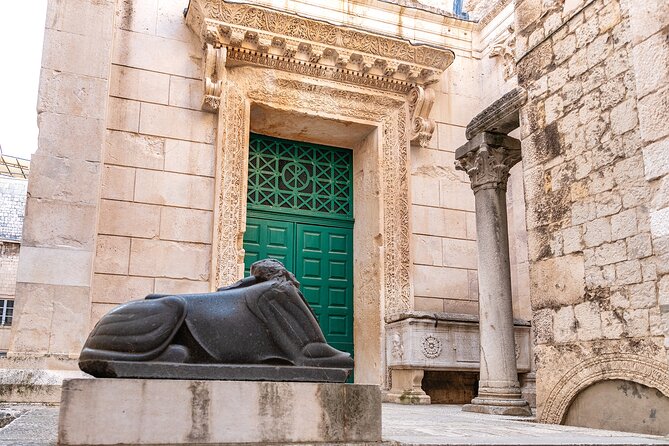
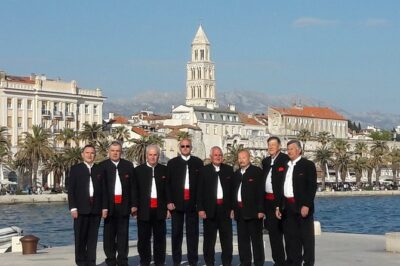
The Vestibule once served as an entrance to the emperor’s quarters. Today, it is a popular open-air photo spot, and the tour pauses for about 10 minutes to look around and take pictures. The circular space also has notable acoustics. Traditional klapa singing is often performed here, though it is not guaranteed as part of the tour.
This is a good place to take a breath and look upward. After tight streets and close-set walls, the open interior gives you a different sense of the palace’s scale. Keep expectations practical: the stop is a visit to the space, not a scheduled musical performance.
Take the palace shortcut toward the Riva
The route uses the Diocletian Palace substructures as a shortcut toward the waterfront. The shift from the open, busy Peristyle to the darker underground passages is part of the experience, and Josipa points out their archaeological and historical significance. The tour does not explore the full substructure complex: paid admission and time limits make this a brief passage rather than an in-depth visit.
If the underground spaces interest you, the guide can arrange a separate visit. For this walk, the shortcut works well as a transition. You leave the dense palace core and emerge near the Riva, Split’s waterfront promenade, which functions as a street, square, and meeting place. The tour strolls along part of it before reaching Fruit Square.
End at the bronze model and get your bearings
The final planned stop is the bronze model of Split’s historic center, near the seaside exit from the substructures. It gives you a useful overview of the old town’s layout and topography after you have walked through it. The tour concludes here, on the Riva waterfront, with a recap and time to ask Josipa for suggestions on what to see next.
The route may continue if time allows, but the palace is extensive, and the model is the likely finish. That is a practical ending: you can use the overview to plan your next wander rather than being left at a random corner. Josipa is also happy to share favorite places and recommendations for food and activities around town.
What the pace, group size, and price mean
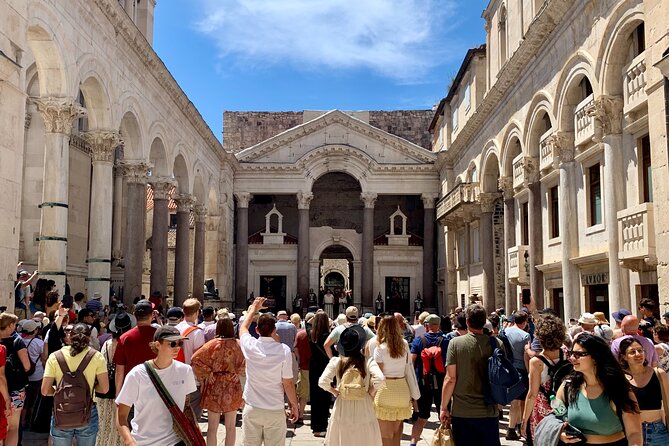
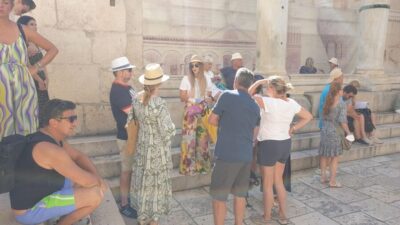
The tour lasts about 1 hour and 40 minutes to 2 hours, with a maximum of 10 people. Many individual stops are brief, but the walk is built around frequent explanations and movement through several distinct parts of the old town. The small cap matters in crowded lanes: it is easier to hear the guide and ask questions than in a large group, and Josipa can adjust the pace or route when needed.
The price is $30.23 per person, with group discounts available. No paid site admissions are included, so the cost is for the guided walk and interpretation rather than access to interiors. I consider that worthwhile if you want a clear introduction to the palace and Split’s layered history. If you only want to see the main sights quickly, you can walk many of these public streets on your own, but you will miss the explanations that connect them.
The strongest reason to book is Josipa’s approach. She is an art historian and local guide, and the tour’s focus reaches beyond dates and famous buildings to include architecture, archaeology, geography, folklore, and contemporary Split. The small-group format encourages questions, and Josipa has been praised for adapting the route around crowds and offering useful suggestions for places to eat and things to do afterward.
Morning availability may be worth choosing if you can, since the lanes and major stops can be less crowded before cruise groups arrive. That is not a promise of an empty old town, but quieter conditions can make it easier to hear and take in the spaces. Bring water and sun protection in hot weather. The tour runs rain or shine, and the route includes unavoidable steps and some uneven areas, though most of the walking is described as flat and easy.
You can bring a service animal. If you want to bring a pet, contact the provider before booking to discuss the details and make sure the group is comfortable. The meeting point is the fountain in Strossmayer Park, at Ul. kralja Tomislava 12. Be on time: the tour waits no more than 10 minutes after the scheduled start before leaving.
Is this Split walking tour right for you?
Book it if you want the Roman remains explained in context, enjoy architecture and local history, or are visiting Split for the first time and want a useful orientation. It is especially suited to curious visitors who like to ask questions and want recommendations for exploring beyond the palace walls.
Skip it if you need a step-free route, want to spend time inside paid sites, or prefer to explore without a guide. The tour does not include entry to the cathedral or the full palace substructures. For most people seeking a compact, personal introduction to Split, Josipa’s small-group walk offers good value and a thoughtful way to understand how the old city works.
FAQ
How long is the walking tour?
It lasts approximately 1 hour and 40 minutes to 2 hours.
What is the price?
The listed price is $30.23 per person. Group discounts are available.
What language is the tour offered in?
The tour is offered in English.
How many people can join?
The group has a maximum of 10 participants.
Where does the tour start?
It starts beside the fountain in Strossmayer Park, at Ul. kralja Tomislava 12 in Split.
Where does the tour end?
It concludes on the Riva waterfront by the bronze model of Split’s historic center, at Obala Hrvatskog narodnog preporoda 23.
Does the tour enter the Cathedral of Saint Domnius?
No. The cathedral is a paid site, and admission is not included.
Does the tour include a full visit to the palace substructures?
No. The route passes through the substructures as a shortcut, but does not explore the full complex. Paid admission is not included.
Does the tour run in bad weather?
Yes. It runs rain or shine.
Can I bring a dog?
Contact the provider before booking to discuss bringing a pet. Service animals are allowed.
Just reviewed in Split
- Split City Walking Tour★ 5.0 · 5 reviews
- Split City Electric Bike Tour★ 5.0 · 68 reviews
- Split Cooking Class – Afternoon Edition Shared Activity★ 5.0 · 8 reviews
- Marjan Park & Split City Bike Tour★ 5.0 · 51 reviews
- Split: Blue Lagoon & 3 Islands Speedboat Tour – Small group★ 4.5 · 46 reviews
- Split Quest Experience: Discover the City★ 3.5 · 5 reviews
- Split: Blue Lagoon, Hvar, Brač, 6 Islands Boat Tour – Small Group★ 5.0 · 57 reviews
- Private transfer Split Airport to Split★ 5.0 · 28 reviews
Split Walking Tours, compared.
Walking Tour of Split and Diocletian’s Palace
Read our review →
Krka Waterfalls tour with Trogir Walking tour and Krka panoramic boat cruise
Read our review →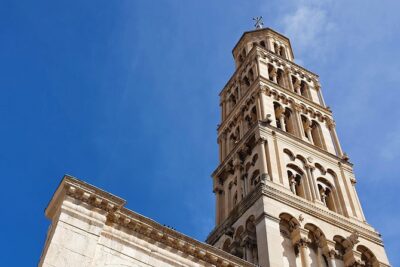
Walking Tour of Split with a ‘Magister’ of History
Read our review →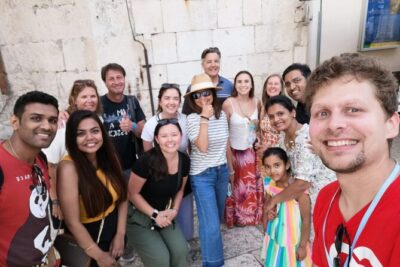
PREMIUM Emperor’s Walking Tour for History Lovers + Museum
Read our review →
Browse the lists this tour appears in