
Review · SPLIT HISTORY TOURS
Split Old Town History Walking Tour
Diocletian’s Palace is not a ruin set apart from the city. It is the city’s beating historic core, threaded with lanes, squares, cafés, and homes. This 90-minute walk helps you read those layers, from the palace cellars to the statue of Gregory of Nin outside the Golden Gate.
I like two things in particular: the route covers the palace’s main landmarks without taking half a day, and a local guide can connect Roman stonework to Croatian history and present-day Split. You also get practical suggestions for places to eat and explore after the walk.
The trade-off is pace. Ten stops in an hour and a half means you get a useful overview, not a long, quiet visit at each site. If you want more time for detailed history, or to linger inside individual buildings, plan to return on your own.
At a glance: palace landmarks and old-town lanes
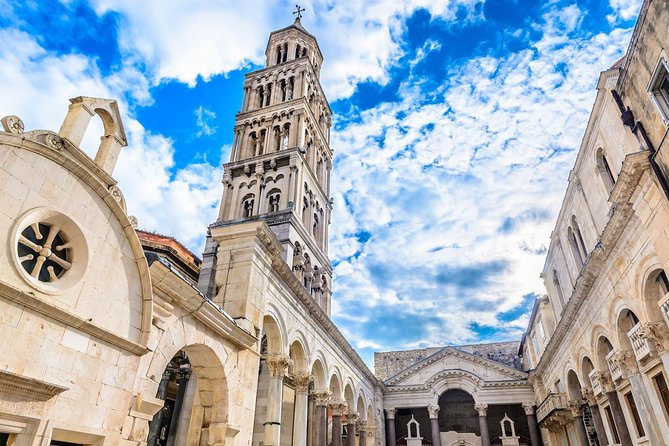
- The Peristyle sits at the heart of the walk: Roman columns and the Cathedral of Saint Domnius anchor the palace’s central square.
- The route includes the palace cellars: You’ll see the substructures below Diocletian’s residence and hear how they supported the rooms above.
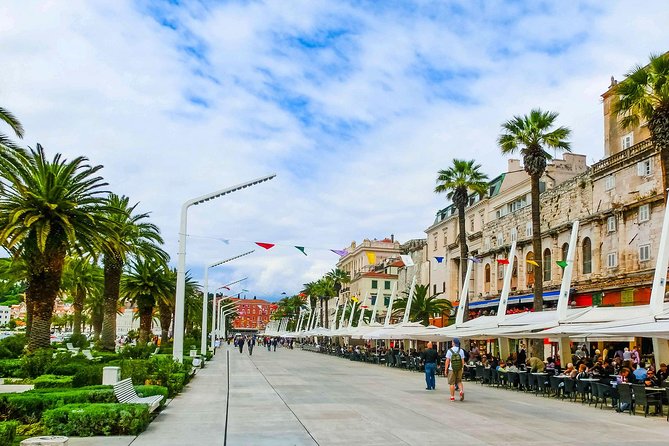
- It ends where it begins: The tour starts and finishes on the Riva, Split’s seaside promenade.
- Local stories add a human scale: Guides such as Anita, Iva, Petra, Toni, Rocco, and Katarina have led tours, with individual styles and strengths.
- Expect a brisk 90 minutes: Ten stops make this a strong orientation walk, but not an exhaustive palace visit.
- The price is $30.23 per person: A licensed guide and a compact route make it a practical first-day introduction to Split.
Starting on Split’s Riva
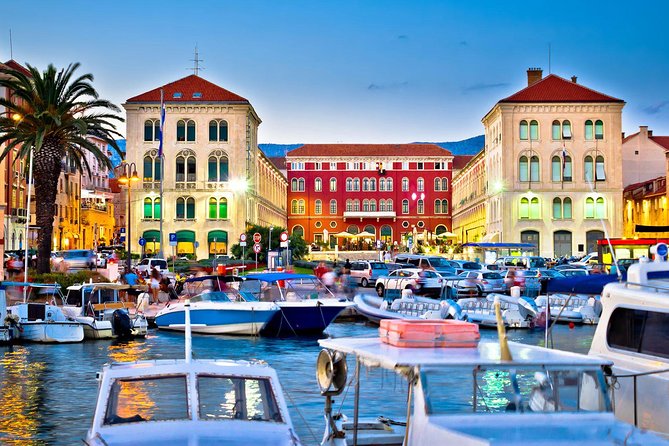
Meet your guide at Obala Hrvatskog narodnog preporoda 21, on the Riva promenade. The waterfront is a good place to begin: there are sea views, people passing through, and a clear sense that Split is both an old port city and a lived-in town.
Your guide starts with an introduction to Split’s history, culture, and layout. That early context matters. The old town can feel like a maze of stone alleys at first, and knowing how the palace fits into the modern city makes the next stops easier to understand.
The opening stop lasts about ten minutes, then the route moves toward the palace. Since the group can have up to 20 people, arrive at the meeting point ready to listen and keep close to the guide as you enter the narrower lanes. The maximum group size is modest compared with a large coach tour, though the group may still feel sizeable in a tight courtyard.
More walking tours in Split:
- Split: Old Town and Diocletian Palace Walking Tour
★ 4.9 · 4,727 reviews - Walking Tour of Split and Diocletian’s Palace
★ 5.0 · 2,588 reviews - Krka Waterfalls tour with Trogir Walking tour and Krka panoramic boat cruise
★ 5.0 · 1,659 reviews
Beneath the palace in the cellars
The palace cellars are among the tour’s most useful stops. These preserved substructures once supported the emperor’s residence above, and their layout gives you a sense of the scale of Diocletian’s complex. Your guide explains how the underground spaces relate to the palace overhead and what they reveal about Roman life.
This is more than a quick look at old stone. When you later stand in the Peristyle, you’ll have a better idea of how the palace was arranged vertically, with working and support spaces below the imperial rooms. That connection helps the palace feel like a functioning residence rather than a collection of disconnected monuments.
The stop is scheduled for about 15 minutes. That is enough for an introduction and a few questions, but not a leisurely visit to every part of the cellars. If the underground chambers catch your interest, ask your guide what you should revisit after the tour.
The Peristyle and Cathedral of Saint Domnius
The Peristyle is the tour’s central moment. This open square was the ceremonial heart of Diocletian’s palace, framed by Roman columns and the buildings that grew up around them. The Cathedral of Saint Domnius, once the emperor’s mausoleum, puts an unusual twist on the site: a structure built for a Roman ruler became a Christian cathedral.
Your guide has about ten minutes here to explain the architecture and the changing uses of the space. That short stop is valuable because the Peristyle is not simply an ancient courtyard. It shows how later generations adapted the palace instead of replacing it, leaving Roman and medieval layers side by side.
You may want to return on your own if you enjoy architectural details or want more time to look around. The guided visit gives you a framework; it cannot cover every feature in depth. Several people have praised guides for making the history clear and answering questions, so use the time to ask about what interests you most.
The Vestibule’s dome and echoes
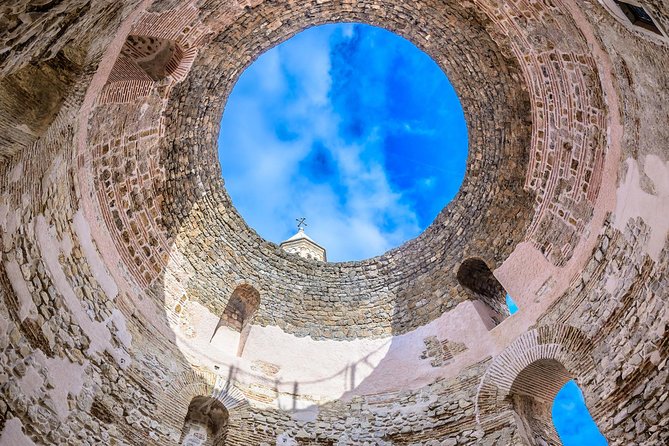
A few minutes later, the route enters the Vestibule, a circular space beneath an open dome. Its shape creates striking acoustics, and, if you happen to visit when traditional klapa singers are performing, you may hear their voices carry through the chamber.
The possibility of live singing is a bonus, not a promise. The stop lasts about five minutes, so the main value is seeing the dome and understanding the role of this space in the palace. It is also a reminder that Split’s historic buildings are not frozen exhibits. They remain part of the city’s everyday life.
More history tours in Split:
- Walking Tour of Split with a ‘Magister’ of History
★ 5.0 · 1,122 reviews - Split Walking Tour with Professor of History
★ 5.0 · 926 reviews - Split: History and Heritage Walking Tour
★ 4.9 · 650 reviews - Split History and Gastro Small-Group Tour with Food and Drinks
★ 5.0 · 375 reviews
Jupiter’s Temple and a Roman dining room
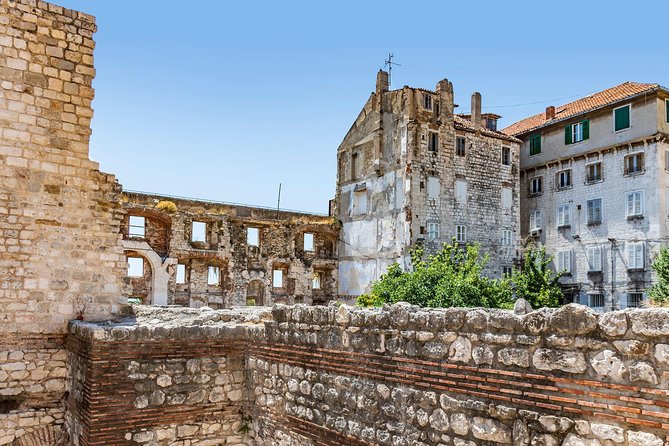
The next stops shift from public and ceremonial spaces to the palace’s smaller rooms. The former Temple of Jupiter became a baptistery, and the visit includes ancient sculptures and a preserved sarcophagus. The change from Roman worship to Christian use is another compact example of how the palace changed with the city.
You then see Triklinij, where Diocletian hosted lavish banquets. Your guide talks about Roman dining and imperial luxury, offering a more personal angle on palace life. Five minutes at each stop keeps the tour moving, so think of them as focused introductions rather than full site visits.
These shorter stops work best if you arrive with a little curiosity about how people used the spaces. Ask a question or two, and you can get more from the guide’s explanation without holding up the group.
The Golden Gate and Gregory of Nin
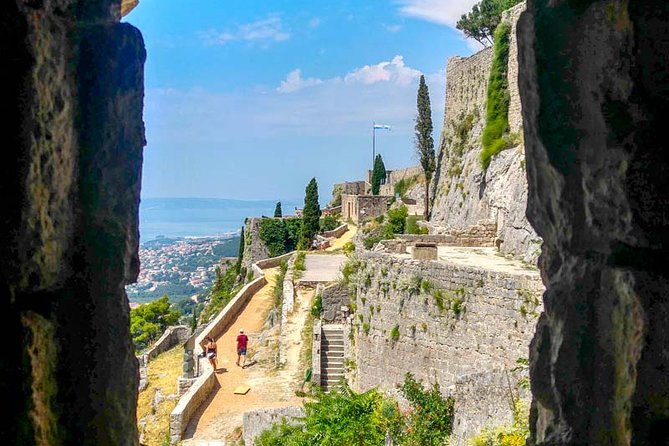
At the Golden Gate, the grandest of the palace’s four gates, the route passes out of the palace core. Nearby stands the towering statue of Gregory of Nin, a medieval bishop associated with the use of the Croatian language in church services.
The local custom is simple: rub the statue’s toe for good luck. The toe is polished from all that attention, making this one of the tour’s more playful stops. It also gives the walk a change of scale after the enclosed palace lanes, with room to take in the gate and statue from outside.
This stop takes about ten minutes, including the statue. If you want a photograph, be ready to take it quickly and then let others have their turn. The tradition is fun, but the more lasting value is learning who Gregory was and why he remains an important figure.
Pjaca, Fruit’s Square, and the return to the sea
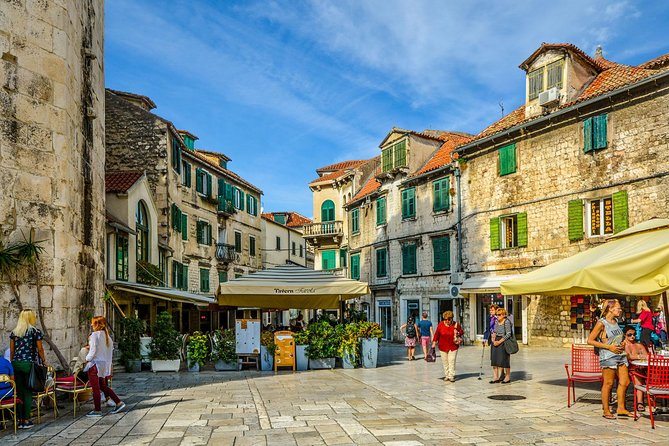
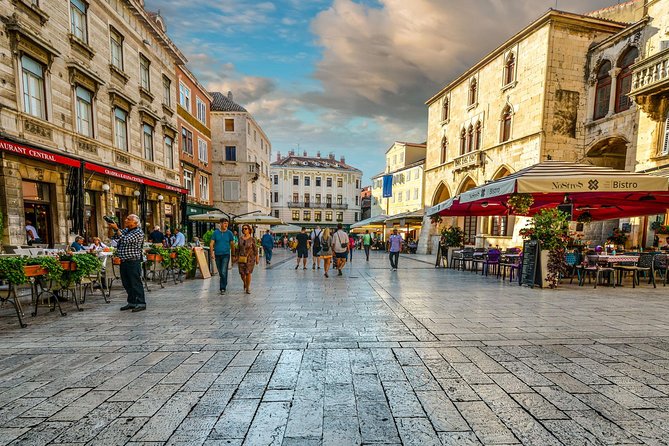
The route continues to Narodni trg, usually called Pjaca. Venetian-era buildings frame the square, with an old city clock and cafés adding to the scene. It is a good place to notice that Split’s history did not end with Rome: later rulers and residents left their own marks on the old town.
Fruit’s Square, or Trg Brace Radic, follows. Its name recalls the fruit markets once held there, while baroque palaces frame the square today. The stop is brief, around five minutes, but it gives you a glimpse of the city beyond the palace’s Roman identity.
The walk ends back on the Riva, after about 90 minutes in total. That return is handy if you want to continue with a meal or a waterfront stroll. It also brings the route full circle: you began with a broad view of Split and finish with a better sense of the old streets behind it.
What the guide adds
A licensed local guide is included, and the guide’s skill is central to the value of this tour. The strongest experiences described by people who took it share a pattern: guides explain the history with enthusiasm, answer questions, and connect the monuments to life in Split. Anita, Iva, Petra, Toni, Rocco, and Katarina are among the guides named by people on past tours.
The style can vary from one guide to another. Toni, for example, was appreciated for mixing local stories and humor with historical information. A useful tip is to ask for clear distinctions between documented history and personal anecdotes if you want the facts laid out neatly. Some people have also found evening departures cooler and quieter than a midday walk, though the exact departure times are not provided here.
The tour is offered in English, and there are two departure times to choose from. That flexibility helps you fit the walk around your day, but the published details do not specify the hours. Check the available options before booking if you are planning around a ferry, meal, or other fixed activity.
Is $30.23 good value?
At $30.23 per person, this is a reasonable price for a guided introduction to Split’s most important historic area. You get a licensed local guide, a 90-minute route, and explanations at ten locations. The walk is especially useful on your first day, when a little orientation can help you decide where to spend more time later.
The value depends on what you want. If you are happy with a brisk overview and enjoy hearing local context, the price buys more than a route map could. If you already know the palace well or want a long, specialist history session, you may find the pace too quick for the cost.
Food and drinks are not included. The tour does, however, include tips on where to eat, drink, and explore, which can help you make a better plan for the rest of your stay.
Practical details before you go
The tour lasts about an hour and a half, starts at Obala Hrvatskog narodnog preporoda 21, and ends at the same point. It is offered in English, uses a mobile ticket, and allows a maximum of 20 people. Children must be accompanied by an adult, and pets are not allowed.
Wear shoes with a secure grip. The route passes through old-town streets and palace spaces, and a person who took the walk advised against smooth-soled shoes. The official participation details say most people can join, but one account describes the route as unsuitable for wheelchairs. If step-free access is important to you, confirm the route’s current accessibility with the provider before booking.
The tour operates in all weather, so dress for the conditions. Poor weather or failure to meet the minimum group size can lead to cancellation, with a different date or a refund offered. You can cancel for a full refund up to 24 hours before the start time; changes or cancellations inside that window are not accepted.
Should you book the Split Old Town History Walking Tour?
Book it if you want a compact, well-structured introduction to Diocletian’s Palace and the old town, especially early in your stay. The route covers the cellars, Peristyle, cathedral, temple, palace gate, and two historic squares, while a local guide gives those stones a human story.
Skip it if you want to spend a long time inside each monument or prefer to explore entirely at your own pace. For most people looking to get their bearings in Split without giving up half a day, this is a sensible use of 90 minutes and $30.23.
FAQ
How long does the tour last?
The walking tour lasts approximately 1 hour and 30 minutes.
Where does the tour start and finish?
It starts at Obala Hrvatskog narodnog preporoda 21 in Split and ends back at the same meeting point.
What language is the tour offered in?
The tour is offered in English.
What is included in the price?
A professional licensed local guide is included. Food and drinks are not included.
How many people can join the tour?
The maximum group size is 20 people.
Are there different departure times?
Yes. You can choose from two departure times. The exact times are not specified here, so check the available options when booking.
Can children and pets join?
Children must be accompanied by an adult. Pets are not allowed on the tour.
What is the cancellation policy?
You can cancel up to 24 hours before the start time for a full refund. Cancellations or changes made less than 24 hours before the start time are not accepted.
Just reviewed in Split
- Split City Walking Tour★ 5.0 · 5 reviews
- Split City Electric Bike Tour★ 5.0 · 68 reviews
- Split Cooking Class – Afternoon Edition Shared Activity★ 5.0 · 8 reviews
- Marjan Park & Split City Bike Tour★ 5.0 · 51 reviews
- Split: Blue Lagoon & 3 Islands Speedboat Tour – Small group★ 4.5 · 46 reviews
- Split Quest Experience: Discover the City★ 3.5 · 5 reviews
- Split: Blue Lagoon, Hvar, Brač, 6 Islands Boat Tour – Small Group★ 5.0 · 57 reviews
- Private transfer Split Airport to Split★ 5.0 · 28 reviews
Split History Tours, compared.
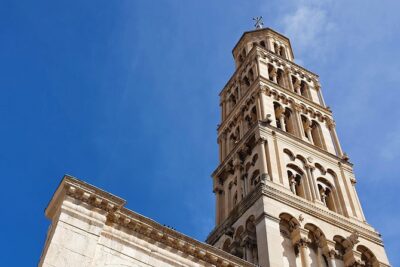
Walking Tour of Split with a ‘Magister’ of History
Read our review →
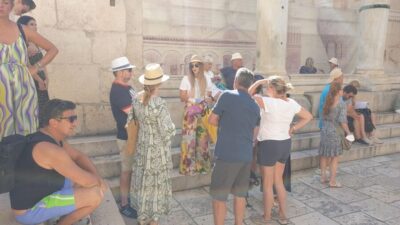
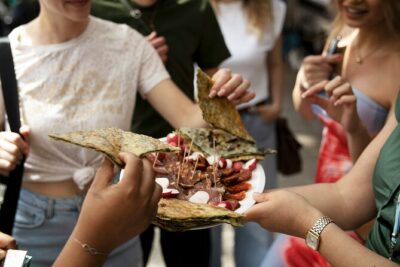
Split History and Gastro Small-Group Tour with Food and Drinks
Read our review →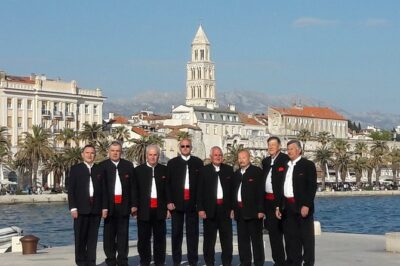
PREMIUM Emperor’s Walking Tour for History Lovers + Museum
Read our review →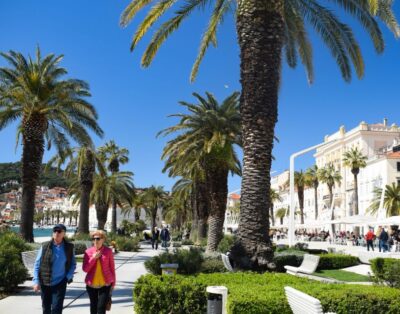
Local History and Culture 90-Minute Walking Tour
Read our review →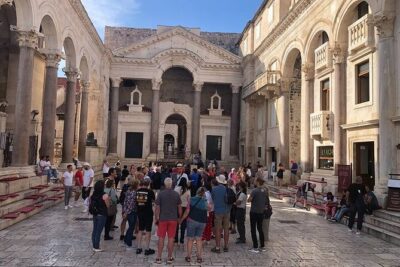
Historical & Gastro Treasures Tour with Green Market
Read our review →Browse the lists this tour appears in