
Review · SPLIT HISTORY TOURS
Split Walking Tour with History Professor
Split’s Roman palace is not a sealed-off ruin. It is part of the city’s everyday fabric, with shops, squares, and homes threaded through its old stone. This walk with history professor Mario connects that Roman core to medieval and modern Split, helping you see how the city grew rather than simply ticking off its most famous monuments.
I like two things especially: Mario’s teaching style, which past participants describe as lively, humorous, and open to questions, and the route’s broader view of Split, including Venetian, Ottoman, and Napoleonic influences beyond the palace. A stop at the model of the historic center also gives you a useful map in your head before you start exploring on your own.
One point to weigh: the Cathedral of Saint Domnius and Temple of Jupiter are visited, but their admission is not included. The advertised duration is two hours, while the tour description also calls it two hours and fifteen minutes, so check the available start time and duration when you book.
- A professor leads the walk: Mario brings a history-teacher’s approach, with explanations, questions, and humor.
- The route looks beyond the palace: You visit Roman landmarks, then continue through medieval and modern parts of central Split.
- Game of Thrones sites and local lore add texture: The tour includes filming locations, legends, and observations about local life.
- The itinerary has several short stops: Expect to move often, with visits ranging from five to twenty minutes.
- Entry fees are extra: Cathedral of Saint Domnius and the Temple of Jupiter are both listed with admission excluded.
- Comfortable shoes matter: This is a walking tour through the historic center, and it is not suitable for wheelchair users.
A Roman palace that became a city
Diocletian’s Palace is the headline attraction in Split, but it is not just a monument to admire from the outside. Its ancient spaces sit within the living center of the city, and the tour uses that setting to explain how Roman, medieval, and modern Split fit together. That wider frame is the main reason to choose this walk over a quick circuit of the palace alone.
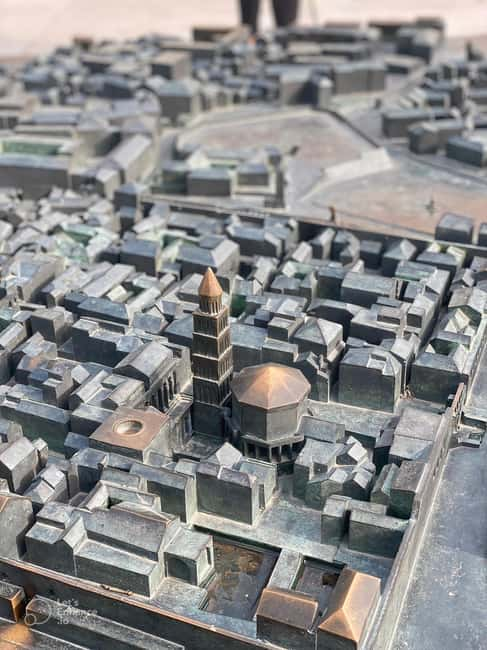
You begin by the Riva harbor, at a model of Split’s historic core. It is a practical first stop. The model can help you understand the shape of the old center before you enter its network of landmarks and streets, and it gives Mario a chance to set out the city’s story.
The tour then moves through the palace substructures, the Peristyle, and the Vestibule. These are not interchangeable photo stops. Each offers a different way to understand the Roman center, and Mario’s historical commentary is intended to make the stones and spaces easier to read.
The itinerary continues to the Cathedral of Saint Domnius and the Temple of Jupiter, then through the Golden Gate and past the statue of Grgur Ninski. After the Roman core, you head toward Marmontova Street, Prokurative, and Fruit’s Square. That route gives the walk a useful change of pace: you begin with the best-known ancient sights and finish in parts of central Split shaped by later periods and daily city life.
Mario’s history lesson, without the lecture-hall feel
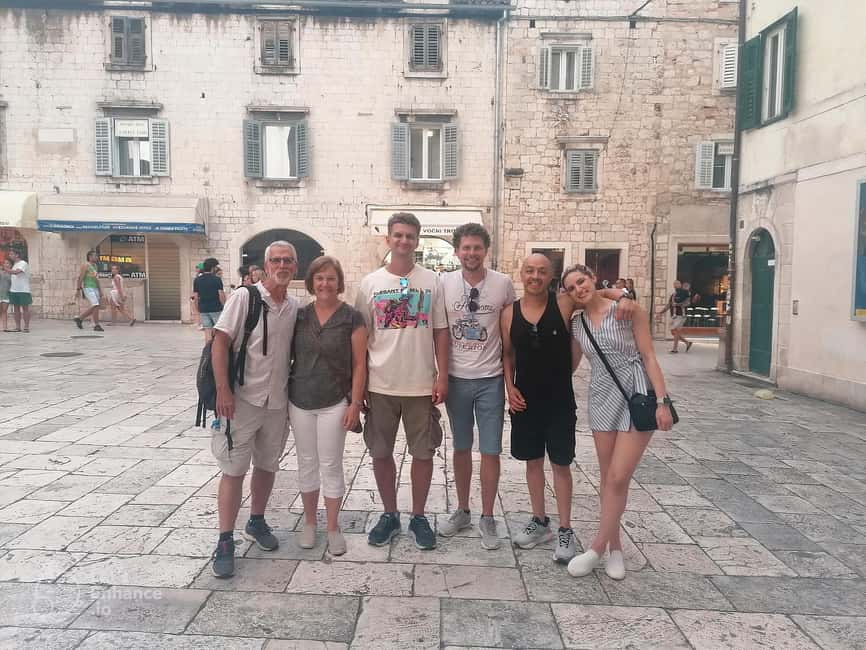
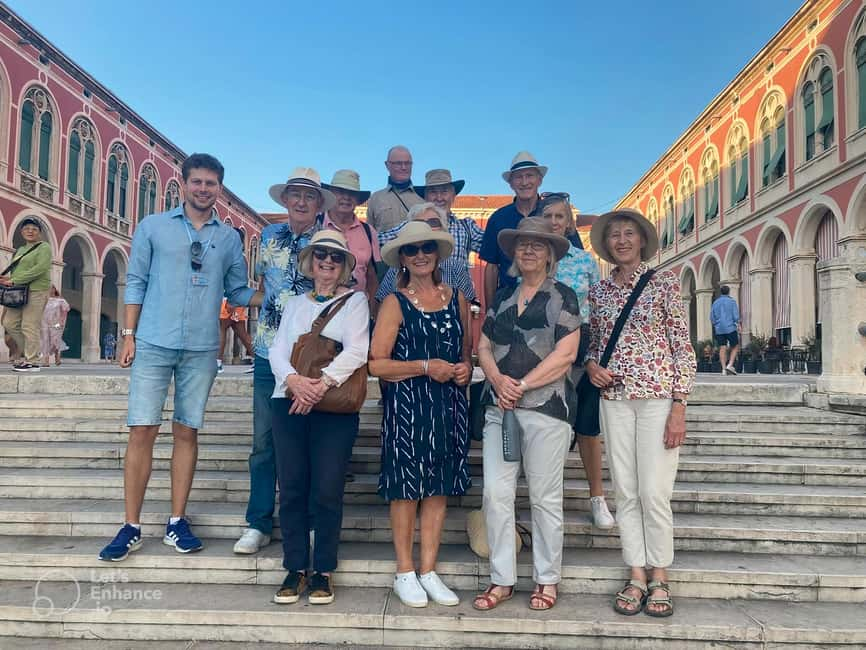
The guide can make or break a history walk. Mario is a local history professor, and his style is a major part of the tour’s appeal. He is described as personable, funny, and enthusiastic, with a way of presenting historical information that keeps the group involved rather than making you listen to a long speech.
That interactive approach matters in a place where there is a lot to take in. The palace’s layers can blur together if you are left to inspect them without context. A guide who invites questions and makes connections helps you understand what you are seeing, while leaving room to follow a point that interests you.
A professor-led tour may sound formal, but the feedback about Mario suggests the opposite: the history comes with humor and a conversational manner. If you enjoy asking questions, or want a guide who can handle them, this is a good fit. If you prefer a quiet walk with only a little commentary, a two-hour guided route may feel talkative.
The information is delivered in English. You should expect the guide to move through a substantial amount of material, from the Roman palace to Split’s later influences, so it is worth listening for the broader connections rather than trying to memorize every detail.
More walking tours in Split:
- Split: Old Town and Diocletian Palace Walking Tour
★ 4.9 · 4,727 reviews - Walking Tour of Split and Diocletian’s Palace
★ 5.0 · 2,588 reviews - Krka Waterfalls tour with Trogir Walking tour and Krka panoramic boat cruise
★ 5.0 · 1,659 reviews
From the Riva model to the palace substructures
The meeting point is next to the Brass Gate of Diocletian’s Palace. From there, the first listed stop is the model of Split’s historic core at Riva harbor, with about ten minutes set aside. This is a smart place to start: the harbor is an easy reference point, and the model can orient you before the walking route moves into the old center.
The palace substructures get a short five-minute stop. That is the briefest pause on the route, so treat it as an introduction rather than a long visit. The point is to begin understanding the palace as a connected site, then continue to the spaces where the tour spends more time.
At the Peristyle, the itinerary allows ten minutes. This is one of the key Roman spaces on the route, and it is where a guide’s explanation can help distinguish the historical significance of the setting from the visual impression. You will have time to look around and hear the story, though not a long stretch for independent exploration.
The Vestibule receives another ten minutes. Taken together, the Peristyle and Vestibule offer a close look at the palace’s central spaces, with Mario providing the context that makes each stop more than a quick photograph. If you want to linger, take note of what catches your eye and return after the tour.
Cathedral, Temple, and the Golden Gate
The Cathedral of Saint Domnius is scheduled for twenty minutes, the longest stop in the itinerary. That extra time is useful, but admission is not included, so your ability to go inside depends on the separate entry arrangements and the tour’s timing. The details provided do not say whether the group enters, so ask before booking if interior access is important to you.
The Temple of Jupiter has a ten-minute stop, also with admission excluded. As with the cathedral, plan for the possibility of an exterior visit unless you confirm otherwise. This distinction matters when comparing the tour price with a self-guided walk: the guide’s fee covers the walk and commentary, not all monument admissions.
The Golden Gate is another ten-minute stop. It gives the route a clear transition from the palace’s Roman core toward the city’s other landmarks. Mario also points out the statue of Grgur Ninski, with a further ten minutes allotted there. The itinerary does not spell out every story attached to these places, but the guide’s focus on local legends and history is a reason to pay attention and ask questions.
These stops are close enough to form a coherent walk through the center, but they are not long museum visits. If your priority is a thorough look inside every paid site, you may want additional time on your own after the guided tour.
Medieval and modern Split beyond the palace
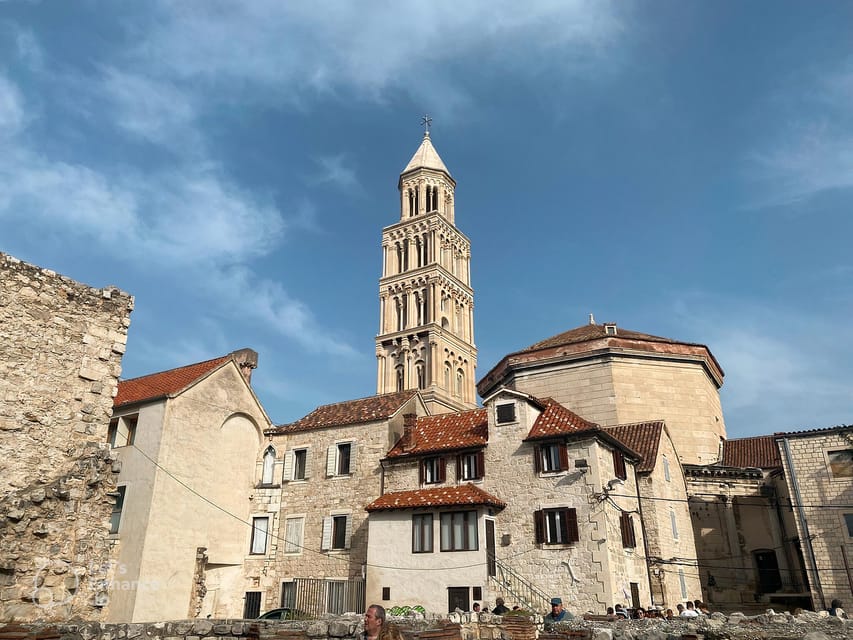
The walk’s broader scope is a real advantage. Many first visits to Split concentrate on Diocletian’s Palace, yet the city’s story did not end with Rome. The tour traces later influences from Venice, the Ottomans, and Napoleon, helping you see the historic center as a place shaped over many centuries.
Marmontova Street receives a ten-minute stop, followed by ten minutes at Prokurative. These later parts of the route help balance the ancient sights with the city’s more recent character. You are not just being led from one Roman landmark to another; you get a sense of how central Split developed beyond the palace walls.
The tour also includes Game of Thrones locations. That can be a fun extra if you recognize the filming sites, but it does not appear to replace the historical focus. The stronger reason to join is the combination of palace history, later city layers, local legends, and everyday-life observations.
Fruit’s Square, or Trg Braće Radić, is the final listed stop and gets fifteen minutes. Ending here gives the route time to settle into the city beyond its most famous ancient landmarks. It is also a useful point from which to decide what you want to revisit or explore independently.
More history tours in Split:
- Walking Tour of Split with a ‘Magister’ of History
★ 5.0 · 1,122 reviews - Split Walking Tour with Professor of History
★ 5.0 · 926 reviews - Split: History and Heritage Walking Tour
★ 4.9 · 650 reviews - Split History and Gastro Small-Group Tour with Food and Drinks
★ 5.0 · 375 reviews
What the short stop times mean in practice
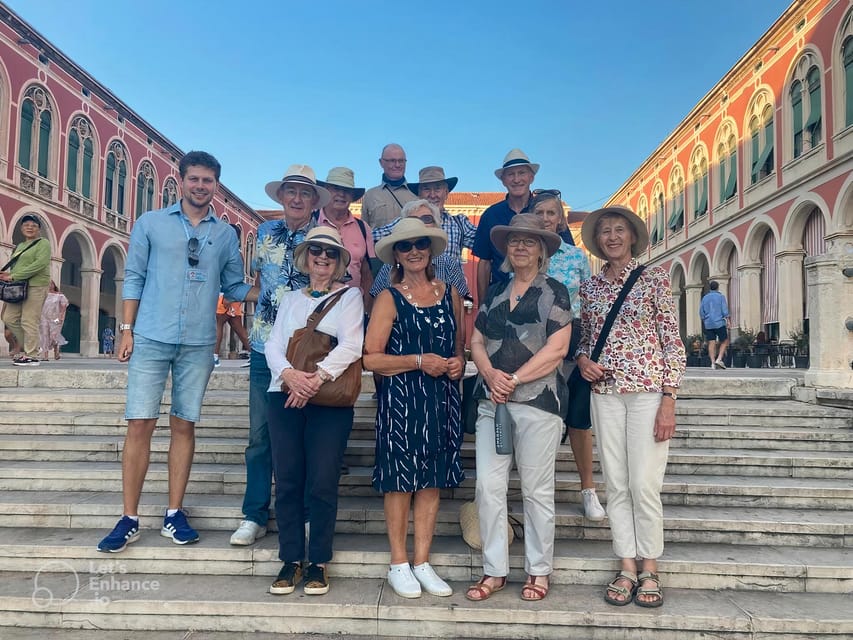
The listed stops add up to around one hour and fifty minutes, before counting the walk between them. The experience is advertised as two hours, though the description also mentions two hours and fifteen minutes. That difference may reflect how the tour is described, but it is worth checking the precise duration for your selected departure.
The schedule is made up of short visits, mostly ten minutes, with longer pauses at the cathedral and Fruit’s Square. That format works well if you want a guided overview and a clear route. It is less suited to anyone hoping to spend a long time inside each monument or take a slow, unstructured look at every corner.
I would treat the walk as an orientation and a history lesson, not as a substitute for visiting every site at length. You can return to a favorite place afterward, and the guide’s explanations should help you choose where to spend that extra time.
The tour is described as small-group, with private tours available on request. A smaller group can make it easier to hear the guide and ask questions, though no exact group-size limit is specified. If you want a private walk, contact the provider at [email protected] to ask about arrangements.
Is $23 good value for this Split walk?
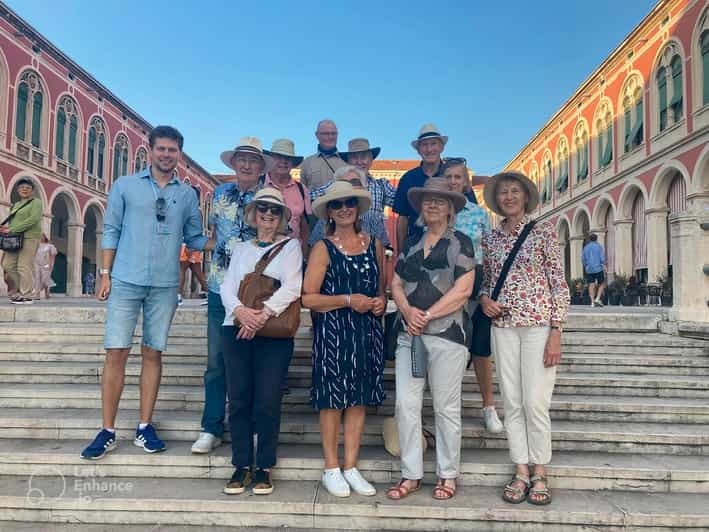
At $23 per person, the tour offers two hours of guided context across a route that covers Roman, medieval, and modern Split. The value is strongest if you want a local historian to connect the landmarks and answer questions, rather than simply find your own way between them.
The price does not include admission to the Cathedral of Saint Domnius or the Temple of Jupiter. Keep that in mind if you plan to enter both. The activity also offers reserve-now, pay-later booking and free cancellation up to 24 hours in advance, which can make it easier to keep plans flexible.
For a short visit to Split, the tour can be a useful first activity. It gives you a framework for later independent exploring and helps explain why the palace is part of the city rather than an isolated archaeological site. If you already know the main history and prefer to explore at your own pace, you may find the guided commentary less essential.
Who should book this tour?
I would point history-minded visitors toward this walk, especially anyone who wants more than the standard palace highlights. Mario’s teaching style appears to suit people who like clear explanations, a bit of humor, and the chance to ask questions. The route also works for a first orientation, since it moves from the harbor and palace through several parts of the center.
It is appropriate for all ages, but not for wheelchair users. You should wear comfortable clothes and shoes, as the activity involves walking between stops. The supplied details do not specify the route’s surface conditions or the exact group size, so ask the provider if either could affect your plans.
Book it if you want a compact, guide-led introduction with historical range. Skip it if you need step-free access, want to spend extended time inside paid sites, or would rather wander without a set route. For many visitors, the strongest reason to go is simple: Mario turns Split’s layered past into a story you can follow while walking through the actual places it shaped.
FAQ
How long is the tour?
It is advertised as a two-hour walking tour, although the description also refers to two hours and fifteen minutes. Check the duration shown for your chosen starting time.
What is the price?
The tour is listed at $23 per person. Admission to the Cathedral of Saint Domnius and the Temple of Jupiter is not included.
What language is the tour in?
The live guide speaks English.
Where is the meeting point?
Meet the guide next to the Brass Gate of Diocletian’s Palace.
Which places are included on the route?
The route includes the Riva harbor model of Split’s historic core, the palace substructures, Peristyle, Vestibule, Cathedral of Saint Domnius, Temple of Jupiter, Golden Gate, Grgur Ninski Statue, Marmontova Street, Prokurative, and Fruit’s Square.
Are monument admission fees included?
No. Admission is excluded for the Cathedral of Saint Domnius and the Temple of Jupiter.
Is the tour suitable for children or wheelchair users?
The tour is described as appropriate for all ages. It is not suitable for wheelchair users.
Can I cancel or pay later?
You can cancel up to 24 hours in advance for a full refund. The booking option also allows you to reserve now and pay later.
Just reviewed in Split
- Split City Walking Tour★ 5.0 · 5 reviews
- Split City Electric Bike Tour★ 5.0 · 68 reviews
- Split Cooking Class – Afternoon Edition Shared Activity★ 5.0 · 8 reviews
- Marjan Park & Split City Bike Tour★ 5.0 · 51 reviews
- Split: Blue Lagoon & 3 Islands Speedboat Tour – Small group★ 4.5 · 46 reviews
- Split Quest Experience: Discover the City★ 3.5 · 5 reviews
- Split Bike and Wine Experience★ 5.0 · 3 reviews
- Split: Blue Lagoon, Hvar, Brač, 6 Islands Boat Tour – Small Group★ 5.0 · 57 reviews
Split History Tours, compared.

Walking Tour of Split with a ‘Magister’ of History
Read our review →
Split History and Gastro Small-Group Tour with Food and Drinks
Read our review →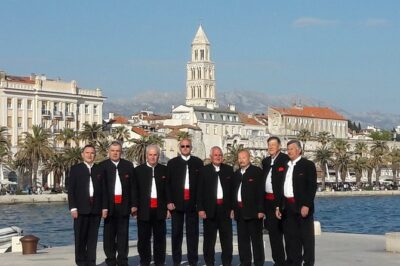
PREMIUM Emperor’s Walking Tour for History Lovers + Museum
Read our review →
Local History and Culture 90-Minute Walking Tour
Read our review →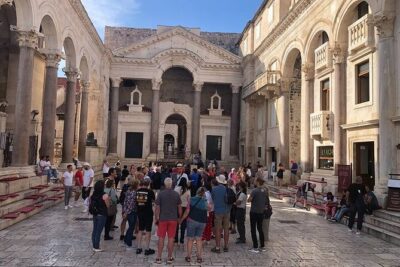

Historical & Gastro Treasures Tour with Green Market
Read our review →Browse the lists this tour appears in