
Review · SPLIT WALKING TOURS
Split: Cultural Walking Tour with Anthropologist Guide
Split’s old center is more than a string of handsome squares and ancient stone. On this two-hour walk, a cultural anthropologist uses familiar landmarks to talk plainly about Croatia’s contested history, identity, politics, religion, and social change.
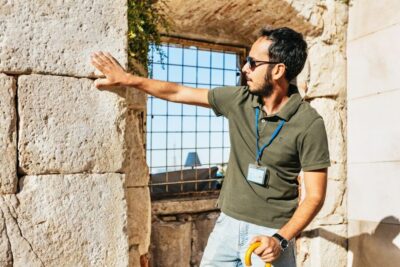
I like that the tour links past events to present-day society, rather than stopping at dates and monuments. I also like its use of audio-visual material to help explain each topic, and the way guide Marin connects ideas to the places around you.
One thing to consider: this is not a light, monument-only stroll. Its frank discussion of difficult subjects may be just what you want, but if you are after a relaxed introduction focused mainly on architecture, another tour may suit you better.
- Meet at the fountain in Park Josipa Jurja Strossmayera, at Ul. kralja Tomislava 12.
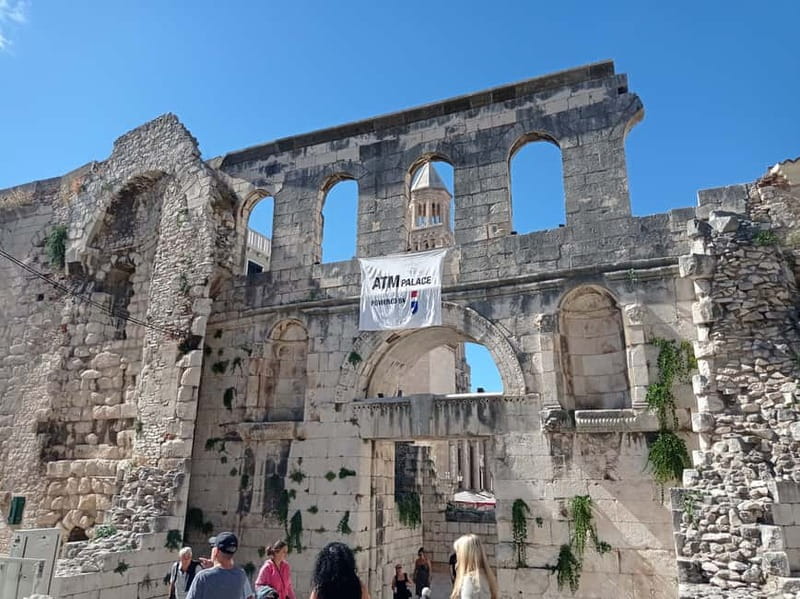
- Expect politics and identity alongside landmarks, including the Golden Gate, Peristil, and People’s Square.
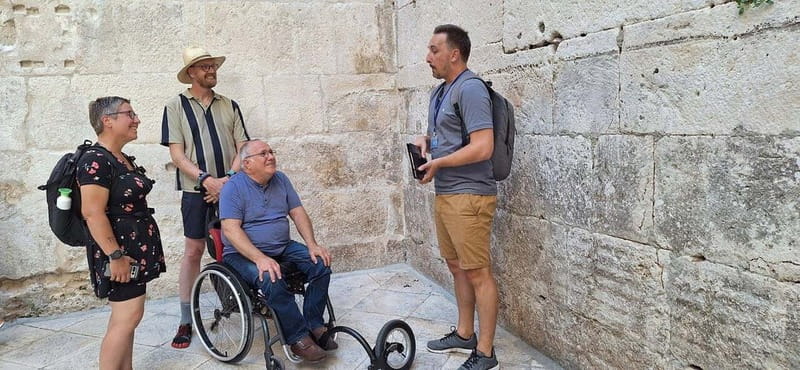
- Guide Marin is a cultural anthropologist and school teacher, and the discussion is designed to be accessible rather than technical.
- The two-hour route includes nine listed stops, with guided talks at most of them and a brief pass by the Riva.
- English-language tour, wheelchair accessible, and listed at $33 per person, with audio-visual material included.
A walking tour built around difficult questions
The tour’s original title, Controversies behind Split and Croatia, makes its priorities plain. You will see central Split, but the main point is to consider how history is remembered and how that memory still shapes social and political life.
Topics include politics and geopolitics, religion, identity, demographics, sexuality, history, and economics. That range gives the walk a different feel from a standard highlights tour. Rather than treating each building as an isolated sight, the guide uses the city as a setting for conversations about the people and forces that shaped it.
I think that approach is especially useful on a first day in Split. A basic orientation can help you recognize the main squares later, while a discussion of local identity gives you a framework for understanding what you see and hear during the rest of your visit. The tour is intended for beginners as well as people who already know the city and want a broader view.
Guide Marin’s background as a cultural anthropologist and school teacher fits the subject well. The aim is not to turn a holiday walk into a lecture, but to make difficult issues understandable and connect them to visible places. The discussion is described as nontechnical, though the subject matter itself calls for attention and an open mind.
From the park fountain to Split’s Golden Gate
The meeting point is in Park Josipa Jurja Strossmayera, at Ul. kralja Tomislava 12. Look for the fountain in the middle of the park. Starting in a public green space gives the guide a practical place to gather the group before heading into the old center.
The first listed landmark is the Golden Gate, where the tour allows about 15 minutes for a guided visit. It is one of Split’s main sites, but here the interest is not only in what you can see. The guide uses the city’s central monuments to set up a wider account of how Split and Croatia have changed over time.
That distinction matters if you are comparing tours. You can expect the architecture to anchor the discussion, but the emphasis is on what the place can help explain, not simply on taking a photo and moving to the next stop.
More walking tours in Split:
- Split: Old Town and Diocletian Palace Walking Tour
★ 4.9 · 4,727 reviews - Walking Tour of Split and Diocletian’s Palace
★ 5.0 · 2,588 reviews - Krka Waterfalls tour with Trogir Walking tour and Krka panoramic boat cruise
★ 5.0 · 1,659 reviews
Peristil and the Diocletian’s Cellars
At Peristil, the planned guided stop is about 15 minutes. The square gives the guide another clear point of reference for discussing the city’s past and its meaning today. You are not just being told that a place is old or important; you are invited to consider how people interpret that past.
The next stop, Diocletian’s Cellars, has about 10 minutes set aside for a guided talk. The tour description identifies the cellars as part of its central route, but does not specify which details will be covered. What is clear is the method: link a well-known site to larger themes in Croatian history and society.
The pace here is purposeful. Across the listed guided stops, the time varies from 10 to 15 minutes, so expect a series of focused conversations rather than long visits at any one location. If you like to linger over architecture or explore interiors at your own speed, you may want to return to particular sites after the tour.
People’s Square and Židovski prolaz
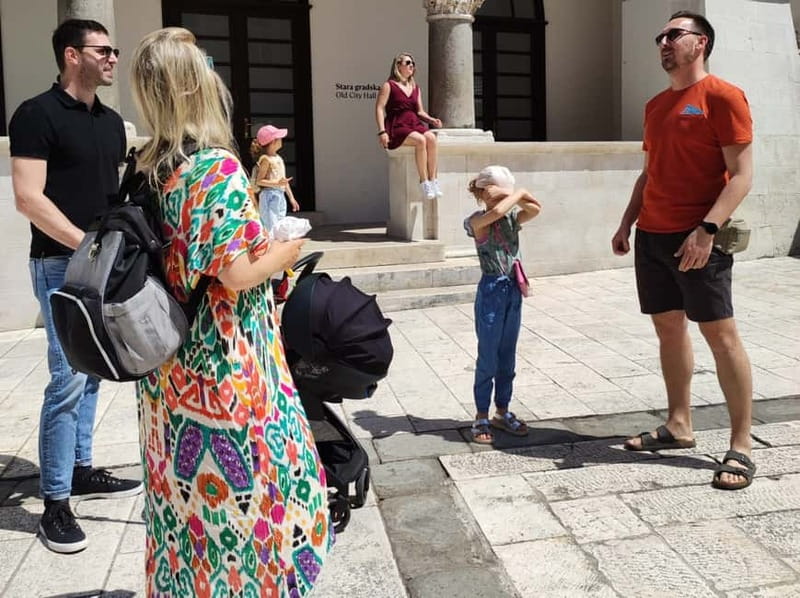
At People’s Square, the group spends about 15 minutes. It is one of the tour’s main public spaces, and its position in the route helps the guide keep the conversation grounded in the everyday center of Split. The tour’s wider themes include religion, demographics, sexuality, and economics, though the precise topic attached to each individual stop is not specified.
A shorter, roughly 10-minute guided stop follows at Židovski prolaz. The name itself points toward a part of the city’s layered cultural story, but the tour’s value lies in the guide’s interpretation rather than a promise of a single fixed narrative. The stated aim is to address subjects that conventional sightseeing accounts can leave out.
This is where the tour’s frank tone is most likely to appeal to curious visitors. Marin is described as willing to address difficult or less openly discussed parts of history, while also setting them alongside positive aspects of Split and Croatia. The goal is not controversy for its own sake. It is a fuller account of the forces that continue to shape local life.
Fruit Square, the Riva, and Republic Square

Fruit Square gets about 15 minutes of guided time. As with the earlier squares, the site provides a place to connect the city’s built environment with the stories people tell about it. The guide’s approach makes the architecture part of the explanation, not just scenery behind it.
The group then passes by the Riva for about five minutes. This is a brief pass-through, not a full guided stop, so do not count on having time to pause for a long look or a café break. It keeps the walk moving toward the final listed guided stop.
At Republic Square, the tour allows another 15 minutes of discussion. By this point, the route has covered several of Split’s central public spaces, which helps the guide return to the relationship between place, history, and contemporary society. The itinerary then lists Trumbićeva obala as the finish.
There is a small practical wrinkle: the route lists Trumbićeva obala as its final stop, while the activity details say the tour ends back at the meeting point. Since those descriptions do not match, confirm the exact finish location before you set plans for immediately afterward.
More guided tours in Split:
- From Split: Plitvice Lakes National Park Guided Tour
★ 5.0 · 3,002 reviews - From Split: Plitvice Lakes Guided Tour with Entry Tickets
★ 4.9 · 2,468 reviews - From Split: Plitvice Lakes National Park Guided Tour
★ 5.0 · 2,355 reviews - Plitvice Lakes National Park Guided Day Tour from Split
★ 5.0 · 1,948 reviews
What the guide’s style adds
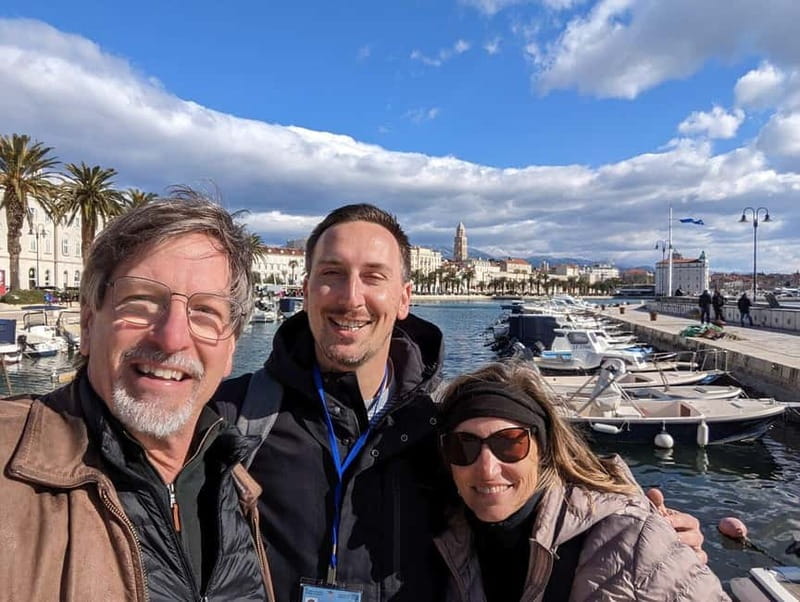
A tour about contested history depends heavily on how the guide handles it. Marin is described as passionate and engaging, with a carefully structured route that links historical and cultural points to the architecture around you. That combination can make abstract topics easier to follow: you have a real place in front of you while considering a broader idea.
The tour is also designed to invite participation and make room for interpretation. In one account of the experience, Marin adjusted for rain and allowed time for interpretation so a deaf participant could follow along. That is a useful sign of a flexible approach, though individual needs are best discussed with the provider ahead of time.
Audio-visual material is included for each topic. That can add context beyond a spoken explanation and may help make a complicated subject clearer. The description does not specify the format or equipment, so if you need a particular type of visual or audio support, ask before booking.
The tour is in English and is listed as wheelchair accessible. Those details make it easier to plan, but accessibility can depend on your specific requirements and the route conditions. If you have questions about your needs, check directly with Context Culture before you reserve.
Who will get the most from this walk
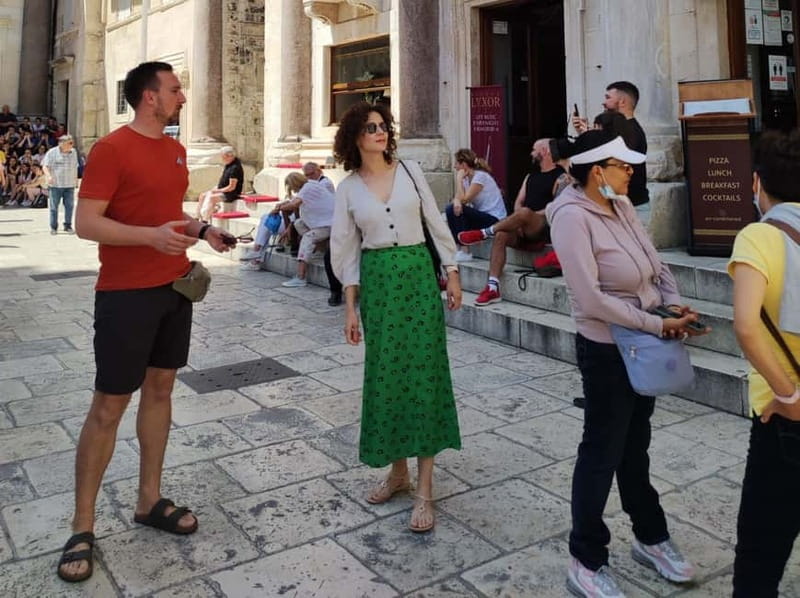
I would choose this tour if I wanted more than a checklist of Split’s famous sights. It is aimed at people who are curious about how identity, politics, religion, and historical memory interact, and who are comfortable discussing subjects that can be sensitive or contested.
It can also work well as an opening activity for a Split stay. The route covers central landmarks, while the guide’s broader explanations can give you useful context for the rest of your time in Croatia. One participant felt the material was accessible to people aged about 15 and older, but that is a personal judgment, not a stated age rule. For younger children, the abstract themes may be less engaging.
If your priority is detailed architectural history, a family-friendly overview, or plenty of unstructured time at each sight, this may not be the best match. The walk’s point is not to cover every feature of every monument. It is to use those places to discuss how the region’s past continues to matter.
Is $33 a fair price?
At $33 per person for two hours, you are paying for interpretation and perspective as much as for a walking route. That is the key value question. If a guide who can connect Split’s main sites to contested local issues is what you want, the price buys a focused experience that is distinct from a standard monument tour.
The activity includes extra audio-visual material for each topic, and the supplied details state there are no extra costs. There is no transport or meal listed, so think of the price as covering the guided walk and its supporting material rather than a bundled day out.
The tour has a five-star rating from five reviews, a small sample that is encouraging but not enough to promise every group will have the same experience. The strongest praise centers on Marin’s teaching style, the thoughtful structure, and his willingness to address complexity without making the tour technical. Those are precisely the qualities that matter most for this kind of walk.
The booking terms offer free cancellation up to 24 hours in advance and a reserve-now, pay-later option. The duration is two hours, and starting times depend on availability. Those flexible terms are handy if your Split plans are still taking shape.
Should you book the Split cultural walking tour?
Book it if you want to understand more than what Split’s landmarks look like. The combination of central sights, a cultural anthropologist guide, and candid discussion of Croatia’s historical and current issues makes this a strong choice for intellectually curious visitors, especially early in a stay.
Skip it if you want a breezy sightseeing loop with minimal discussion, or if you would rather spend the full two hours focused on monuments themselves. At $33, the tour offers its best value to people who want context and are ready to listen, ask questions, and sit with complicated answers.
FAQ
How long is the tour?
The tour lasts two hours. Starting times vary, so check availability when you book.
Where does the tour start?
Meet at Ul. kralja Tomislava 12 in Split, next to the fountain in the middle of Park Josipa Jurja Strossmayera.
Where does the tour finish?
The route lists Trumbićeva obala as the final stop, while the activity details say the tour ends back at the meeting point. Confirm the exact finish location with the provider before booking.
What language is the tour in?
The live guided tour is in English.
Is the tour wheelchair accessible?
Yes, it is listed as wheelchair accessible. If you have specific access needs, check with the provider before booking.
What is included in the price?
The tour includes extra audio-visual material for each topic, and no extra costs are listed. The price is $33 per person.
Just reviewed in Split
- Split City Walking Tour★ 5.0 · 5 reviews
- Split City Electric Bike Tour★ 5.0 · 68 reviews
- Split Cooking Class – Afternoon Edition Shared Activity★ 5.0 · 8 reviews
- Marjan Park & Split City Bike Tour★ 5.0 · 51 reviews
- Split: Blue Lagoon & 3 Islands Speedboat Tour – Small group★ 4.5 · 46 reviews
- Split Quest Experience: Discover the City★ 3.5 · 5 reviews
- Split: Blue Lagoon, Hvar, Brač, 6 Islands Boat Tour – Small Group★ 5.0 · 57 reviews
- Private transfer Split Airport to Split★ 5.0 · 28 reviews
Split Walking Tours, compared.
Walking Tour of Split and Diocletian’s Palace
Read our review →
Krka Waterfalls tour with Trogir Walking tour and Krka panoramic boat cruise
Read our review →
Walking Tour of Split with a ‘Magister’ of History
Read our review →
PREMIUM Emperor’s Walking Tour for History Lovers + Museum
Read our review →
Browse the lists this tour appears in